The Andy Murray statue is Wimbledon's hardest sculptural test
Wimbledon plans to unveil a David Williams-Ellis statue of Andy Murray next year — but how do you freeze a career defined by movement and struggle in bronze?
Daniel Fletcher
Writer ·
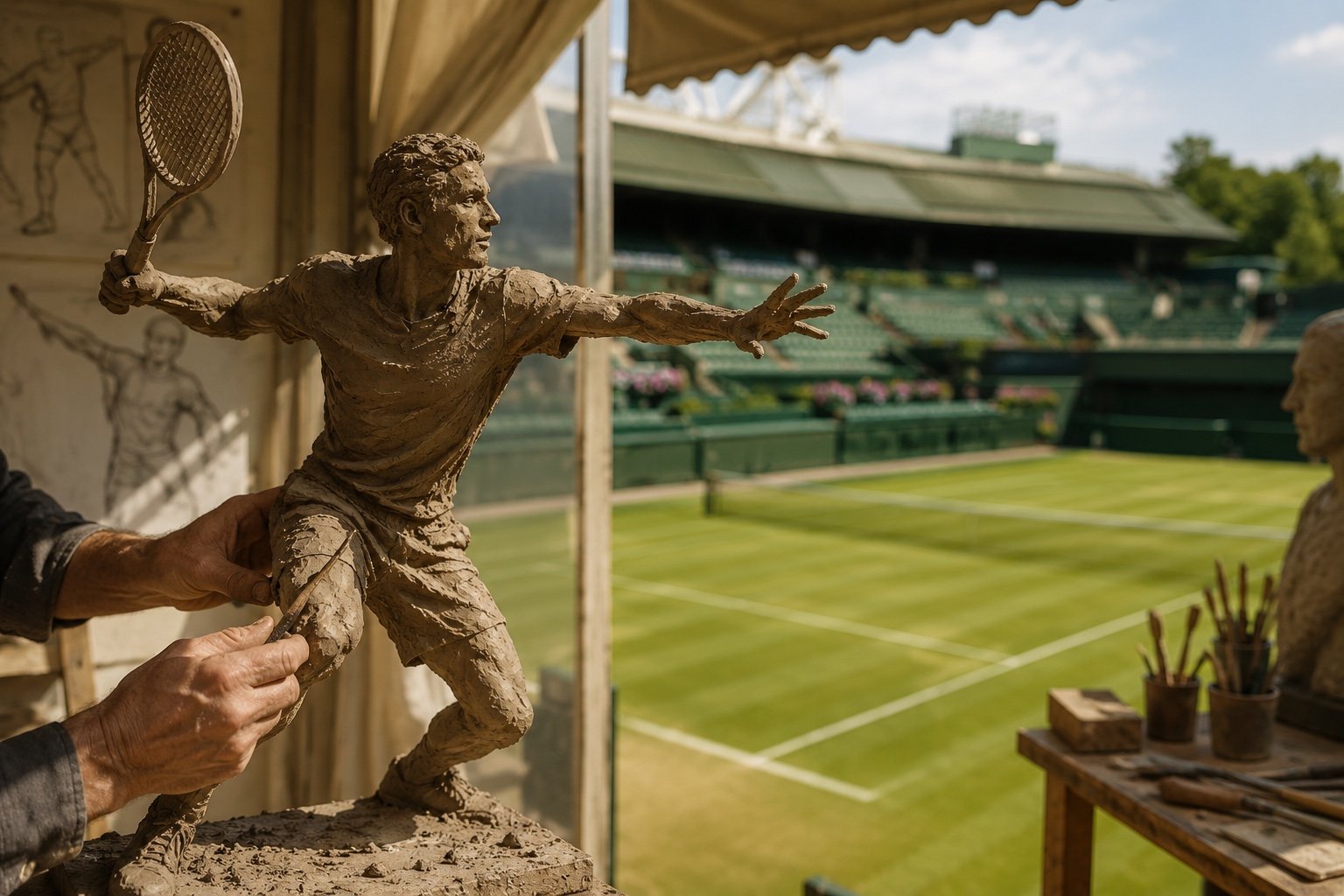
Wimbledon plans to unveil a statue of Andy Murray at the All England Club next year, with sculptor David Williams-Ellis working on what is described as a dynamic likeness of the two-time champion, according to the Associated Press. On the surface it is a familiar ritual: great player, famous venue, permanent tribute. But statues are never only about the person depicted — they are about which version of a career an institution chooses to freeze, and Murray may be the hardest subject in British sport to get right.
What happened
AP reported that Williams-Ellis held a 90-minute session with Murray himself, a detail that matters more than it might appear. A statue worked up from photographs risks producing a generic athlete with a familiar face; a sculptor who has studied how a player actually moves has a chance of capturing character. Murray's greatness was rarely a clean pose. It was the stretch into corners, the counterpunching, the argument with himself, the refusal to concede a rally while any option remained. Bronze does not naturally hold that kind of tension.
Why it matters
Murray's 2013 and 2016 titles were not simply personal achievements; they discharged a decades-long national wait and reshaped the emotional identity of the tournament for a generation. Placing him permanently within the All England Club's carefully curated landscape of courts, honour boards and memorials says his career belongs to the place itself, not just the record books. There is risk in the genre, though: sports statues have become a public test in which failures travel faster than successes, judged online from a single cropped image before anyone reads the artist's intent. Williams-Ellis appears alert to that history — awareness that is itself part of the story.
The bigger picture
Sculpting a living, recently retired athlete brings its own awkwardness — legacy is still settling — but also an advantage: the subject can correct assumptions and protect the details memory smooths away. Murray's public identity includes unease, dry humour and directness, and a tribute that sanded those qualities off would render him a cleaner, duller symbol than he ever was. The challenge is to honour the Wimbledon frame without shrinking a career that also contained Olympic golds and years of resistance to Federer, Nadal and Djokovic.
What happens next
The unveiling is planned for next year, and the statue will inevitably become a site of pilgrimage and photography — which should not be dismissed as superficial, because sporting memory is physical, and a good monument lets a venue speak to visitors who never saw the matches live. The real measure of success is simple enough to state and fiendish to achieve: if the sculpture works, it will not merely resemble Murray. It will recall the feeling of watching him chase one more ball when the point already seemed lost.
Sources: reporting by Associated Press.
The NE Times is an independent news and analysis publisher. Our articles combine factual reporting with clearly-written, impartial analysis. Content is for general information and does not constitute professional advice. Disclaimer.
You may also like to read

Nick Kyrgios's Wimbledon goodbye turns a doubles loss into a career marker
A straight-sets doubles defeat on Court 17 became a farewell as Kyrgios said this was probably his last Wimbledon, closing a brilliant, volatile chapter.
Jack Draper wins on Eastbourne return with Andy Murray in his coaching team
Jack Draper returned from knee trouble with a straight-sets win over Marcos Giron at Eastbourne, his first match with Andy Murray working alongside long-time coach James Trotman.
Wimbledon build-up sharpens focus on British tennis hopes
Jack Draper's reassuring Eastbourne return under new coach Andy Murray headlines a grass-court build-up that has British attention rising before SW19.
Osaka Stuns Sabalenka as Djokovic Passes Federer: Wimbledon's Day Seven Shifts the Draw
Naomi Osaka's straight-sets win over top seed Aryna Sabalenka and Novak Djokovic's record 106th Wimbledon victory made day seven the fortnight's pivot.