Belfast counts the cost as week of disorder grips Northern Ireland
Several nights of violence that left families homeless and dozens of officers injured have prompted soul-searching across Northern Ireland, with politicians condemning attacks that spread from Belfast to other towns.
Eleanor Whitfield
Writer ·

Northern Ireland is taking stock after one of the most serious outbreaks of public disorder it has seen in years, with several consecutive nights of violence in Belfast and other towns leaving families burned out of their homes, businesses gutted and dozens of police officers injured. What began as a protest after a serious assault escalated into sustained rioting that drew condemnation from across the political spectrum and required reinforcements from forces in Great Britain.
The trouble erupted on the evening of 9 June following a stabbing the previous day, an attack that police said was allegedly carried out by a Sudanese man. Within hours, crowds had gathered, vehicles were set alight and masked groups moved through residential streets. In the worst incidents, people went door-to-door attempting to identify houses occupied by immigrant families, leaving some residents homeless after their properties were attacked.
The disorder did not remain confined to Belfast. Smaller protests and flashpoints were reported elsewhere in Northern Ireland and, over subsequent days, sympathetic gatherings appeared in Glasgow and Edinburgh, as well as in Southampton in England, suggesting the unrest had tapped into a wider current of tension already running through parts of the United Kingdom this summer.
A policing operation stretched to the limit
The scale of the violence forced an extraordinary mobilisation of resources. The Police Service of Northern Ireland deployed public-order units night after night, using water cannon and baton rounds to push back crowds in the worst-affected areas. Officers came under sustained attack from petrol bombs, fireworks, bricks and bottles, and a significant number were injured over the course of the week.
With its own ranks under pressure, the PSNI called in mutual aid from across the UK. Around 200 officers were drafted in from other forces to support the operation, while Police Scotland confirmed it had sent 90 officers to assist colleagues in Northern Ireland. The deployment underlined both the seriousness of the situation and the limits of a single regional force when confronted with widespread, coordinated disorder.
Senior officers warned that those involved in the violence would be pursued through the courts long after the streets had quietened, with detectives gathering footage and forensic evidence to support prosecutions. Arrests were made on multiple nights, and police stressed that the people who organised and incited the trouble, as much as those throwing missiles, would be the focus of the investigation.
“These were not protests. They were orchestrated attacks on families and on the officers trying to protect them, and they will be met with the full weight of the law.”
— Senior PSNI officer addressing the media during the unrest
Communities pushing back
As the violence persisted, a counter-movement began to take shape. On Saturday 13 June, large crowds of counter-protesters gathered in Belfast and Derry to rally against the disorder, insisting that those targeting immigrant families did not speak for their communities. The gatherings were intended as a visible rejection of the intimidation that had played out earlier in the week.
Community workers, faith leaders and local charities mobilised to support families forced from their homes, arranging emergency accommodation and donations of clothing and food. For many residents, the most distressing aspect of the unrest was the deliberate targeting of households based on where the occupants were thought to have come from, a tactic that left lasting fear in mixed neighbourhoods.
- Around 200 officers from other UK forces were drafted in to support the PSNI
- Police Scotland sent 90 officers across the Irish Sea to assist
- Homes, businesses and vehicles were set alight over several nights
- Some families were left homeless after their properties were attacked
- Counter-protests against the disorder took place in Belfast and Derry on 13 June
Background
Northern Ireland has a long and painful history of street disorder, but the character of this episode marked a departure from the sectarian flashpoints of the past. Rather than being rooted in the traditional unionist-nationalist divide, the violence was bound up with anger over immigration and asylum, echoing tensions seen elsewhere in the UK in recent years following high-profile crimes.
Political leaders across the divide moved quickly to condemn the violence, warning that attacks on minority communities risked dragging Northern Ireland backwards at a moment when its institutions remain fragile. The episode also raised difficult questions about how disinformation spreads online and how quickly a single alleged crime can be weaponised to justify wider attacks.
What happens next will depend heavily on the pace of arrests and prosecutions, and on whether community confidence can be rebuilt in the areas worst affected. Police have signalled that their investigation will run for months, while politicians face pressure to address the underlying grievances and the online networks that helped turn a single incident into a week of fear.
Sources: reporting by ABC News.
The NE Times is an independent news and analysis publisher. Our articles combine factual reporting with clearly-written, impartial analysis. Content is for general information and does not constitute professional advice. Disclaimer.
You may also like to read

Belfast counts the cost after racially-motivated riots leave 27 homeless
Days of disorder across Belfast and beyond, triggered by a stabbing in the north of the city, have left dozens of people without homes and prompted Stormont's leaders to unite in condemnation as the PSNI works through a growing list of arrests and charges.
Casement Park edges towards delivery as funding package nears £210m
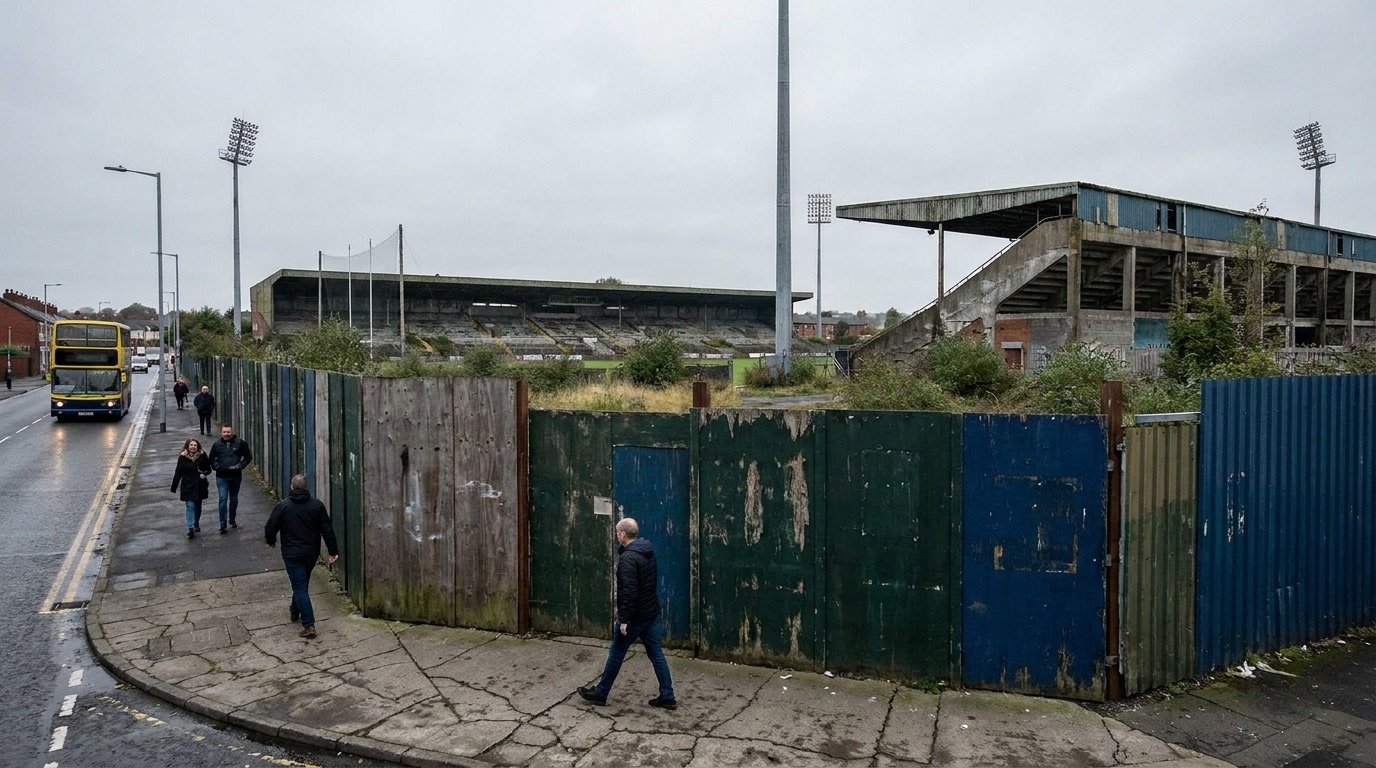
After more than a decade of dereliction, the redevelopment of Belfast's Casement Park is moving into its delivery phase, with a funding package approaching £210m drawn from Stormont and the two governments, even as unionist voices warn of political sensitivities over the GAA stadium.

Police facial recognition expands rapidly as watchdogs warn law is lagging behind
Forces have scanned millions of faces this year and ministers plan a national rollout, but biometrics regulators caution that the legal framework is struggling to keep pace with the technology.

Hundreds of county lines shut down in national crackdown as Liverpool dealer jailed
A co-ordinated police intensification week dismantled 241 drug lines and safeguarded more than 1,000 vulnerable people, as a Merseyside investigation put a city-centre line controller behind bars.