Bonn climate talks lay groundwork for COP31 amid bitter rows over who pays
The mid-year UN negotiations in Germany opened what officials call the 'implementation era' of climate action, but finance disputes and geopolitical strain cloud the path to the Türkiye summit.
Marcus Reeve
Writer ·
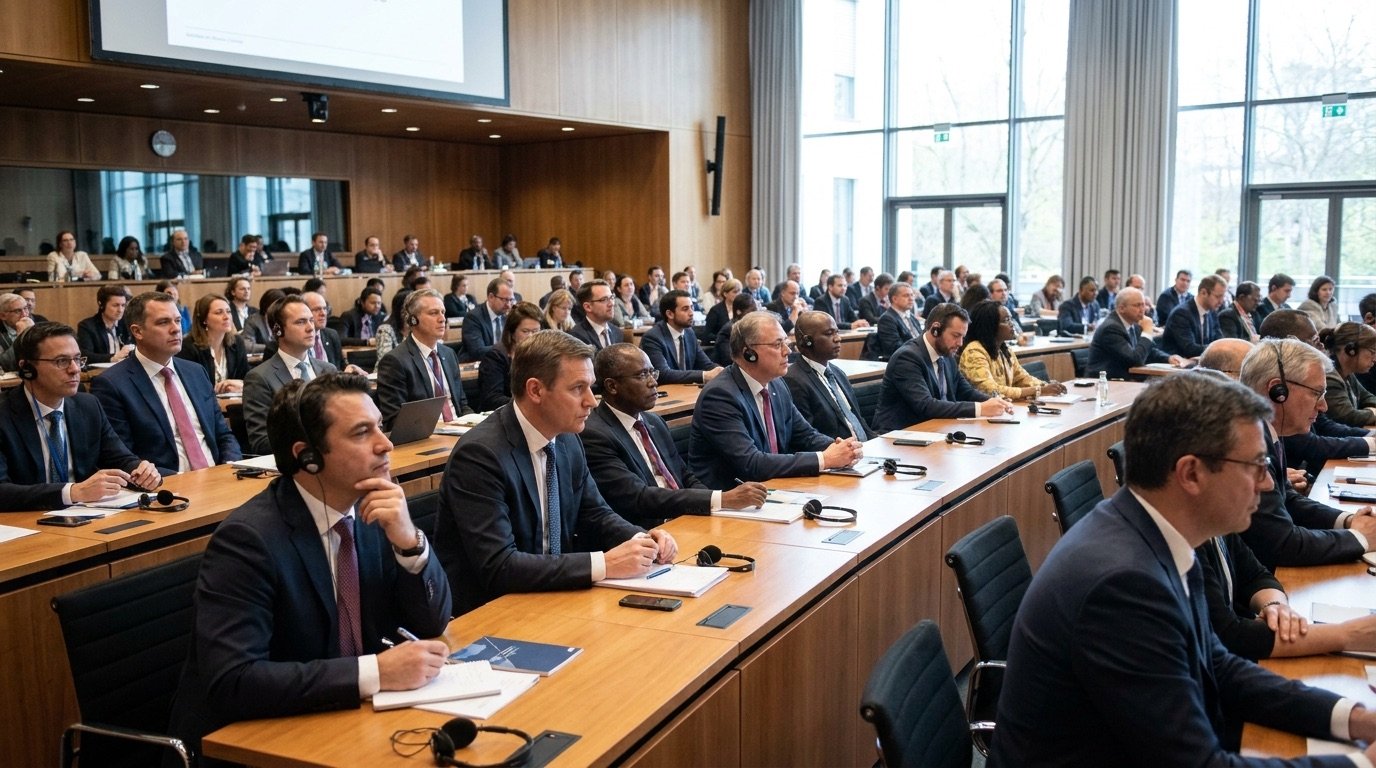
Negotiators from nearly 200 countries have wrapped up ten days of UN climate talks in Bonn, Germany, in a session billed as the opening of the 'implementation era' — the moment when the lofty pledges of recent summits are meant to translate into concrete action. Yet the mid-year meeting, formally the 64th session of the UNFCCC subsidiary bodies, closed with many of the thorniest questions still unresolved.
Held from 8 to 18 June, the Bonn talks are the main staging post before COP31, the next full UN climate summit, due to take place in Türkiye later in the year. Delegates worked to turn the outcomes of last year's Belém summit and the Global Stocktake into actionable decisions on adaptation, finance and a managed transition away from fossil fuels.
But familiar fault lines quickly reopened, above all over money. Developing countries and civil society groups warned that declining public finance, weak replenishment of climate funds and persistent access barriers risk undermining the entire enterprise just as the world is being asked to move from promises to delivery.
Finance dominates — and divides
The central battleground was climate finance. A new work programme under Article 9 of the Paris Agreement opened amid procedural disputes over its place on the COP31 agenda, while talks on the Baku-to-Belém roadmap to mobilise $1.3 trillion a year exposed deep divisions over who is obliged to pay, how equity should be measured and what counts as climate finance at all.
Health and development groups used the Bonn platform to press for adaptation finance to be tripled, calling for it to reach $120 billion a year by 2035 to help vulnerable nations cope with worsening heat, floods and droughts. Wealthy governments, facing their own fiscal and political pressures, were more cautious, and the gap between ambition and committed funds remained stubbornly wide.
“We are entering an era of implementation, but implementation without finance is just another word for delay.”
— Developing-country negotiator at SB64
Fossil fuels, forests and the COP31 agenda
Beyond finance, delegates grappled with how to operationalise commitments to transition away from fossil fuels, a phrase that has proven far easier to write into summit declarations than to put into practice. Discussions also covered food systems, trade and climate policy, and the Just Transition Mechanism agreed at the previous COP.
Forests were another flashpoint. Countries clashed over how to define forest degradation and over who should bear the cost of halting deforestation, an issue with particular resonance given the host of last year's summit. The talks underscored a recurring tension between the urgency of the science and the slow grind of consensus-based diplomacy.
- SB64 held in Bonn from 8 to 18 June 2026
- Main staging post ahead of COP31 in Türkiye later in the year
- Baku-to-Belém roadmap targets $1.3 trillion a year in climate finance
- Calls to triple adaptation finance to $120 billion a year by 2035
- Unresolved disputes over forest degradation, finance definitions and accountability
Geopolitics in the room
Observers noted that wider geopolitical strain — from trade tensions to the economic fallout of conflict — hung over the negotiations, complicating efforts to build trust between rich and poor nations. With several major economies preoccupied by domestic pressures and security crises, some delegates worried that climate cooperation could slip down the international agenda at a moment when emissions remain near record highs.
The mid-year talks rarely produce headline decisions; their purpose is to clear technical ground so that ministers can strike bargains at the year-end summit. By that measure, Bonn did its job in narrowing some options, even as it left the hardest political trade-offs to be settled in Türkiye.
Background
The UNFCCC's subsidiary bodies meet each June in Bonn to prepare the ground for the annual COP. The process is built on consensus, meaning a single objecting country can stall progress, which helps explain why finance and fossil-fuel language so often dominate. The Paris Agreement's framework of nationally determined contributions and periodic stocktakes is designed to ratchet up ambition over time, but delivery has consistently lagged behind what scientists say is required to limit warming.
What happens next
Attention now turns to COP31 in Türkiye, where governments will be pressed to convert the Bonn groundwork into firm commitments on finance, adaptation and the fossil-fuel transition. A biodiversity COP is also due later in the year, raising hopes — and demands — for closer coordination between the climate, nature and land-degradation conventions. Whether the 'implementation era' lives up to its name will depend less on the speeches in Bonn than on the cheques written afterwards.
Sources: reporting by Down To Earth.
The NE Times is an independent news and analysis publisher. Our articles combine factual reporting with clearly-written, impartial analysis. Content is for general information and does not constitute professional advice. Disclaimer.
You may also like to read

Europe heatwave smashes records as health and infrastructure buckle
Britain logs its hottest June day and France its hottest day on record, with temperatures near or above 40C triggering red alerts across western Europe.

What is a heat dome? The high-pressure system behind Europe's scorching spell
As temperatures climb well above seasonal norms across the continent, meteorologists point to a heat dome trapping hot air and straining health services, transport and energy networks.

Forty mayors sign pact to shape how data centres grow in cities
A C40 Cities agreement aims to guide the rapid build-out of AI infrastructure amid mounting concern over power demand, water use and the strain on local communities.

Olympians Including Jessie Diggins Press Capitol Hill On Climate Action
Elite athletes visited Capitol Hill to push for climate solutions, linking winter sport to clean air, reliable snowpack and community health in a bid to give policy debates a human face.