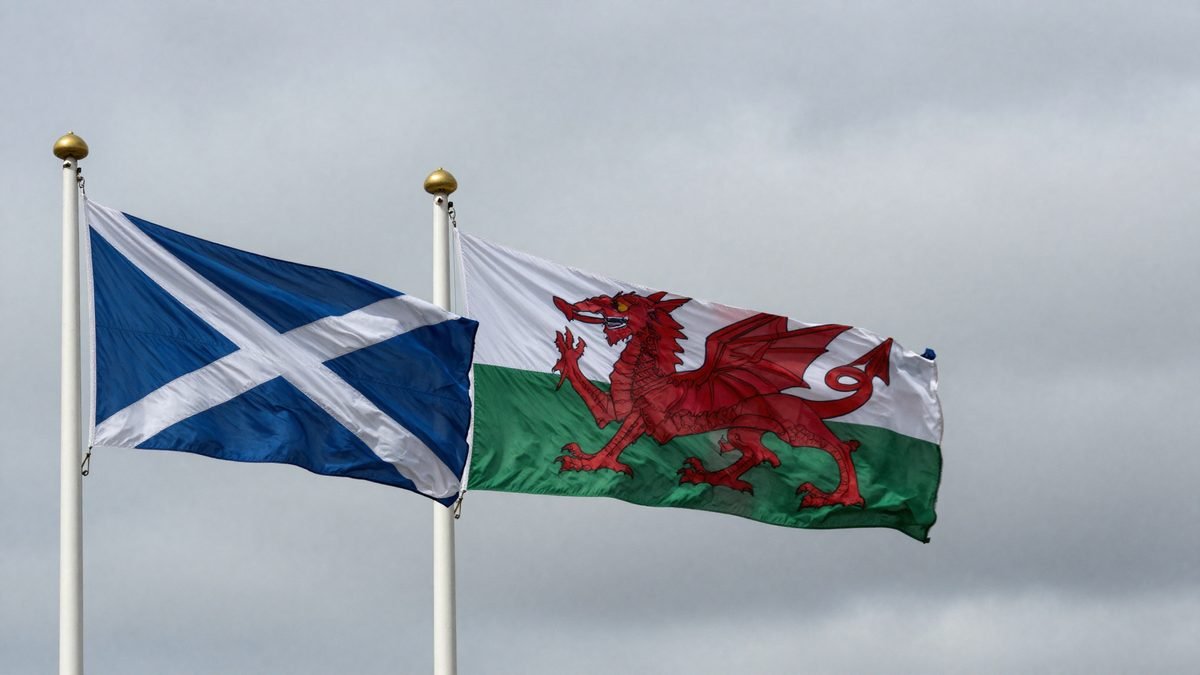
The Council of the Nations and Regions Moves to the Centre of UK Governance
A body set up to coordinate between the UK government, devolved nations and English regions is taking on new importance. Here is what it is, how it works and why it now matters more.
UK News & Politics Editor ·
Why it's trending
With nationalist parties leading the devolved nations and powerful mayors across England, the mechanisms that coordinate government across the UK have become far more important. This body sits at the heart of how disputes are managed.
A body built for a fragmented map
The Council of the Nations and Regions was created to bring together the UK government, the devolved administrations and England's regional mayors in a single forum. Its purpose is coordination: aligning policy, sharing information and managing the tensions that arise when power is distributed across many governments.
When it was established, such a body might have seemed a modest addition to the machinery of government. In the political landscape of 2026, with assertive devolved administrations and strong mayors, it has become a more central institution than its founders may have anticipated.
Why it matters more now
The importance of coordination rises as alignment falls. When governments across the UK were more politically similar, informal cooperation could carry much of the load. With a more varied and assertive set of administrations, formal structures are needed to prevent disagreement from becoming dysfunction.
The Council offers a venue where differences can be aired and, ideally, resolved. Whether it succeeds depends on whether participants treat it as a genuine forum for decision-making or merely a stage for restating positions already held.
The role of England's mayors
One distinctive feature is the inclusion of English regional mayors alongside national governments. This reflects the growth of devolution within England, where directly elected mayors now wield significant powers over transport, housing and economic development. Their presence gives England's regions a voice they historically lacked.
It also complicates the picture. Mayors have their own mandates and priorities, which do not always align with either Westminster or the devolved nations. Balancing these many voices is part of what makes coordination in the modern UK so challenging.
Coordination without a constitution
The UK has no single codified constitution setting out how its governments relate. Instead, relationships rest on conventions, agreements and bodies like this one. That flexibility can be a strength, allowing arrangements to evolve, but it also leaves room for disputes about who decides what.
In this context, the Council functions as connective tissue, holding a complex system together through relationships rather than rigid rules. Its authority is practical and political rather than legal, which makes trust and goodwill essential to its effectiveness.
The risks of failure
If coordinating bodies work well, they can defuse tension and produce genuinely joint decisions. If they fail, disputes migrate to more adversarial arenas: public rows, legal challenges and appeals over each other's heads to the public. That is worse for everyone and corrosive to the union.
The stakes are therefore higher than the low-key nature of intergovernmental machinery suggests. Quiet, effective coordination is one of the underappreciated conditions for a stable multinational state.
Comparisons with other multinational states
The UK is not unique in needing to coordinate multiple governments; federal and devolved systems around the world grapple with similar challenges. Many use formal councils, agreements and dispute-resolution mechanisms to manage relations between central and regional governments. The UK's arrangements are less codified than most, relying more on convention than on written rules.
This comparative perspective suggests both the value and the limits of bodies like the Council of the Nations and Regions. Where such institutions have clear roles, regular meetings and genuine influence, they can stabilise relations. Where they are informal and easily sidelined, they struggle. The UK's challenge is to give its coordinating machinery enough weight to matter without a formal constitution to anchor it.
Trust as the essential ingredient
Ultimately, intergovernmental machinery works on trust as much as on structure. When governments believe that engaging in good faith will be reciprocated, forums like this can resolve disputes and produce genuine cooperation. When trust breaks down, no amount of structure can compel agreement, and meetings become exercises in restating grievances.
Building trust across governments led by different parties with different goals is demanding, but it is the real work of holding a diverse union together. The Council's value will lie less in its formal powers than in whether it can foster the habits of cooperation that allow disagreements to be managed rather than allowed to fester.
The stakes are easy to underestimate because the work is so undramatic. Yet the quiet business of coordinating budgets, aligning policies and defusing disputes is precisely what prevents a multinational state from fracturing under the strain of disagreement. In an era of distributed power, institutions like this carry a weight far greater than their low public profile suggests, and their success or failure will shape the union's cohesion for years.
What to watch next
Observers should watch how often the Council meets, whether it produces concrete agreements, and how it handles the first serious dispute of the new political era. Its track record, not its remit, will determine its credibility.
In an age of distributed power, the institutions that hold the UK together are as important as the powers themselves. The Council of the Nations and Regions has moved from the footnotes to the front line of that task.
Sources & verification
- Institute for Government - intergovernmental relations analysis
- UK Government - Council of the Nations and Regions material
- House of Lords Constitution Committee - evidence, 2026
Filed under Politics · Written by Eleanor Whitfield