Disney streaming swings to double-digit margins as D'Amaro era opens
The first quarterly results under chief executive Josh D'Amaro showed direct-to-consumer operating income up 88 per cent, with the company guiding to accelerating growth in the second half.
Rajan Mehta
Writer ·
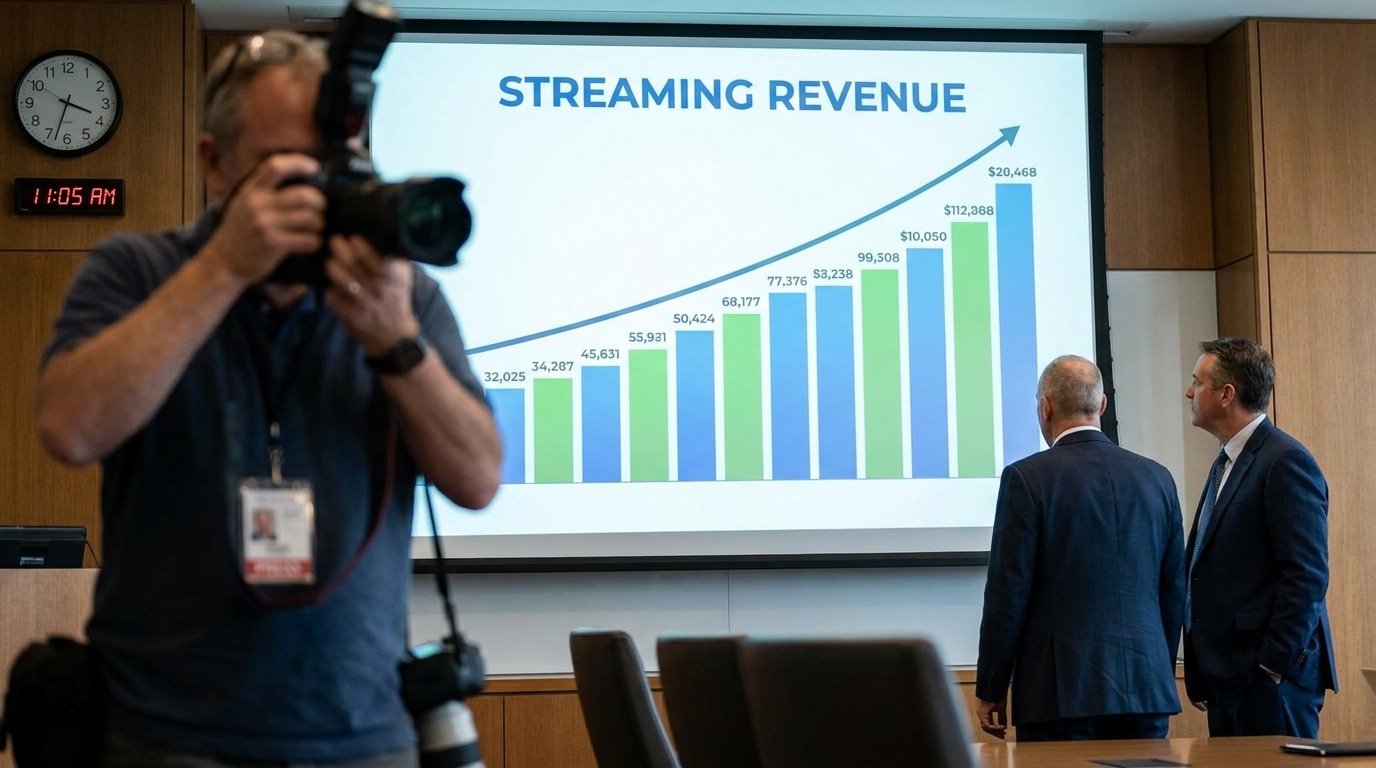
Disney delivered a forecast-beating set of fiscal second-quarter results, the first under new chief executive Josh D'Amaro, with the long-awaited turnaround in its streaming arm now firmly in profit. The numbers offered an early validation of the leadership transition, and a measure of reassurance to investors who had watched the company absorb years of streaming losses in pursuit of subscriber scale.
Group revenue rose 7 per cent to $25.17bn for the three months to 28 March, ahead of the $24.85bn consensus. Combined Disney+ and Hulu revenue climbed 13 per cent to $5.49bn, and direct-to-consumer operating income jumped 88 per cent to $582m, lifting the streaming operating margin above 10 per cent for the first time. Crossing into double-digit margins marks a symbolic milestone for a business that, only a few years ago, was hemorrhaging cash as it chased growth at almost any cost.
For a new chief executive, beating expectations in a first outing buys credibility and breathing room. The challenge for D'Amaro now is to demonstrate that the improvement reflects a durable structural shift rather than a favourable confluence of price rises and one-off measures.
Profit over subscriber chasing
The figures vindicate a strategy shift away from headline subscriber growth and towards margin discipline, including price rises and a clampdown on password sharing. Disney Experiences remained the cash engine, generating $9.5bn in revenue, while ESPN's operating income slipped despite higher revenue. The willingness to trade raw subscriber additions for profitability marks a decisive break from the land-grab mentality that defined the opening phase of the streaming wars.
Management used the results to set out an upbeat trajectory, guiding to roughly 12 per cent adjusted earnings-per-share growth for the full year and at least $8bn of share buybacks. The buyback commitment is itself a statement of confidence, signalling that the company believes it has moved past the period of heavy investment and into one of returning capital to shareholders.
“Our creative and operational momentum drove strong quarterly results, and we continue to expect growth to accelerate in the second half of the fiscal year.”
— Josh D'Amaro and Hugh Johnston, Disney
A diversified engine room
What distinguishes Disney from most of its streaming rivals is the breadth of its earnings base. While pure-play streamers live or die by subscriber economics, Disney can lean on a portfolio of businesses that interlock in ways competitors struggle to replicate. The quarter underlined how those segments are pulling in different directions, with the experiences division anchoring the group even as legacy television and sports navigate structural headwinds.
The key contributors to the quarter break down as follows:
- Group revenue up 7 per cent to $25.17bn, ahead of the $24.85bn consensus
- Disney+ and Hulu revenue up 13 per cent to $5.49bn
- Direct-to-consumer operating income up 88 per cent to $582m, with margins above 10 per cent
- Disney Experiences generating $9.5bn in revenue as the group's cash engine
- ESPN operating income slipping despite higher revenue, reflecting sports-rights cost pressure
The pressure on ESPN is a reminder that not every part of the empire is firing in unison. Rising sports-rights costs continue to squeeze profitability even as audiences remain large, a tension the company will have to manage as it positions the sports brand for a more direct-to-consumer future.
Background: from streaming losses to discipline
Disney's streaming business spent its early years prioritising subscriber growth above all else, accumulating losses on the assumption that scale would eventually translate into profit. That phase produced an impressive global subscriber base but also a costly habit of measuring success by additions rather than economics. The subsequent pivot, hardening prices, cracking down on shared passwords and reining in content spend, reflects an industry-wide recognition that streaming must ultimately stand on its own as a profitable enterprise.
What happens next
With guidance pointing to accelerating growth in the second half and a substantial buyback programme underway, the burden of proof shifts to execution. Investors will watch whether streaming margins can keep climbing without sacrificing the subscriber base, how ESPN's direct-to-consumer ambitions develop, and whether the experiences division can continue to absorb softness elsewhere. For D'Amaro, a strong opening quarter sets the tone, but the verdict on his tenure will rest on whether Disney can convert this early momentum into sustained, broad-based growth.
Sources: reporting by Variety.
The NE Times is an independent news and analysis publisher. Our articles combine factual reporting with clearly-written, impartial analysis. Content is for general information and does not constitute professional advice. Disclaimer.
You may also like to read

Netflix and Spotify blur the lines between streaming and podcasting
A distribution pact bringing Spotify Studios and Ringer video shows to Netflix marks the clearest sign yet that the podcast and television businesses are converging.

Oil prices ease as more tankers exit the Strait of Hormuz
Brent crude slipped back below pre-war levels as vessel traffic through the strait doubled, calming fears of a prolonged energy crunch.

Asian shares mixed after technology-led sell-off
Regional markets wavered as semiconductor stocks, currency expectations and Wall Street sentiment reshaped trading.

Business taxes at a 'tipping point', CBI warns as bill hits £345bn
The employers' group says firms are being treated as a cash tap and cannot drive growth while shouldering record tax costs, led by higher employer National Insurance.