Netflix orders second series of Steven Knight's House of Guinness
The Peaky Blinders creator's Dublin-set period saga has been recommissioned after a strong debut run, with the writer signalling ambitions to take the dynasty all the way to the 1960s.
Sophie Bennett
Writer ·
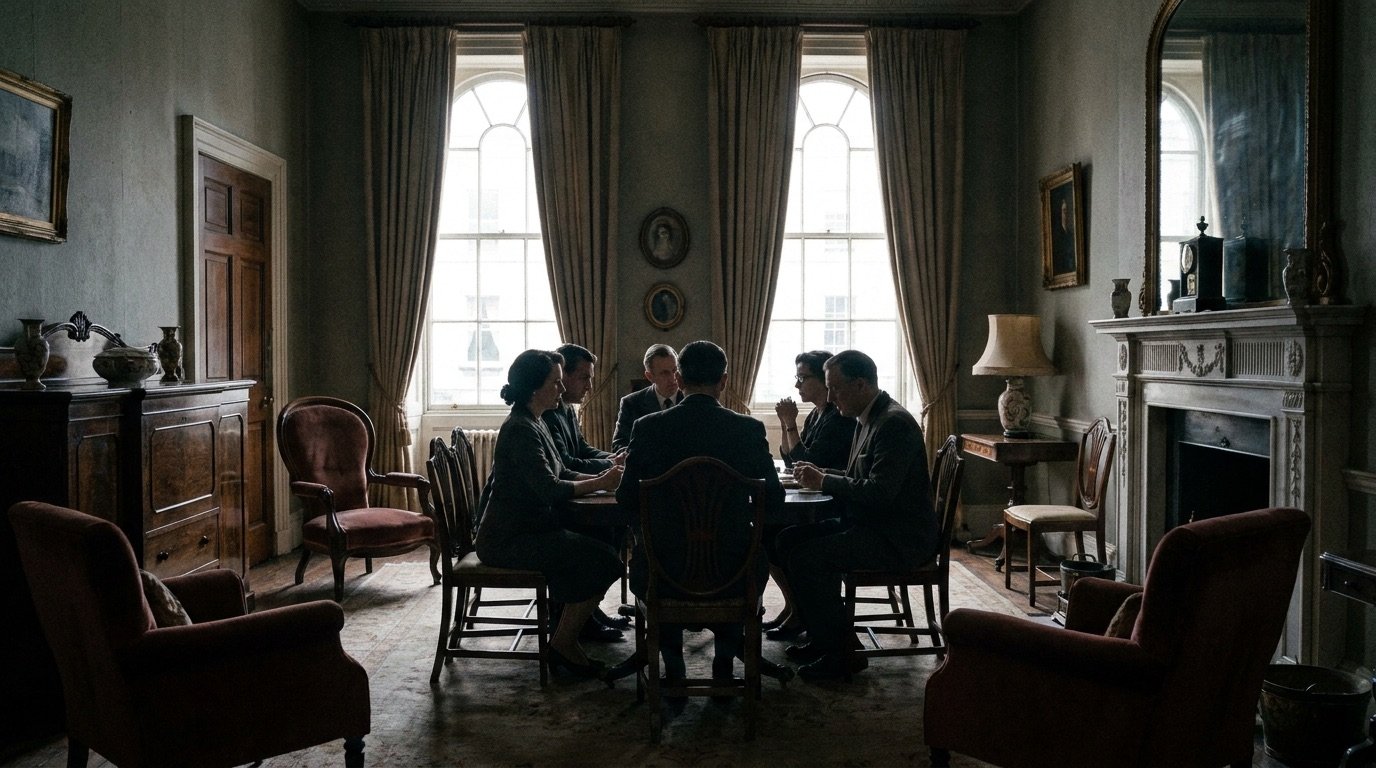
Netflix has renewed House of Guinness, the period drama from Peaky Blinders creator Steven Knight, for a second series. The decision follows a debut run that spent four weeks inside the streamer's global top 10 and drew a 90% critics' score on Rotten Tomatoes, a combination of popular reach and critical approval that has become the benchmark Netflix looks for before committing to more.
The eight-episode first series opened in the aftermath of the death of Sir Benjamin Guinness in 1860s Ireland, tracing how his will reshaped the fortunes of his four adult children, played by Anthony Boyle, Louis Partridge, Emily Fairn and Fionn O'Shea. Built around one of the most recognisable names in brewing, the show married the intimate machinations of an inheritance dispute to the broader sweep of a changing Ireland.
For Knight, the renewal extends a remarkable run as one of British television's most bankable creators of muscular, family-centred period drama. House of Guinness applies the template that made Peaky Blinders a global phenomenon, charismatic protagonists, a richly realised historical setting and a dynasty whose private struggles map onto wider social upheaval, to a new subject with deep roots in Irish and British cultural memory.
A long-term commission
Production on the second run is slated to begin in early 2027, pointing to a likely release later that year. Knight has been explicit about wanting a multi-series arc, telling press he intends to carry the story of the brewing dynasty forward across several seasons. That ambition suggests a show conceived less as a self-contained drama than as the foundation of a long-running franchise capable of spanning generations of the family.
“We are going to do season two and three and four. We are going to do this all the way to the 1960s.”
— Steven Knight, creator
Taking the narrative to the 1960s would carry the Guinness story across a century of profound change, from Victorian Ireland through independence, two world wars and the postwar transformation of both Britain and Ireland. It is a canvas that offers Knight the kind of historical scope he exploited so effectively in Peaky Blinders, where the passage of years allowed characters to age, fortunes to rise and fall, and the political weather to shift around them.
Why Netflix is doubling down on period drama
The renewal reinforces a continued appetite for prestige British and Irish period drama, a genre that has reliably travelled internationally and that the platform has leaned on to anchor its slate beyond contemporary thrillers. Lavish historical productions have proved unusually durable performers for the streamer, combining broad demographic appeal with the kind of production values that signal quality to subscribers weighing whether to keep paying.
Several factors explain the genre's enduring pull for a global platform:
- Period settings translate across borders, with costume and spectacle that need little cultural context to appreciate.
- Recognisable names and historical events give marketing a ready-made hook.
- Returning series build loyal audiences that reduce the constant churn of one-off commissions.
- British and Irish production talent offers a deep pool of writers, crews and locations at competitive cost.
- Prestige dramas burnish a platform's brand, helping justify subscription prices against cheaper rivals.
House of Guinness also benefits from the halo of Knight's track record. A creator with a proven global hit lowers the perceived risk of a multi-season commitment, and the early decision to renew before the first run had fully played out signals how confident the streamer is in the property's longevity.
Background: the Knight effect
Steven Knight built his reputation on Peaky Blinders, which grew from a modestly received BBC drama into an international cult phenomenon, spawning fashion lines, festivals and a feature film. That trajectory reshaped expectations of what a British period drama could achieve commercially, and made Knight one of the most sought-after writers in the industry. House of Guinness arrives carrying those expectations, and the swift renewal suggests it is meeting them.
What happens next
With cameras due to roll in early 2027, viewers can expect the second series to land later that year, continuing the saga of the Guinness heirs as the family's fortunes evolve. Should Knight's stated ambition hold, the show is positioned to become a multi-series fixture of the Netflix calendar, a returning prestige title to set alongside its biggest dramas. For the British and Irish production sector, a long-running, locally made commission of this scale represents a significant and welcome anchor of high-end work.
Sources: reporting by Variety.
The NE Times is an independent news and analysis publisher. Our articles combine factual reporting with clearly-written, impartial analysis. Content is for general information and does not constitute professional advice. Disclaimer.
You may also like to read

Netflix calls time on two cult favourites, ordering final seasons of 'Good Girl's Guide' and 'Devil May Cry'
Within days of each other, the streamer renewed its hit teen mystery and its acclaimed video-game anime for third and final seasons, completing two stories built as trilogies from the start.

Netflix renews Devil May Cry for third and final season
Showrunner Adi Shankar confirms the anime adaptation will close out its planned trilogy, capping a streaming success that repeatedly cracked the platform's global top 10.

Why streamers are turning hit TV shows into cinema events
The old pipeline sent films to streaming. Now streamers are sending proven series and fan favourites back toward cinemas to build bigger franchise moments.
Enola Holmes 3, Madonna and Elle: the streaming week that proves range beats scale
A Netflix detective sequel, a Legally Blonde prequel, Madonna's Confessions II and hit thriller Obsession show how streaming now sells a menu, not a moment.