The indie cinema revival is turning moviegoing back into a community habit
Independent cinemas have grown 38% since the pandemic, with Gen Z leading the queue — proof that curation and community will help shape film's future.
Sophie Bennett
Writer ·
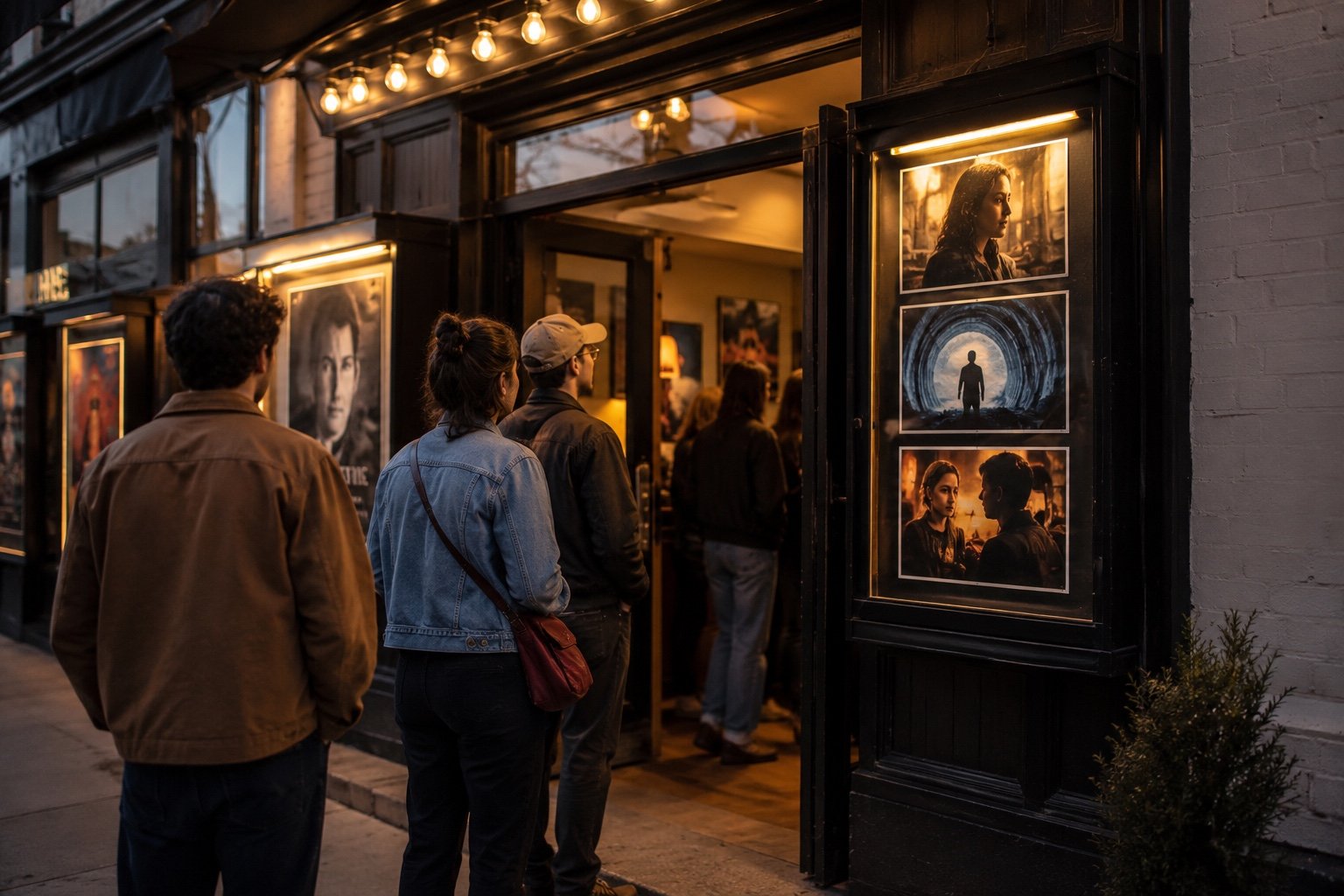
The surprise in the independent cinema revival is not that people still want to watch films together — it is who is turning up. A generation raised on streaming menus and algorithmic feeds is queuing for 42-seat rooms, repertory prints and a programmer's taste, seeking exactly what frictionless home viewing cannot supply: a schedule, a shared room and the mild risk of watching something chosen by someone else.
What happened
The Guardian reported on a wave of growth in American independent cinemas, using filmmaker John Wilson's Low Cinema — a 42-seat venue opened in New York's Ridgewood in spring 2025 — as its emblem. The numbers behind the anecdote are striking: an Art House Convergence survey found independent cinemas have grown 38% since the pandemic, with 68% of attendees under 45, while a Fandango study identified Gen Z as the largest moviegoing demographic. Chicago's near-century-old Music Box Theatre drew more than 300,000 admissions in 2025, with strong demand for 35mm and 70mm screenings.
Why it matters
The pattern demolishes a lazy industry assumption — that younger viewers are permanently lost to phones. What is returning, though, is not the multiplex habit in miniature. Small venues sell what streaming structurally cannot: limitation as identity. A catalogue of thousands turns choice into fatigue; one screen and a curator's point of view turn it into an occasion. A 70mm print of an old film is not an archive item but an event — happening at a time, in a place, with strangers reacting in the same room. The parallel with vinyl is tempting but incomplete: a screening vanishes when the lights come up, which makes these venues closer to music halls and bookshops — cultural infrastructure that is fragile, local and hard to replace.
The counter-view
A fashionable revival does not repeal the economics. Small cinemas still face brutal margins, rising rents, staffing costs and uneven access to desirable titles, and community enthusiasm does not automatically become a stable business. The venues that endure will likely treat film as one strand of a broader offer — memberships, events, partnerships and a social identity people support between screenings. Britain's own independents, from regional picture houses to community-run screens, know this arithmetic intimately.
What happens next
The opportunity for studios and distributors is to treat independent cinemas as launchpads rather than niche endpoints — homes for restorations, documentaries and films that need advocates instead of saturation marketing. For audiences, the lesson of the moment is simpler and more hopeful: viewers who can watch almost anything at home are choosing to watch particular things together. That is a smaller story than Hollywood's usual spectacle, and possibly a healthier one — moviegoing rebuilt around taste, care and the pleasure of being in the room.
Sources: reporting by The Guardian.
The NE Times is an independent news and analysis publisher. Our articles combine factual reporting with clearly-written, impartial analysis. Content is for general information and does not constitute professional advice. Disclaimer.
You may also like to read
Tauron American Film Festival keeps US indie cinema moving through Europe
Wroclaw's 17th Tauron American Film Festival and its U.S. in Progress strand show how regional festivals now double as finishing schools for indie film.

A24's Google AI partnership exposes Hollywood's taste-versus-tech dilemma
A reported research partnership between A24 and Google DeepMind has stirred fan backlash and sharpened questions about how prestige studios should handle AI tools.

Paul Feig's AI warning puts human storytelling back at the centre of Hollywood's debate
Speaking at the Nantucket Film Festival, the filmmaker used an industry honour to argue that artificial intelligence cannot replace lived experience in storytelling.

Sanitised biopics are becoming Hollywood's safest event-cinema bet
Music and celebrity biopics may frustrate critics, but estate-approved versions of famous lives are proving increasingly useful to studios hunting reliable box office.