Kazuki Yamada's Harmonium in Birmingham Treats American Music as an Argument, Not a Pageant
Kazuki Yamada and the CBSO frame John Adams' Harmonium with Copland, Tower and Florence Price, turning a Freedom 250 concert into a canon debate.
Sophie Bennett
Writer ·
What happened
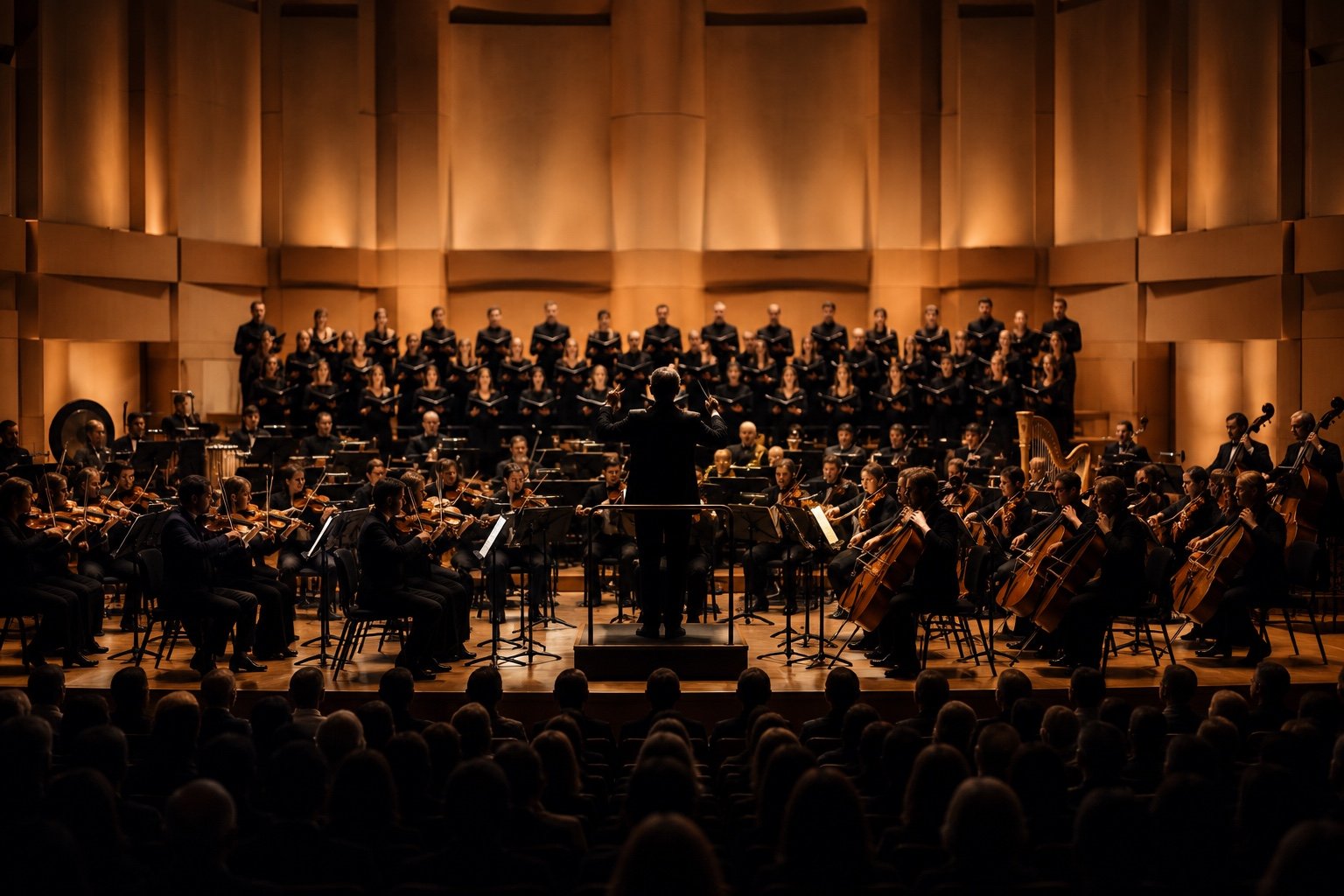
Kazuki Yamada led the City of Birmingham Symphony Orchestra in a programme at Birmingham Symphony Hall built around John Adams' 1980 choral-orchestral work Harmonium, marking the Freedom 250 anniversary of American independence. Around the Adams centrepiece sat Aaron Copland's Fanfare for the Common Man and Lincoln Portrait, Joan Tower's Fanfare for the Uncommon Woman and Florence Price's The Heart of A Woman in a new orchestration by Lior Rosner, with soprano Janai Brugger taking the spoken Lincoln material and the Price songs. The Guardian's review praised Yamada's incisive energy while noting that the CBSO Chorus sounded somewhat restrained and occasionally behind the beat.
Why it matters
An anniversary concert of American music could easily have been a flag-waving set list. This one was constructed as a conversation. Copland supplies the established public language of American concert music; Tower's title answers it with a pointed correction; Price represents a composer whose reputation has been rebuilt after decades of institutional neglect. Placing those voices side by side asks the audience to hear the American canon as a contest over who gets included, rather than a single official sound. That is programming doing critical work that no programme note could do alone.
The reservation about the chorus matters too, and it is healthy that it was made. Harmonium lives on momentum and the sensation of massed forces locking together and surging forward; if the choral blaze is not quite there, the evening lands differently. A review willing to admire the architecture while flagging the execution treats the concert as a serious event rather than a promotional exercise.
The bigger picture
Orchestras everywhere are wrestling with how to mark loaded anniversaries without flattering their audiences. Birmingham's answer was to use the occasion as a reason to examine ideals and exclusions at once, letting Price's recovered lyricism share a platform with works that already carry institutional weight. The sterner test for the recovery project around Price is whether her music outlasts the framing of rediscovery and settles into the living repertory. Evenings like this one advance that cause precisely because they decline to make a lecture of it.
What happens next
With the Proms season ahead, Yamada and the CBSO have time to sharpen the choral response that the reviewers found wanting. The more interesting question is whether other British orchestras copy the model: anniversary programming that treats a national tradition as a live argument. On this evidence, the format has legs — it gives audiences familiarity and friction in the same evening, which is exactly what keeps concert halls relevant.
Sources: reporting by The Guardian.
The NE Times is an independent news and analysis publisher. Our articles combine factual reporting with clearly-written, impartial analysis. Content is for general information and does not constitute professional advice. Disclaimer.
You may also like to read
Swift and Kelce Marry at Madison Square Garden — and Redraw the Map of Celebrity News
Taylor Swift and Travis Kelce's Madison Square Garden wedding, officiated by Adam Sandler, shows how pop, sport and fandom now share one attention economy.
Backrooms Goes Home: The Viral Horror Hit Faces Its Streaming Audit
A24's $81.5m internet-born horror phenomenon arrives on premium VOD on 7 July — the next test of whether viral fandom can outlast the opening weekend.
Minions Edge Toy Story in a July Fourth Weekend That Reveals the Market's New Rules
Minions & Monsters topped the US chart with $36.4m over Toy Story 5's $31m — a win with caveats in a tighter, more international summer box office.
Why Seth Rogen and Olivia Wilde Shouting at Each Other Is Good News for Grown-Up Comedy
Ahead of The Invite's 10 July expansion, Rogen and Wilde's combative screen chemistry makes the case for the endangered adult chamber comedy.