Is Morrisons' Unbeatable Prices Promise Really Cheaper for a Weekly Shop?
Morrisons has promised not to be beaten on more than 500 weekly essentials by Asda, Tesco, Sainsbury’s, Aldi or Lidl, months after Lidl pushed it out of Britain’s top five grocers.
Business & Technology Editor ·
Why it's trending
Price-match pledges are measured against a defined basket and usually exclude promotions and loyalty pricing, so the headline promise and the till receipt can diverge.
Morrisons has widened its price battle to five rivals with a guarantee on more than 500 essentials, but the small print still matters at the checkout.
You can now spot Morrisons Unbeatable Prices labels across hundreds of everyday lines. Does that make your whole shop cheaper? Not necessarily. The useful part is knowing exactly what the badge does — and what it leaves out.
At a glance
- Morrisons Corporate — the Unbeatable Prices commitment launched on 24 August and covers more than 500 weekly essentials.
- Morrisons Corporate — covered products are guaranteed to be the same price or cheaper than comparable prices at Asda, Tesco, Sainsbury’s, Aldi and Lidl.
- Morrisons Corporate — the pledge applies in supermarkets, online and click-and-collect, but not Morrisons Daily, Amazon, Deliveroo or other third-party channels.
- The Retail Bulletin — promotions, multibuys, loyalty prices and in-store-only promotions are excluded from the guarantee.
- Worldpanel data reported by Retail Gazette — Morrisons held 8.5% of the grocery market in the latest period while Lidl had moved ahead of it.
- The guarantee is broad for a price-match scheme, but it covers selected lines rather than every item in a basket.
- Tesco and Sainsbury’s both run Aldi Price Match schemes focused on selected comparable products, checked regularly.
- Morrisons compares against five rivals, but its exclusions mean a Clubcard, Nectar or temporary promotional price can still beat the sticker you see.
- The useful test for shoppers is the total basket they actually buy, not the number of products carrying a price-match badge.
What does Morrisons Unbeatable Prices actually guarantee?
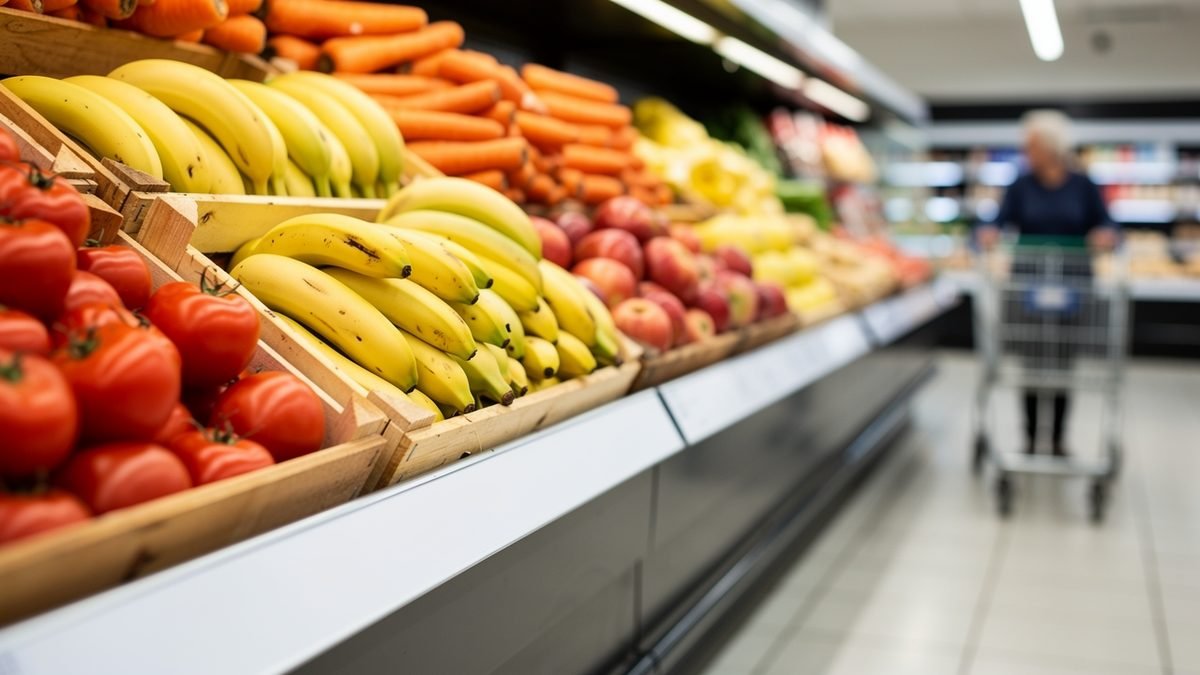
Morrisons says more than 500 weekly essentials will cost the same as or less than equivalent prices at Aldi, Lidl, Tesco, Sainsbury’s and Asda. The list includes bananas, tomatoes, carrots, bread, butter, chicken fillets and fresh Market Street lines. That is more ambitious than a simple Aldi-only comparison because it asks Morrisons to stay competitive against five large rivals at once. But the promise applies only to products selected for the scheme. A customer whose trolley is heavy on brands, premium ranges or items outside those 500-plus lines can still find a different supermarket cheaper overall.
How is the pledge different from Tesco and Sainsbury’s?
Tesco’s Aldi Price Match compares selected Tesco products with comparable Aldi lines and says it checks Aldi prices twice a week. Sainsbury’s also matches more than 500 selected own-label and branded products to Aldi, with products changing over time and promotional prices excluded. Morrisons’ distinctive claim is the five-way comparison, not that it has invented price matching. That broader reference group may make the selected lines more competitive, but shoppers should not assume the matching methodology is identical across retailers. Pack sizes, own-label equivalents and availability can all affect whether two products are genuinely like-for-like.
Can a price match prove your whole basket is cheapest?
No. Morrisons itself excludes promotions, multibuys, loyalty prices and in-store-only deals from the guarantee. A Clubcard price at Tesco or Nectar price at Sainsbury’s could therefore undercut a Morrisons item without breaching the promise. The reverse can also happen if Morrisons has a strong base price on something outside the scheme. For a household with a stable weekly list, the best comparison remains the final cost of that basket after loyalty discounts and promotions. Price-match logos are useful shortcuts on staples; they are not independent audits of every shopper’s bill.
Why is Morrisons making this move now?
The commercial context is unusually sharp. Retail Gazette says Morrisons has been overtaken by Lidl and the latest Worldpanel data puts Morrisons at 8.5% market share. Morrisons has also been cutting costs and trying to rebuild customer momentum under private-equity ownership. Price perception matters because shoppers do not compare every line every week; they remember what milk, butter, chicken and bananas seem to cost. By putting those high-frequency items under a visible guarantee, Morrisons is trying to change the mental benchmark before customers decide where to do a bigger shop.
What should shoppers check before switching?
Look at where you buy, not just what the advert says. Morrisons says the commitment works in supermarkets, online and click-and-collect, but not Morrisons Daily or third-party delivery channels such as Amazon and Deliveroo. Check whether the exact item carries the Unbeatable Prices marker and compare the unit price if pack sizes differ. If you routinely use loyalty schemes, include those discounts in your own calculation. A pledge can remove some price anxiety on essentials, but it is most valuable when it matches the products and channels you already use.
What happens next
Morrisons will have to maintain the comparison as rivals change prices and promotions, and the real test will be whether market share follows. Tesco and Sainsbury’s already review their Aldi-matched ranges regularly, so a prolonged price battle could keep pressure on shelf prices even without a formal response. For shoppers, the smartest use of Morrisons Unbeatable Prices is narrow: treat it as evidence that selected staples are competitive, then judge the rest of the basket on its own merits.
Sources & verification
- Morrisons Corporate — primary reporting and official updates
- Reporting reviewed on 24 August 2026; figures as published at that time
Filed under Business · Written by Rajan Mehta