NASA's orbiter images the fresh Moon crater carved out by a spent SpaceX Falcon 9 stage
A four-tonne piece of a rocket launched in January 2025 hit the Moon at the start of this month. NASA has now photographed the hole it left, and the picture is more scientifically interesting than anyone expected.
Business & Technology Editor ·
Why it's trending
NASA released the first detailed images of the crater made when a discarded SpaceX rocket stage struck the Moon on 5 August.
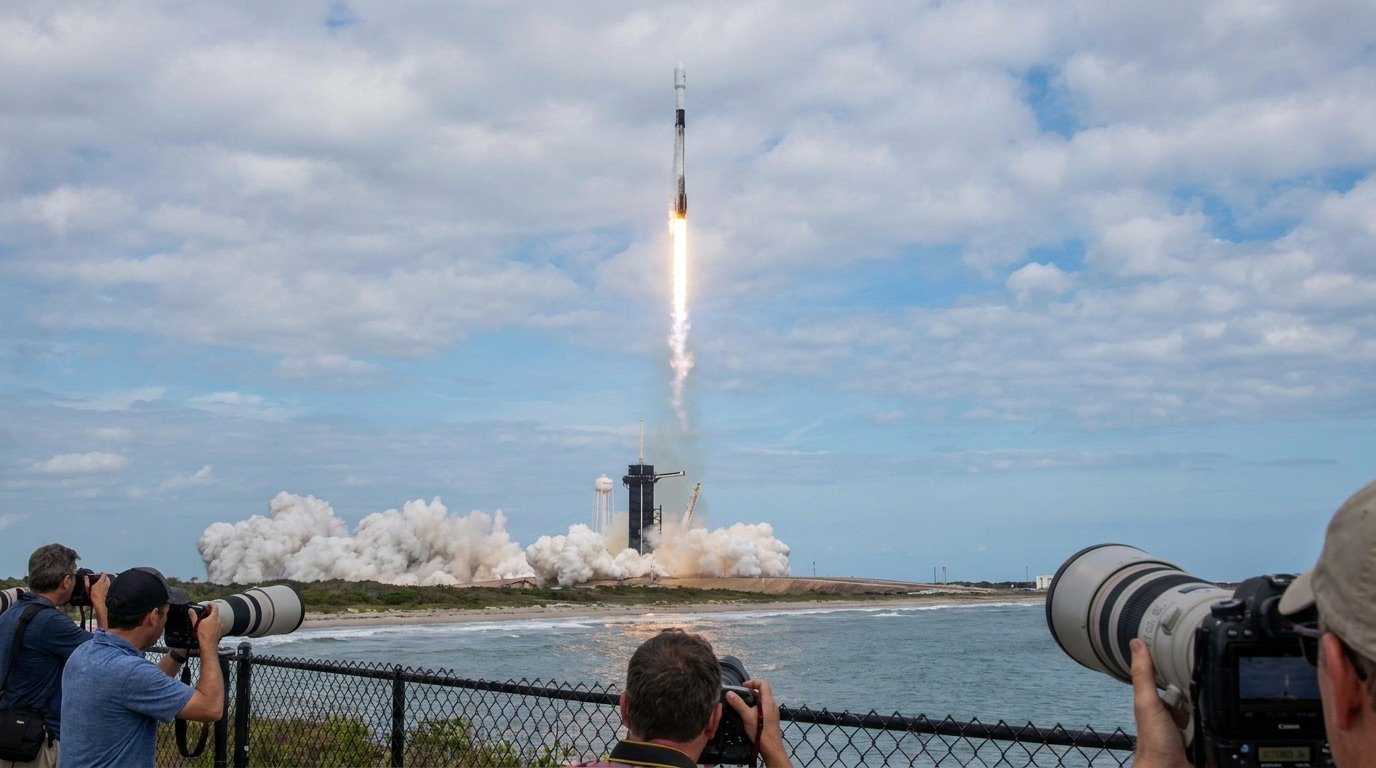
NASA has released the first detailed images of a crater that did not exist three weeks ago. On 5 August a spent SpaceX Falcon 9 upper stage — about four tonnes of discarded rocket left over from the January 2025 launch of the Firefly Blue Ghost 1 mission — struck the lunar surface near Einstein Crater.
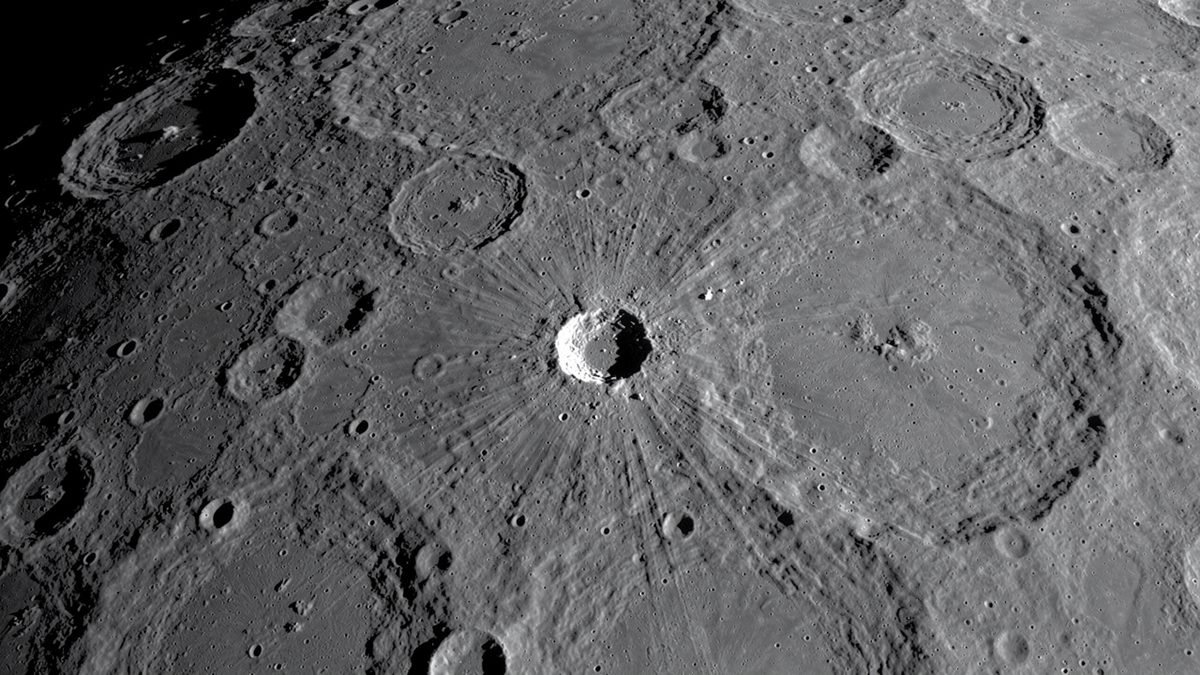
Between 11 and 12 August, the Narrow-Angle Camera aboard NASA's Lunar Reconnaissance Orbiter photographed the result: a crater roughly 60 feet across and, judging by the length of its shadow, less than 10 feet deep.
At a glance
- Impact occurred on 5 August 2026 near Einstein Crater
- The object was a four-tonne spent Falcon 9 upper stage from a January 2025 launch
- Crater measures about 60 feet across and less than 10 feet deep
- Imaged 11-12 August by the Narrow-Angle Camera on NASA's Lunar Reconnaissance Orbiter
- Bright rays are fresh material excavated from about 46cm below the surface
Reading a crater from orbit
The orbiter's camera can resolve features as small as three feet from lunar orbit, which is what makes this kind of forensic measurement possible. Depth cannot be measured directly from above, so scientists infer it from the shadow the crater rim casts at a known sun angle — a technique as old as telescopic astronomy, applied with modern precision.
What makes this particular crater valuable is that its formation was witnessed. Almost every other crater on the Moon is of unknown age and unknown impactor; here the mass, velocity and moment of impact are all documented, turning the site into a calibration point for interpreting the millions of craters that are not.
What the rays reveal
The images show bright and dark rays streaking outward from the point of impact. The darker streaks are made of surface material — dust and rock weathered over long periods by solar wind, galactic cosmic rays and micrometeorite bombardment.
The brighter streaks near the rim are the interesting part: fresh material thrown up from roughly 46 centimetres below the surface, unexposed until the moment of impact. In effect the rocket dug a very small, very fast trench through the top layer of the Moon and scattered the contents across the landscape.
Why space debris reaches the Moon at all
Upper stages are the least glamorous part of any launch. Once they have delivered their payload they are often left in high orbits with no propellant to deorbit them, drifting for years under the competing tugs of Earth, Moon and Sun until something eventually intersects.
This is not the first such impact and will not be the last. As launch rates climb, the population of derelict hardware in cislunar space climbs with it — and tracking which object is which has repeatedly proved harder than expected, with past lunar impacts misattributed to the wrong rocket before the record was corrected.
An accidental experiment
Deliberate lunar impacts have real scientific pedigree. NASA's LCROSS mission drove a spent stage into a permanently shadowed crater in 2009 specifically to look for water in the plume, and the technique remains one of the few ways to sample below the surface without landing.
This impact was not planned, but it produces comparable data for free: a known mass at a known speed, and an orbiter overhead to photograph the aftermath within days. That is a considerably better dataset than most natural impacts provide.
What happens next
The site will now be re-imaged over coming months to watch the rays fade as space weathering darkens the fresh material — a process that lets scientists calibrate how quickly the lunar surface ages, and therefore how to date other craters.
The wider issue is governance. Cislunar traffic is increasing sharply ahead of crewed Artemis missions, and there is still no binding regime for disposing of spent stages. Right now the Moon is absorbing the difference.
Sources & verification
- NASA Science — primary reporting and official updates
- Reporting reviewed on 19 August 2026; figures as published at that time
Filed under Technology · Written by Rajan Mehta