Ministers pledge AI-driven NHS overhaul, insisting service must 'transform its way out' of crisis
The Health and Social Care Secretary has set out plans to accelerate the digitisation of the NHS, telling the ConfedExpo conference that the service cannot manage its way out of pressure but must reform through technology.
Eleanor Whitfield
Writer ·
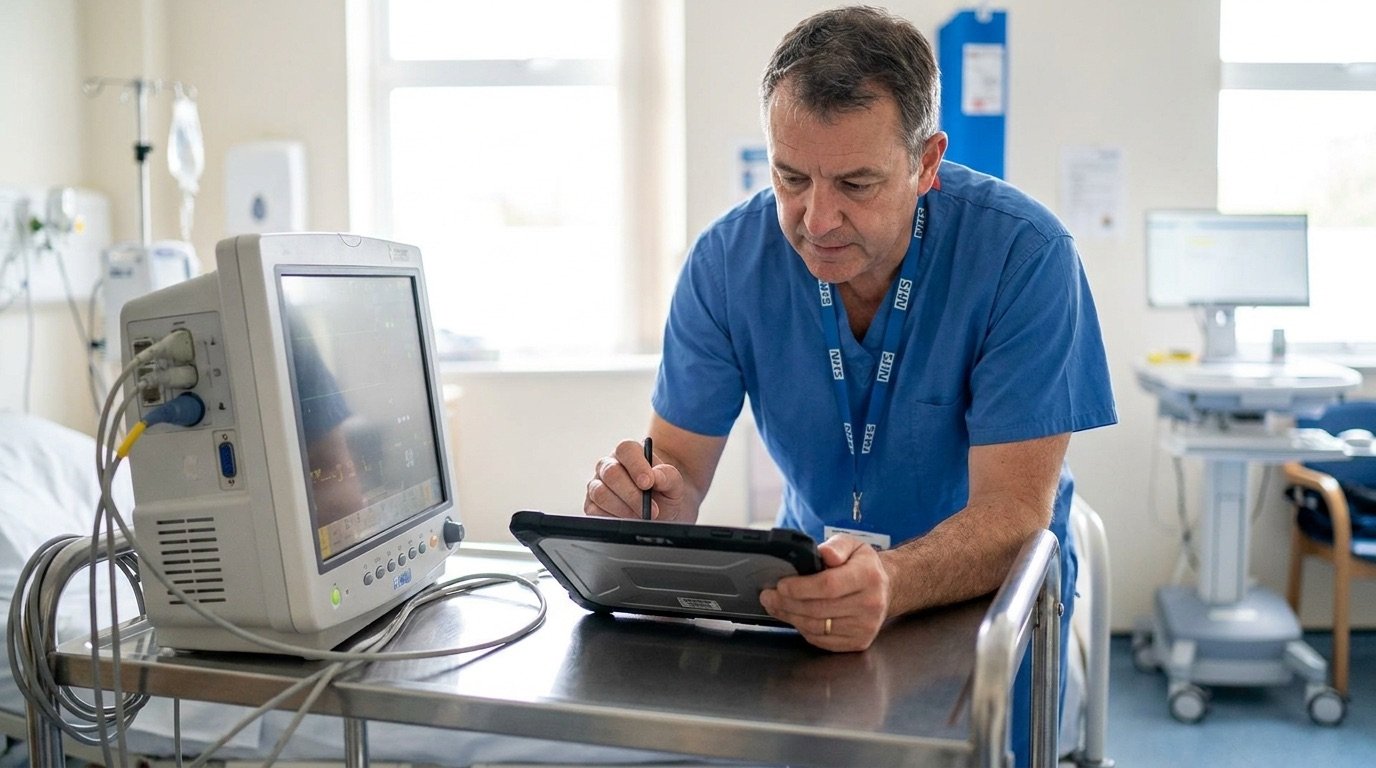
The government has pledged to accelerate a sweeping modernisation of the NHS built around technology, digitisation and artificial intelligence, with the Health and Social Care Secretary declaring that the health service must 'transform its way out' of its current pressures rather than simply manage them. The commitment was set out in a keynote address to the NHS ConfedExpo conference in Manchester and amplified in a subsequent government statement.
The speech sought to marry a reform agenda with a recital of recent progress, listing improvements in waiting lists, dental access and ambulance response times over the past two years. But the central message was forward-looking: that incremental management of demand is no longer enough, and that the NHS must embrace new tools and new ways of working to remain sustainable.
The pitch comes against the backdrop of a broader legislative push to reshape how the health service is run, including plans to overhaul its national management structures. For ministers, technology is being positioned as the engine of a wider transformation rather than a bolt-on extra.
The case for transformation
The Secretary used the speech to argue that the scale of the challenge facing the NHS cannot be met through efficiency drives alone. The service, the argument runs, must fundamentally change how it operates, deploying digital triage, AI-assisted diagnostics and joined-up patient records to free up clinicians' time and speed up care. The framing was deliberate: reform and delivery, ministers insist, are not competing priorities but two sides of the same coin.
To illustrate the point, the speech highlighted examples already showing results in different parts of the country, presenting them as proof that change is possible at scale.
- A community wellness team in South Cumbria that cut emergency admissions by two-thirds
- An eTriage tool at the Royal Berkshire reducing face-to-face appointments
- The North East Ambulance Service meeting all six national response standards
- Princess Alexandra Hospital significantly cutting elective waiting times
- A wider rollout of digitisation, AI and a single patient record
Progress claimed so far
Alongside the promise of future reform, the government set out a record of recent gains. Ministers pointed to movement towards the 18-week target for planned treatment, the delivery of 1.8 million dental appointments, and a reduction in waiting lists of more than 400,000. Improvements in ambulance response times and in the proportion of patients seen within four hours in A&E were also cited, along with what officials described as the biggest fall in NHS dissatisfaction since 1998.
Whether those figures translate into a felt improvement for patients remains the subject of debate, and critics will note that the service continues to operate under severe strain. But the recital served a clear political purpose: to argue that reform is already bearing fruit and that the technology agenda is an extension of progress rather than a leap into the unknown.
“The NHS cannot simply manage its way out of the current pressures. It must transform its way out of them.”
— The Health and Social Care Secretary
Background: a structural shake-up
The technology drive sits within a far larger restructuring of the NHS. Legislation working its way through Parliament proposes a significant overhaul of how the service is led and managed, including pulling national functions more directly into central government and reconfiguring the bodies that commission and oversee local care. The bill reached an early parliamentary milestone at the start of June, signalling the government's intent to legislate as well as exhort.
Reform on this scale inevitably attracts scrutiny. Disruption to management structures can absorb energy and attention that might otherwise go into frontline care, and previous reorganisations have a mixed record. Supporters counter that the current arrangements are too fragmented to deliver the kind of digital transformation ministers envisage, and that structural change is a precondition for the technology agenda to succeed.
“I will back you in using new technology to improve the experiences and outcomes of patients.”
— The Health and Social Care Secretary, addressing NHS staff
What happens next
The government now faces the harder task of turning conference rhetoric into change on the ground. Rolling out AI tools, a single patient record and digital triage across hundreds of trusts is a formidable undertaking, requiring investment, training and the confidence of a workforce that has lived through repeated reorganisations and is currently embroiled in its own pay disputes.
The legislative timetable will be one measure of progress, the practical spread of the cited pilot schemes another. For patients, the test will be simpler and more demanding: shorter waits, quicker diagnoses and care that feels joined up rather than fragmented. The vision has been set out clearly; the coming months and years will reveal whether the NHS can, in the Secretary's words, transform its way out of crisis.
Sources: reporting by Department of Health and Social Care.
The NE Times is an independent news and analysis publisher. Our articles combine factual reporting with clearly-written, impartial analysis. Content is for general information and does not constitute professional advice. Disclaimer.
You may also like to read

NHS dental contract reforms bring complex care pathways from 23 June
The second wave of NHS dentistry reforms in England introduces new complex care pathways for patients with serious decay and gum disease, alongside changes to denture payments, as ministers try to improve access to NHS care.
Opinion: The Palantir row is really a question about what the NHS is for
MPs want ministers to walk away from a £330m contract over the firm's 'values'. The instinct is understandable, but ditching a working system on principle alone would be a serious mistake unless we are honest about what replaces it.
Two arrested over Nottingham hospital mortuary practices ahead of maternity review
Nottinghamshire Police have arrested two men on suspicion of misconduct in a public office over mortuary practices at Nottingham University Hospitals, a separate inquiry that has compounded scrutiny of the trust.

GPs to prescribe Mounjaro weight-loss jab from late June
From 23 June, family doctors in England will be able to prescribe the weight-loss injection tirzepatide to prioritised patients, with eligibility widening and every patient required to take part in wrap-around lifestyle support.