Switch 2 races past 17 million units, becoming Nintendo's fastest-selling console
Strong software attach rates and a blockbuster Mario Kart launch have powered the hybrid's debut year, with the company forecasting 19 million units by the close of its fiscal year.
Sophie Bennett
Writer ·
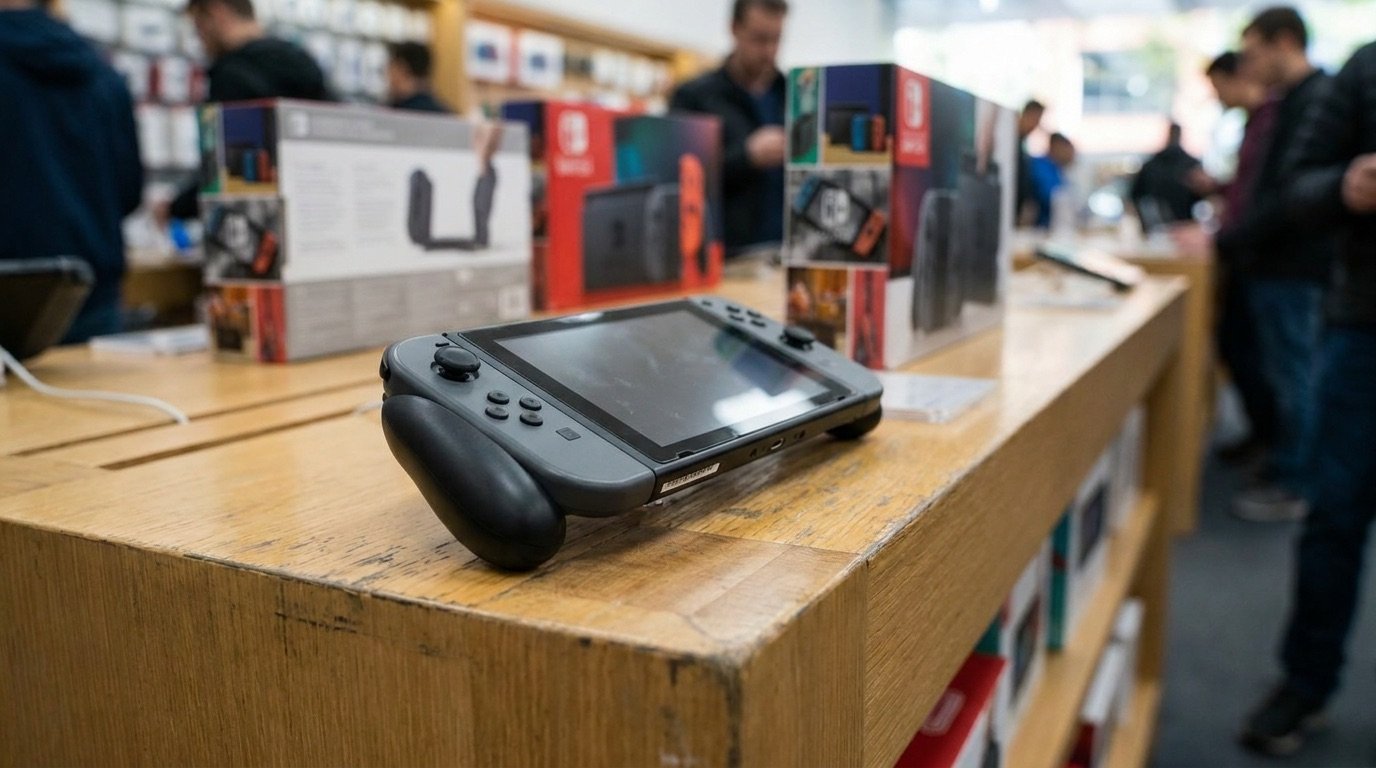
Nintendo's Switch 2 has emerged as the company's fastest-selling console to date, shifting more than 17 million units since its June 2025 launch. The figure, disclosed alongside the company's earnings, comfortably outpaces the original Switch over a comparable window and underscores the strength of the hybrid hardware refresh. After the slow decline that traditionally afflicts a console in the twilight of its life cycle, the successor has reset the curve and restored Nintendo to a position of clear momentum.
The momentum has been driven as much by software as by the hardware itself. Mario Kart World has sold beyond 14 million copies, while Donkey Kong Bananza reached 4.25 million, helping the platform log 37.9 million game sales across the fiscal year. The pairing of a system-selling flagship with a steady second wave of first-party releases is the formula Nintendo has refined over generations, and the early returns suggest it is working exactly as intended.
The achievement is all the more striking given the backdrop. The Switch 2 launched into a market wrestled by years of restructuring and into the long shadow of its own predecessor, a console that became one of the best-selling devices in the medium's history. Following an act that successful is among the hardest tasks in the hardware business, and Nintendo's own history is littered with successors that struggled to recapture lightning. That the Switch 2 has so far avoided that fate is its most important early signal.
An attach rate publishers covet
For third-party publishers weighing where to place their next titles, the Switch 2's software attach rate is the more telling metric. A large, engaged base of buyers who purchase multiple games is precisely the audience that has made Nintendo platforms commercially attractive, and the early data suggests the successor is repeating that pattern. The original Switch became, over time, a viable home for a far broader range of third-party software than its underpowered hardware might have implied, precisely because its owners bought games in volume.
Nintendo is forecasting roughly 19 million units shipped by the end of March 2026, a target it framed around a steady drumbeat of first-party releases designed to keep the install base expanding. That guidance is notably ambitious, and it reflects confidence that the launch surge is not a one-off spike but the foundation of a durable platform.
“By continuously introducing these new titles while maintaining the momentum of released titles, we aim to expand the install base of the platform.”
— Nintendo statement
The breakdown of the first year tells a clear story about what is driving demand:
- More than 17 million Switch 2 units sold since the June 2025 launch, outpacing the original Switch at the same stage
- Mario Kart World past 14 million copies, acting as the platform's principal system-seller
- Donkey Kong Bananza at 4.25 million copies in its early window
- 37.9 million total game sales logged across the fiscal year
- A company forecast of roughly 19 million units shipped by the end of March 2026
Background: following an era-defining console
The original Switch redefined Nintendo's fortunes after the commercial disappointment of the Wii U, fusing home and handheld play into a single device and building a vast, loyal audience over its lifetime. The challenge for the Switch 2 was always going to be one of expectation management: a successor that merely matched its forebear would still be judged a relative letdown by a market accustomed to record numbers.
Nintendo's answer was evolution rather than reinvention. The Switch 2 keeps the hybrid concept that defined its predecessor while delivering the generational power upgrade that developers had long requested, and it preserves backward compatibility that lets existing owners carry their libraries forward. That continuity lowers the barrier to upgrading and helps explain why adoption has been so brisk among the existing user base.
What happens next
The test now is sustaining the pace beyond the launch window, when novelty fades and the initial wave of eager early adopters gives way to the more price-sensitive mainstream. Nintendo's track record suggests it understands the assignment: a measured cadence of marquee first-party titles, spaced to keep the platform in the conversation through quieter months, is the lever it has historically pulled to keep hardware moving. If the company can maintain that rhythm and continue to attract the third-party support that high attach rates make possible, the Switch 2 looks well placed to extend its early lead into a multi-year success story.
Sources: reporting by Variety.
The NE Times is an independent news and analysis publisher. Our articles combine factual reporting with clearly-written, impartial analysis. Content is for general information and does not constitute professional advice. Disclaimer.
You may also like to read

Bungie layoffs underline the pressure on live-service gaming
Fresh job cuts at the Destiny and Marathon studio have reignited concern about the cost of live-service development and the volatility of the games business.
'The Super Mario Galaxy Movie' becomes 2026's first billion-dollar hit
Illumination and Nintendo's animated sequel has cleared the $1bn mark worldwide, pushing the Mario film franchise past $2bn and cementing Universal's grip on family entertainment.

Games industry enters 2026 still in cost-cutting mode
Studio closures and restructurings continued into the year, with major publishers reshaping their organisations even as hit hardware and software mask deeper structural strain.
Final Fantasy VII Revelation headlines a deal-heavy Summer Game Fest 2026
Square Enix capped Geoff Keighley's Los Angeles showcase with the closing chapter of its FF7 remake trilogy, as publishers used the post-E3 calendar slot to load 2027's release schedule.