Sharkfest turns the hammerhead search into a conservation story
National Geographic's 2026 Sharkfest opens with Bertie Gregory hunting for hammerheads, using spectacle to ask what happens when a famous predator becomes hard to find.
Sophie Bennett
Writer ·
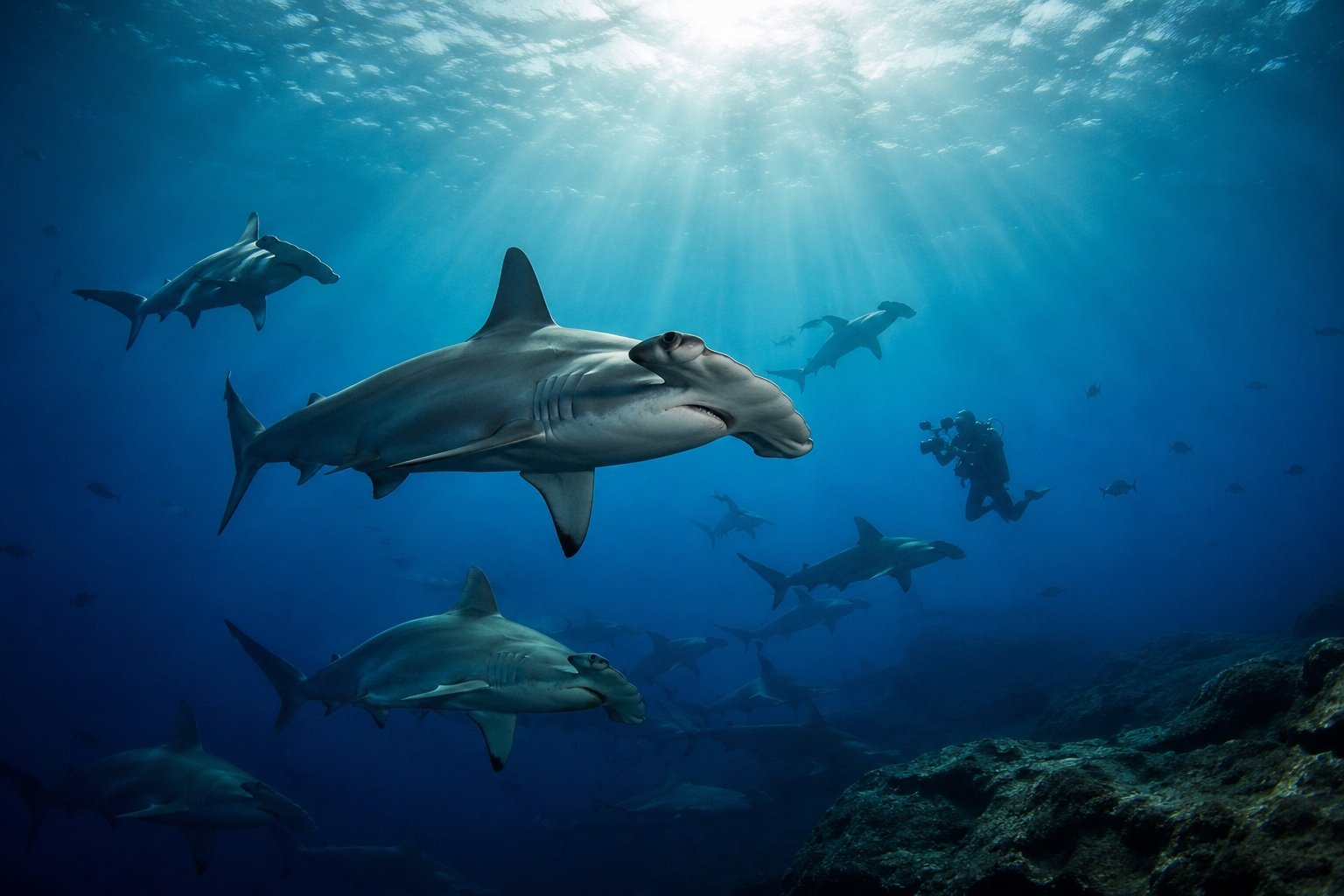
National Geographic's 2026 Sharkfest opens with Hammerhead Sharks Up Close With Bertie Gregory, a wildlife television event that uses spectacle to ask a harder question: what happens when one of the ocean's most recognisable predators becomes difficult to find?
What happened
The special is the opening title in the fourteenth year of Sharkfest, returning on 5 July, with Emmy and BAFTA-winning cinematographer and explorer Bertie Gregory travelling into Mexico's Pacific waters to search for hammerheads and examine how protected seas can help. PEOPLE framed the new season as a month of shark programming built around science and conservation. TV Insider added a sharper production detail: Gregory and his crew spent weeks looking for hammerheads in the Baja Peninsula, an area once described as a stronghold for the species, and had to work hard before seeing one.
Why it matters
That difficulty is the point. Nature programming often relies on the illusion that the camera can always find the animal, condensing weeks into a sequence that feels inevitable. The search for hammerheads pushes against that illusion. If the crew has to wait, adapt and move carefully, the absence itself becomes part of the reporting, and evidence of the changed conditions the film is trying to explain.
The hammerhead is a useful subject because it sits at the crossroads of fear, fascination and vulnerability. Its silhouette is instantly readable even to viewers who could not name individual shark species, and shark television has historically leaned on danger and attack. The Sharkfest opener appears to take the opposite route, using the animal's mystery to discuss population decline, protected waters and the need for patient field science.
The bigger picture
The most interesting editorial choice is the focus on marine sanctuaries. Conservation television can drift into vague optimism, offering beauty as if beauty alone will solve the problem. A stronger approach shows the mechanism: protected waters can reduce pressure, create safer routes and allow threatened species to recover where human activity is managed. Viewers do not need a policy lecture, but they do need the image of the shark connected to the systems that make future sightings possible.
Distribution complicates the mission. A single special can air on National Geographic and then move through Disney+ and Hulu, while further programmes run across Nat Geo WILD, Nat Geo Mundo and other channels. That gives the subject reach, but it also places conservation storytelling inside the same attention economy as celebrity news, live sport and franchise releases. The hammerhead has to compete for attention before it can inspire concern.
What happens next
If Sharkfest 2026 succeeds, it will not be because it makes hammerheads look exotic for an hour. It will be because it uses the search for them to make scarcity visible. The image of a hammerhead moving through blue water is powerful, but the more durable question is whether future crews, scientists and viewers will still be able to find that image in the wild.
Sources: reporting by TV Insider.
The NE Times is an independent news and analysis publisher. Our articles combine factual reporting with clearly-written, impartial analysis. Content is for general information and does not constitute professional advice. Disclaimer.
You may also like to read

Swift and Kelce Marry at Madison Square Garden — and Redraw the Map of Celebrity News
Taylor Swift and Travis Kelce's Madison Square Garden wedding, officiated by Adam Sandler, shows how pop, sport and fandom now share one attention economy.
Backrooms Goes Home: The Viral Horror Hit Faces Its Streaming Audit
A24's $81.5m internet-born horror phenomenon arrives on premium VOD on 7 July — the next test of whether viral fandom can outlast the opening weekend.

Minions Edge Toy Story in a July Fourth Weekend That Reveals the Market's New Rules
Minions & Monsters topped the US chart with $36.4m over Toy Story 5's $31m — a win with caveats in a tighter, more international summer box office.

Why Seth Rogen and Olivia Wilde Shouting at Each Other Is Good News for Grown-Up Comedy
Ahead of The Invite's 10 July expansion, Rogen and Wilde's combative screen chemistry makes the case for the endangered adult chamber comedy.