Spotify and Universal strike landmark deal to let fans build licensed AI covers
The streaming giant will let paying subscribers create AI covers and remixes of opted-in songs, with Universal artists sharing in a new revenue stream built on consent, credit and compensation.
Sophie Bennett
Writer ·
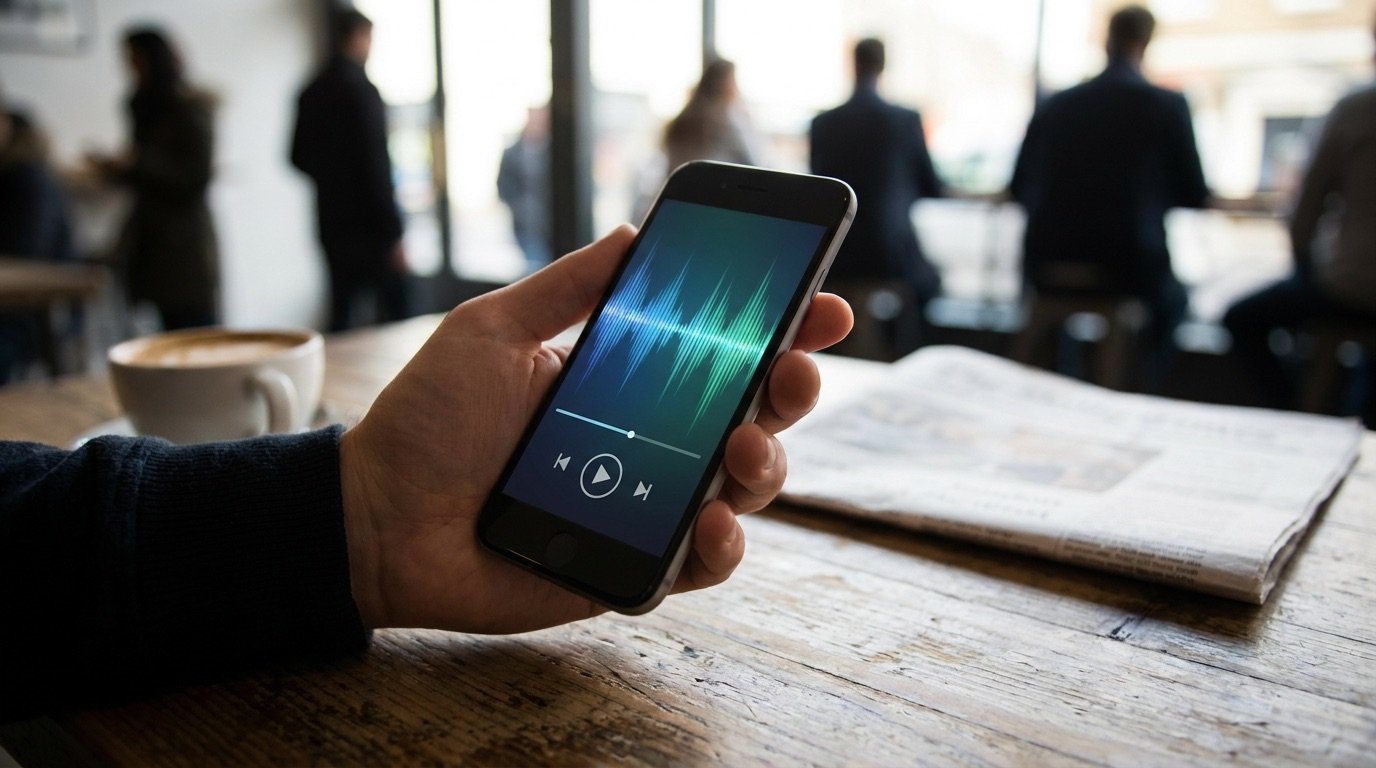
Spotify and Universal Music Group have agreed a set of licensing deals that will, for the first time, allow the platform's subscribers to generate AI-made covers and remixes of songs directly inside the app. Announced at Spotify's investor day on 21 May, the partnership marks a notable shift for a company that has until now kept fan-generated AI content at arm's length.
The feature will arrive as a paid add-on for Premium subscribers, with a rollout expected over the summer. Crucially, only the work of artists and songwriters who choose to take part will be eligible, and those participants will share directly in the revenue the tool generates.
For an industry that has spent the better part of three years wrestling with the implications of generative audio, the agreement is being read as a watershed: the moment two of the most powerful players in recorded music decided to bring fan-driven AI creativity inside a controlled, licensed environment rather than fight it in the courts or ignore it on the margins.
Built around consent and compensation
Both companies have framed the agreements, which cover recorded music and publishing, around three principles: consent, credit and compensation. Rights holders decide whether their catalogue can be fed into the remix system, an attempt to head off the disputes that have dogged generative music tools elsewhere in the industry.
The opt-in model is the deal's most consequential design choice. By making participation a deliberate decision for labels, artists and songwriters, the two companies are attempting to draw a clear line between licensed, sanctioned creativity and the unlicensed AI imitations that have circulated widely online. The most notorious example remains the viral 2023 track that cloned the voices of two major artists without permission, a moment that crystallised the industry's anxieties about synthetic vocals.
“Solving hard problems for music is what Spotify does.”
— Alex Norstrom, co-president and co-CEO, Spotify
Universal chairman and chief executive Sir Lucian Grainge described the initiative as firmly artist-centric and rooted in responsible AI. For the labels, the deal represents an effort to monetise a technology they have spent the past two years trying to contain, turning a perceived threat into a licensed product line.
What subscribers will actually be able to do
While the finer details of the toolset are still being finalised ahead of launch, the companies have outlined the broad shape of the experience. Premium subscribers who pay for the add-on will be able to reimagine eligible tracks in new ways, with safeguards baked in to keep the output within the bounds of what rights holders have agreed to.
- Creating AI-assisted covers and remixes of songs from artists who have opted in to the programme
- Generating reworkings only from catalogue that rights holders have explicitly cleared
- Accessing the feature through a paid add-on layered on top of an existing Premium subscription
- Built-in attribution so original writers and performers are credited on derivative creations
- A revenue-share mechanism that routes payments back to participating artists and songwriters
The emphasis throughout is on guardrails. Rather than an open-ended generator capable of producing anything, the system is designed as a walled garden in which every input has been licensed and every output is traceable, a deliberate contrast to the free-for-all that has characterised much of the consumer AI music landscape.
Background: an industry on the defensive
The deal lands against a backdrop of mounting tension between the recorded-music business and the AI sector. Major labels have pursued legal action against generative music start-ups they accuse of training on copyrighted recordings without permission, while simultaneously seeking commercial frameworks that would let them participate in the technology on their own terms.
Spotify, for its part, has trodden carefully. The platform has removed tens of thousands of tracks it identified as spam or AI-generated noise designed to game royalty payouts, and has publicly committed to combating impersonation and content that misleads listeners. Striking a licensed, opt-in deal with the world's largest music company allows it to embrace fan creativity while distancing itself from the unlicensed flood.
“The principle has to be that artists choose to take part, and that they are paid when their work is used.”
— A senior music industry executive
What happens next
Much will hinge on take-up. The model only works at scale if a critical mass of artists and songwriters opt in, and if subscribers see enough value to pay for an add-on on top of their existing Premium fee. Industry observers will be watching closely to see whether other major labels and independents follow Universal's lead, and whether rival platforms strike comparable arrangements.
If the rollout succeeds, it could establish a template for how licensed generative music is monetised across the sector, transforming a source of legal jeopardy into a recurring revenue line. If it stumbles, it will reinforce the doubts of those who argue that fans want to listen to music, not remake it. Either way, the summer launch will be one of the most closely scrutinised experiments the streaming era has yet produced.
Sources: reporting by Variety.
The NE Times is an independent news and analysis publisher. Our articles combine factual reporting with clearly-written, impartial analysis. Content is for general information and does not constitute professional advice. Disclaimer.
You may also like to read
Streaming calendar crowds as films, series, music and games fight for the same week
A packed release slate shows how entertainment platforms increasingly compete across categories, with viewers asked to treat one week as a full media menu.

Spotify to hold concert tickets for superfans in new Live Nation tie-up
A multi-year partnership will reserve a pair of tickets for an artist's most dedicated Premium listeners before general sale, using streaming data to identify genuine fans rather than touts and bots.
UK studio plans face a new rival: AI data centres
As the streaming boom cools, some UK property developers are reportedly reassessing film and TV studio projects in favour of data-centre demand.
Backrooms Goes Home: The Viral Horror Hit Faces Its Streaming Audit
A24's $81.5m internet-born horror phenomenon arrives on premium VOD on 7 July — the next test of whether viral fandom can outlast the opening weekend.