Amber heat warning grips England as temperatures forecast to hit 38C in record-breaking June heatwave
The Met Office has extended an amber extreme heat warning across southern England and south-east Wales, with the existing June record almost certain to fall as a humid heat dome settles over the country.
Eleanor Whitfield
Writer ·
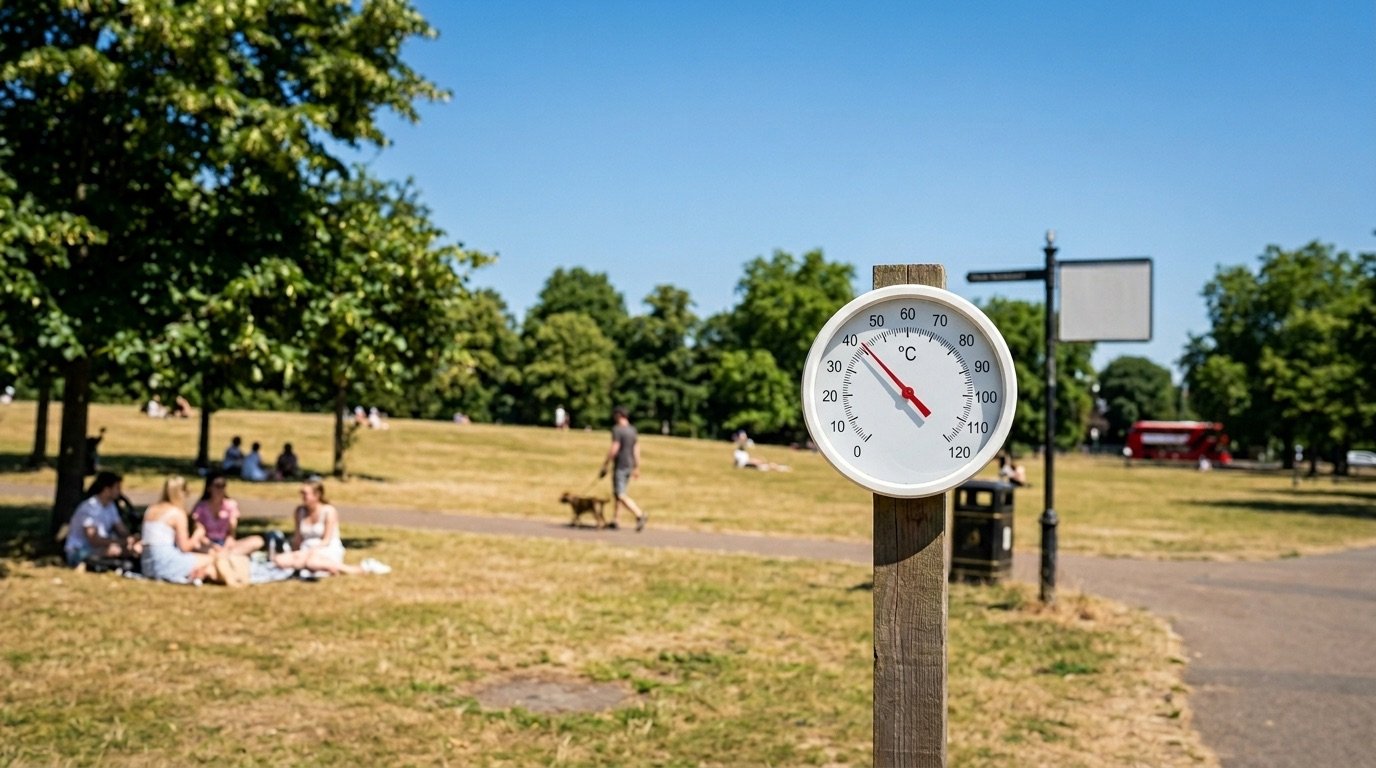
Britain is bracing for one of the most intense June heat events on record, with the Met Office extending an amber extreme heat warning across southern England and south-east Wales as temperatures are forecast to climb towards 38C by the middle of the week. Forecasters say the existing June temperature record of 35.6C, set in Southampton in 1976 and at Camden Square in 1957, is now almost certain to be broken.
The warning runs from Monday morning through to Thursday night, covering the most heavily populated parts of the country. Highs of 34C are expected on Monday, rising to 37C in southern England on Tuesday and peaking at 38C on Wednesday and Thursday before easing slightly to 33C in eastern areas on Friday.
What sets this heatwave apart, meteorologists say, is not just the daytime peak but the oppressive humidity and warm nights accompanying it, which together make the heat far harder for the body to shed.
A humid heat dome unlike 2022
A heat dome of high pressure has settled over much of the southern UK, drawing hot air northwards from continental Europe and trapping it in place. Unlike the dry, record-shattering July 2022 heatwave when temperatures first exceeded 40C in Britain, this episode is defined by exceptionally high moisture content in the air.
Dew points are forecast to reach around 22C on Wednesday and Thursday, a level that makes the air feel sticky and stifling. During the 2022 event, by contrast, dew points were only in single figures.
“The forecast heatwave is developing into an impactful severe weather event, with record-breaking June temperatures and very high humidity.”
Tropical nights bring no respite
Forecasters are warning of widespread tropical nights, defined as overnight temperatures that do not fall below 20C, across southern England and especially in urban areas where buildings and roads radiate stored heat after dark. The lack of cooling overnight is a particular concern for older people, young children and those with underlying health conditions.
The UK Health Security Agency has issued a series of yellow and amber heat health alerts, flagging the potential for increased pressure on health and social care services and a rise in heat-related illness and deaths among vulnerable groups.
Health and safety advice
Authorities are urging the public to take the heat seriously and to look out for neighbours and relatives who may be at risk. The combination of extreme daytime temperatures and warm nights places sustained strain on the body, particularly for those unable to cool down at home.
- Stay out of the sun during the hottest part of the day, between 11am and 3pm
- Drink plenty of water and avoid excess alcohol and caffeine
- Keep homes cool by closing curtains on sun-facing windows during the day
- Check on elderly, very young or unwell neighbours and relatives
- Never leave children or animals in parked vehicles
- If swimming to cool off, use lifeguarded beaches and enter water gradually
The RNLI has issued its own appeal as people head to coasts and rivers, warning that the shock of cold water on a hot day can be deadly even for strong swimmers.
Background
Heatwaves are becoming more frequent, more intense and longer-lasting as the climate warms, scientists say. The Met Office has repeatedly stressed that temperatures once considered exceptional are increasingly within the range of a typical British summer, and that human-driven climate change has made extreme heat events many times more likely.
June heatwaves carry particular risks because people and infrastructure are less acclimatised to high temperatures early in the season than they are in late summer, and because schools, transport networks and hospitals are operating at full capacity.
What happens next
Temperatures are expected to peak on Wednesday and Thursday before a gradual breakdown of the heat dome brings fresher air and the risk of thunderstorms by the weekend. Forecasters caution that the transition could be volatile, with intense downpours and lightning possible as the hot, humid air is displaced, and they urge the public to keep checking official Met Office warnings as the situation develops.
Sources: reporting by Met Office.
The NE Times is an independent news and analysis publisher. Our articles combine factual reporting with clearly-written, impartial analysis. Content is for general information and does not constitute professional advice. Disclaimer.
You may also like to read
Heat health alert issued as second heatwave builds across England
After a record-breaking May, forecasters warn of another surge of warm air pushing into southern Britain, with temperatures expected to climb into the low thirties before a sharp drop later in the week.
UK records hottest June day as heatwave intensifies
Britain has logged its hottest June day on record as a heatwave drives temperatures sharply higher and warnings are extended.
Amber heat-health alerts in force as temperatures push towards 30C across England
Health officials have issued amber alerts for much of England as a fresh heatwave brings temperatures of up to 30C, with fire services warning of wildfire risk and the chance of sudden thunderstorms.

Hospitals Keep Improvising Through Heatwaves — the Plan Has to Come First
Europe's latest extreme heat shows health systems built for an older climate cannot keep writing heatwave plans after the wards are already hot.