Opinion: On welfare and youth unemployment, Britain keeps asking the wrong question
The Lords debate on welfare and a generation locked out of work framed the choice as compassion versus cost. The real failure is a system that pays to keep people idle rather than helping them back to work.
Sophie Bennett
Writer ·
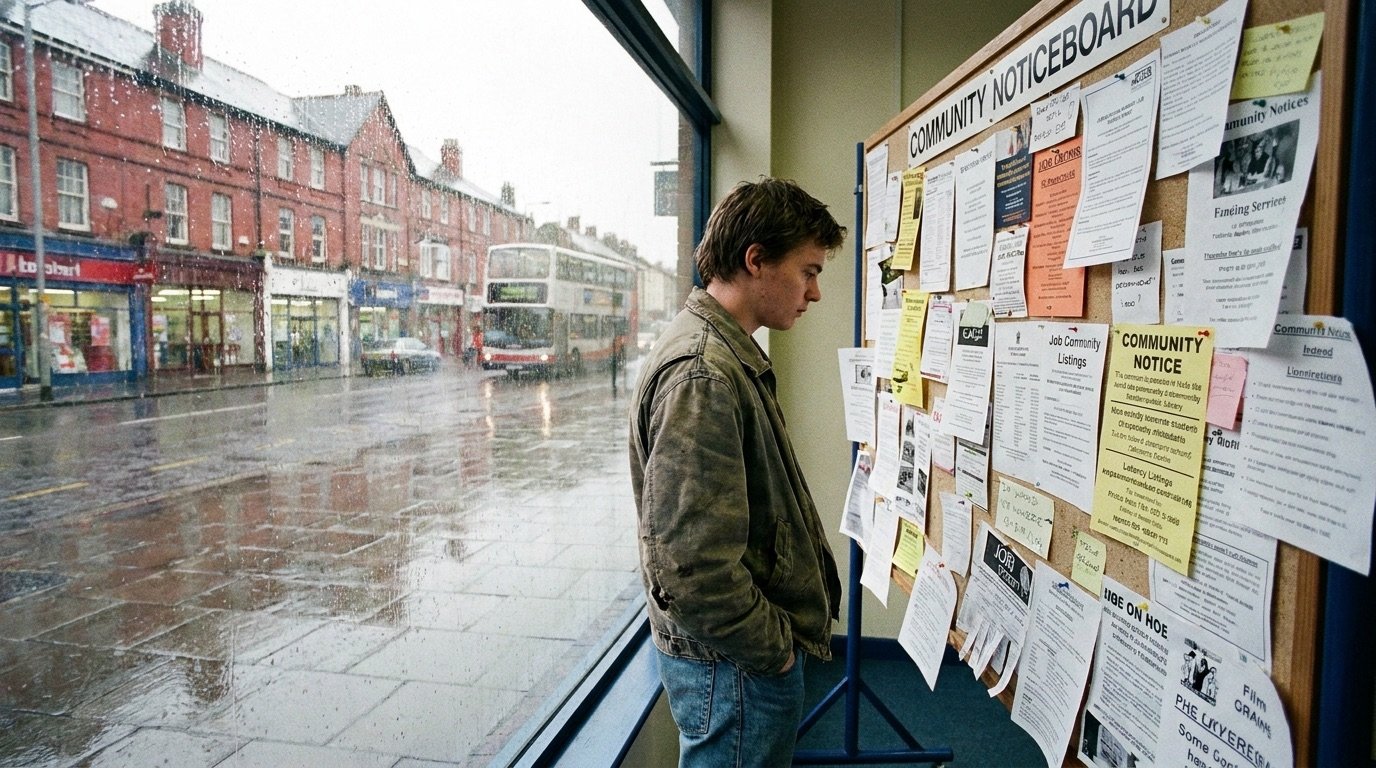
Last Thursday the House of Lords debated welfare reform and youth unemployment together, and the pairing was telling. For too long these have been treated as separate files: one a matter of cost control, the other a matter of opportunity. In truth they are two ends of the same broken pipe. A welfare system that struggles to move people into work and a labour market that struggles to absorb the young are not coincidental problems. They are symptoms of the same underlying dysfunction.
The numbers that frame the debate are sobering. Office for National Statistics figures show the number of people aged 16 to 64 who are economically inactive because of long-term sickness has risen to around 2.79 million, up from roughly 2.05 million in 2019. That is not a rounding error. It is three-quarters of a million additional people, in the space of a few years, drifting out of the workforce, and the bill for it now sits alongside every other claim on a stretched Treasury, defence, tax relief, the investment that might actually grow the economy.
Faced with this, our politics defaults to a tired binary: are you for the claimant or for the taxpayer? It is a false choice, and an expensive one.
The right's instinct is necessary but insufficient
Those who insist the welfare bill cannot keep rising are not wrong. A system in which long-term sickness claims climb by three-quarters of a million in half a decade is not sustainable, and pretending otherwise is its own form of unkindness, because the money runs out eventually and it is the most vulnerable who suffer when it does. There is nothing compassionate about a structurally unaffordable settlement.
But the standard reform playbook, tighten the criteria, sharpen the sanctions, reassess the caseload, treats the symptom and ignores the cause. You can make benefits harder to claim, but if the underlying reasons people are out of work, ill health, a lack of suitable jobs, the absence of retraining, go unaddressed, you simply move misery around rather than reducing it. Sanctions can shift someone off a statistic without moving them into a livelihood. That is not reform; it is bookkeeping.
The left's instinct is humane but incomplete
The opposing camp is right that the human cost of getting this wrong is severe, and that a benefits system exists precisely to protect people through illness, disability and the cruelties of the labour market. Anyone who has dealt with the system knows it can be punitive, baffling and slow, and that genuine ill health is real and rising. Defending a safety net is not the same as defending idleness.
Yet there is a complacency on this side too: a reluctance to admit that worklessness itself is corrosive, that long-term inactivity damages health, confidence and prospects, and that keeping someone on benefits indefinitely is not the same as helping them. Compassion that asks nothing and offers no route back can curdle into a soft form of writing people off. The most generous thing a system can do for most people is help them into the dignity and security of work.
- Around 2.79 million working-age people are now inactive due to long-term sickness, up from 2.05 million in 2019
- Every pound spent on a rising welfare bill is a pound unavailable for growth, defence or tax cuts
- Youth unemployment scars earnings and prospects for years after the first job is missed
- Health, skills and job availability are causes; benefit rolls are mostly an effect
“The most generous and the most fiscally responsible policy are, for once, the same thing: getting people who can work into work that exists.”
— Helen Carrick
Spend on the cause, not the symptom
The way out of the binary is to stop arguing about the size of the benefit and start arguing about what we do upstream. That means treating the rise in long-term sickness as the health emergency it is, with proper investment in mental health services and occupational health, so that a treatable condition does not become a permanent exit from the workforce. It means employment support that is genuinely tailored rather than a box-ticking gateway to a payment. And it means tackling youth unemployment before it calcifies, because a young person who misses their first foothold pays for it in lower wages and worse prospects for years.
None of this is cheap, and that is the honest difficulty. Prevention always costs money now to save more later, and 'later' rarely fits the electoral cycle. But the arithmetic is unforgiving in the other direction too: the do-nothing option is a welfare bill that compounds while the workforce shrinks. The cheapest thing we can do over a decade is the thing that looks most expensive in a single budget.
So let us stop staging the same morality play. The claimant and the taxpayer are not opponents; very often they are the same person at different stages of a life. A serious welfare policy would be judged not by how much it spends or how much it saves, but by how many people it moves from dependence into work that suits them. On that measure, both the slogans we are offered fall short. The Lords were right to debate these two problems together. Now the rest of our politics needs to catch up and treat them as one.
Sources: reporting by UK Parliament.
The NE Times is an independent news and analysis publisher. Our articles combine factual reporting with clearly-written, impartial analysis. Content is for general information and does not constitute professional advice. Disclaimer.
You may also like to read

US imposes new sanctions on Cuban companies amid economic strain
Washington targets firms it describes as important to the island's struggling economy, adding pressure to Havana amid shortages and migration concerns.

Asylum support shifts from legal duty to ministerial discretion
From June, the Home Office no longer has a binding duty to support destitute asylum seekers, replacing it with a discretionary power and the ability to suspend payments for unauthorised work.

Bank of England poised to hold rates at 3.75% as Middle East crisis stokes inflation fears
The Bank of England's Monetary Policy Committee is widely expected to keep interest rates at 3.75% on 18 June, with energy-driven inflation risks dividing the panel and dampening hopes of cuts later this year.

Reform UK shifts stance on two-child benefit cap as welfare battle intensifies
Nigel Farage's party has reversed course on the two-child benefit limit, sharpening the contest with Labour over welfare policy.