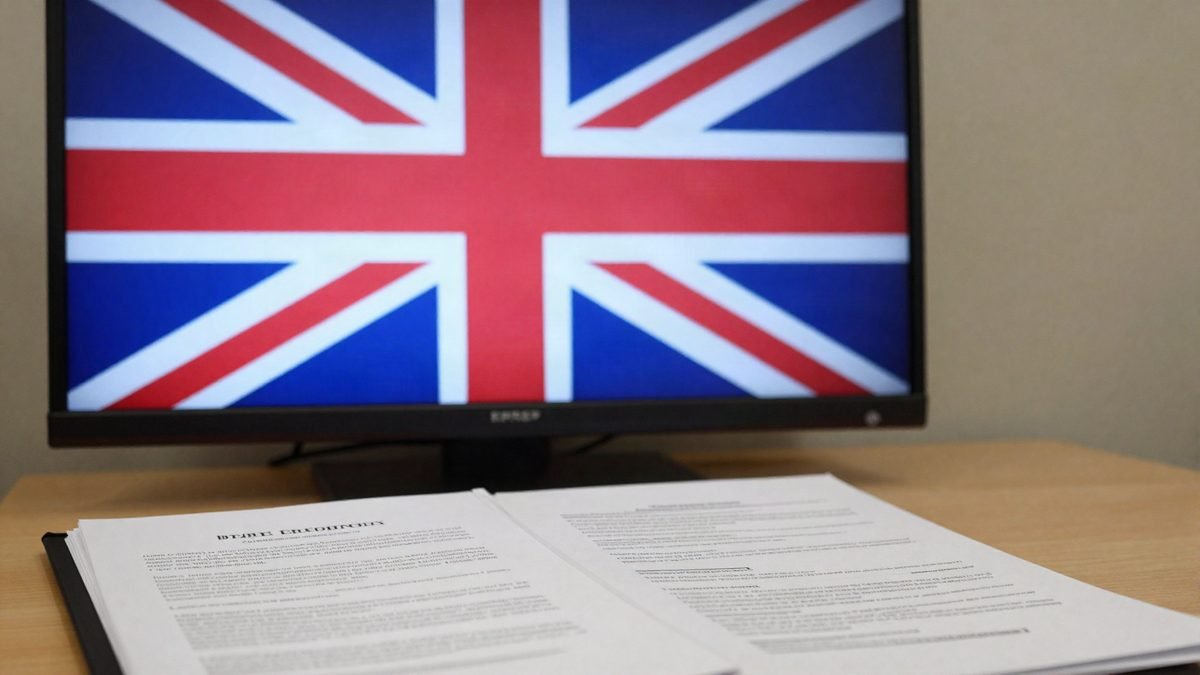
BBC Charter Review: The Fight Over the Corporation's Future and the Licence Fee
The review of the BBC's Royal Charter reopens the question of how the corporation is funded and governed. Here is what is at stake for the licence fee, impartiality and public broadcasting.
UK News & Politics Editor ·

Why it's trending
The BBC is a national institution whose funding and future are periodically reopened during Charter reviews. Decisions on the licence fee, governance and remit shape the media landscape and touch every household that watches television.
A once-in-a-decade decision
The BBC operates under a Royal Charter that is reviewed roughly once a decade, and each review reopens fundamental questions about how the corporation is funded, governed and held to account. The current process arrives at a moment of upheaval in how people consume media, making the stakes especially high.
Charter reviews are among the most consequential decisions in media policy. They shape not only the BBC but the wider ecosystem, because the corporation's scale and funding model affect commercial broadcasters, independent producers and the market for talent and content.
The licence fee under pressure
The licence fee, a flat charge on households that watch or stream live television, is increasingly contested. Critics argue it is regressive, hard to justify in an age of streaming, and difficult to enforce. Defenders say it guarantees the BBC's independence and universality in a way that advertising or subscription could not.
Alternatives, from subscription models to funding through general taxation or a reformed household levy, each carry trade-offs. Subscription could undermine universality; taxation could threaten independence. There is no option without drawbacks, which is why the debate is so difficult to resolve.
Impartiality and trust
Alongside funding, the review will examine the BBC's remit and its commitment to impartiality. Trust in the corporation's neutrality is central to its legitimacy, and accusations of bias, from across the political spectrum, are a recurring theme. How the Charter addresses accountability for impartiality is politically sensitive.
The BBC's challenge is that in a polarised environment, genuine impartiality can satisfy no one, with critics on each side convinced it favours the other. Designing governance that upholds standards while protecting the corporation from political pressure is a perennial puzzle.
Competition in a streaming world
The media landscape has been transformed by global streaming services with vast budgets. The BBC must justify its role in this environment, arguing that public service broadcasting provides things the market will not: universal access, distinctive British content, trusted news and support for the wider creative economy.
Critics question whether a large publicly funded broadcaster is still needed when audiences have endless choice. Supporters respond that market abundance does not guarantee quality, plurality or reliable news, and that these public goods are precisely what the BBC exists to provide.
Governance and independence
How the BBC is governed, and how its leaders are appointed, affects its independence. Reviews often examine the balance between accountability to the public and insulation from political interference. Getting this wrong in either direction, too little accountability or too much political control, damages the institution.
The appointment of senior figures and the structure of oversight bodies are therefore closely watched. They determine whether the BBC can hold power to account without fear, which is the essence of its public purpose.
The value of universal public broadcasting
Defenders of the BBC argue that its greatest value lies in universality: everyone contributes and everyone can access its services, from news to education to entertainment. This universality supports social cohesion, provides trusted information available to all regardless of income, and sustains content that a purely commercial market might not produce, such as local news or programming for minority audiences.
Critics question whether this model can survive in an era of abundant choice, when many people, particularly the young, consume media through global streaming platforms. The Charter review must weigh the enduring case for universal public broadcasting against the reality of changing habits, and decide whether the institution can adapt without losing what makes it distinctive.
Independence in a polarised age
The BBC's independence from government is fundamental to its role, yet it is perpetually contested. Because it is funded through a public charge and operates under a Charter granted by government, it is inevitably exposed to political pressure. Protecting its editorial independence while ensuring genuine accountability is a balance that every Charter review must strike anew.
In a polarised environment, accusations of bias come from all directions, and the BBC's insistence on impartiality can satisfy neither side. Yet that commitment to reporting without fear or favour is precisely what distinguishes public service journalism from partisan media. How the review safeguards this independence will shape not only the BBC's future but the wider health of trusted information in Britain.
What to watch next
The key decisions concern the future of the licence fee, the length and terms of the new Charter, and how impartiality and governance are handled. Evidence sessions with ministers and BBC leadership will signal the direction of travel.
Whatever is decided will shape British media for years. The core question, how a country sustains trusted, universal public broadcasting in a fragmented commercial age, has no easy answer, but the Charter review is where it must be confronted.
Sources & verification
- UK Government - BBC Charter Review documents
- Culture, Media and Sport Committee - BBC Charter evidence, 2026
- Ofcom - public service media reports
Filed under Politics · Written by Eleanor Whitfield