Big Brother UK 2026: Housemates, Evictions & the Diary Room
The original · Why the house that started it all still matters
Culture & Features Editor ·
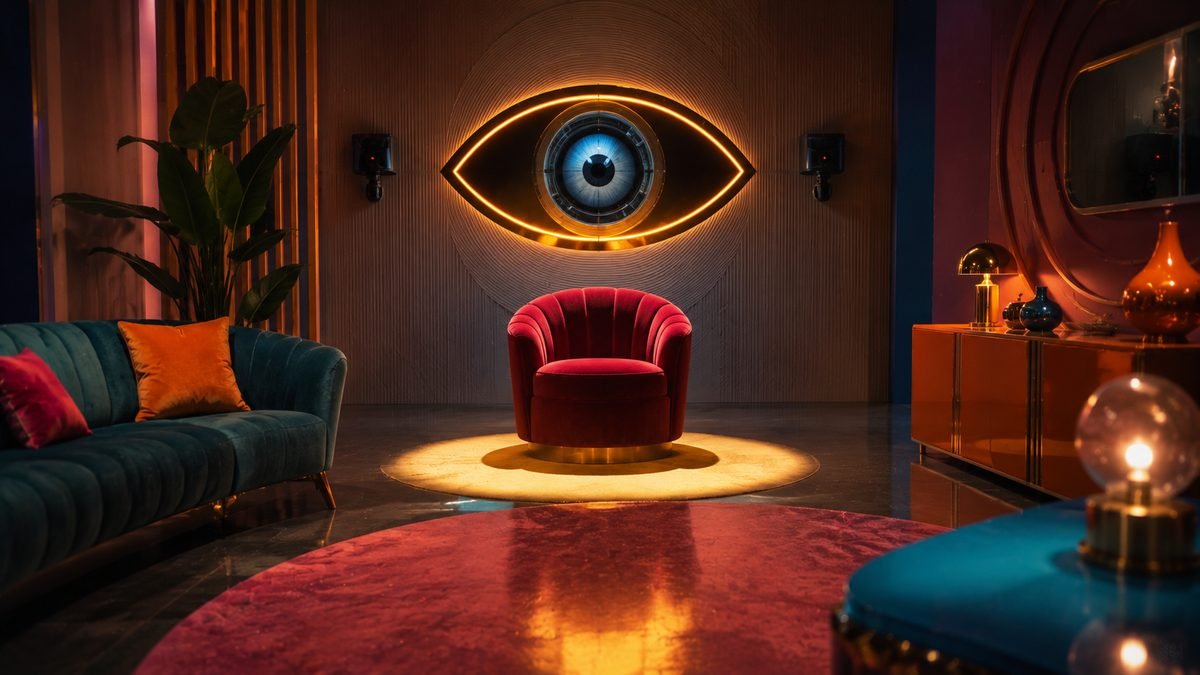
Before the villas, before the pods, before the castles and the mountains, there was a house. Big Brother did not just launch a show; it launched a genre, and its continuing ITV2 revival gives a new generation the chance to experience the format that invented modern reality television. As a fresh set of housemates prepares for surveillance, tasks and evictions, it is worth remembering exactly what makes the original still worth watching.
The premise remains as elegantly stark as ever. A group of strangers move into a purpose-built house, cut off from the outside world, with cameras watching their every move around the clock. They cannot leave. They cannot access news, phones or the internet. They complete tasks set by the unseen "Big Brother," they nominate one another for eviction, and the public votes on who leaves. Week by week, the house empties until a winner remains. There is no skill to demonstrate, no mountain to climb, no romance required. The entire show is simply people, watched.
That purity is the point. Big Brother is a social experiment before it is an entertainment format, and its genius lies in what isolation and surveillance do to ordinary human behaviour. Strip away privacy and the outside world, confine a diverse group of strangers together indefinitely, and personalities amplify. Alliances form and collapse. Petty grievances metastasise into full-blown feuds. Genuine friendships blossom under conditions no normal friendship would survive. The house functions as a pressure cooker, and the results are consistently, uncomfortably fascinating.
The Diary Room deserves its iconic status. By giving housemates a private space to confess, vent, scheme and unravel directly to camera, the format created one of reality television's most enduring devices — a confessional that lets viewers inside a contestant's head. It is where strategy is revealed, where facades slip, and where the gap between how someone behaves in the house and how they truly feel becomes visible. Nearly every reality show since has borrowed some version of it.
Then there is the nominations mechanic, which remains a masterpiece of social engineering. By requiring housemates to select one another for eviction, the format forces them into acts of quiet betrayal, week after week. Everyone must choose; everyone must then live alongside the people they chose. The paranoia this generates — the wondering, the second-guessing, the strategic friendliness — is the engine of the entire show, and it prefigured the trust-and-betrayal formats that dominate the genre today.
The public vote, meanwhile, hands the ultimate power to the audience, making viewers active participants rather than passive observers. That relationship between house and country is central to the Big Brother experience: housemates play not only to each other but to an audience they cannot see, and the fascinating gap between how a person thinks they are being perceived and how they actually are is where much of the drama lives.
Its cultural importance is difficult to overstate. Big Brother introduced the language and grammar of modern reality television — the confessional, the eviction, the live-feed intimacy, the transformation of ordinary people into overnight national figures. Virtually every format that followed, from the villas to the castles, owes it a debt. Watching the show now is, in part, an exercise in seeing the original blueprint from which an entire industry was drawn.
The ITV2 revival's task is to honour that legacy while speaking to a contemporary audience — one raised on social media, and therefore far more fluent in self-presentation than the housemates of the show's early years. That shift is genuinely interesting. Today's contestants arrive knowing exactly how reality edits work, how clips travel, and how personas are built. The modern Big Brother is therefore a subtler game: not just surviving surveillance, but performing under it, and knowing that everyone else is performing too. Whether authenticity can survive that awareness is one of the most compelling questions the revived show asks.
What has not changed is the fundamental appeal. There remains something irresistible about watching real people, stripped of distraction and privacy, simply exist together — the boredom, the bickering, the tasks, the tenderness. In a genre now crowded with elaborate concepts and lavish locations, Big Brother's stripped-back format feels almost radical: no gimmick, just a house, a group of strangers, and the cameras.
For the new run, expect exactly that: housemates settling in, alliances forming, tasks testing the group, nominations sowing paranoia, and the public passing judgement week by week. Some will be loved, some loathed; someone will crack, someone will surprise everyone, and someone will walk out with the prize and a wholly changed life. The house that started it all is open again, the cameras are rolling, and Big Brother, as ever, is watching. Twenty-odd years on, so are we.
Filed under Reality TV · Written by Sophie Bennett