David Hockney, towering figure of British art, dies aged 88
The painter behind A Bigger Splash and a pioneer of digital art died peacefully at his home, weeks before his 89th birthday.
Sophie Bennett
Writer ·
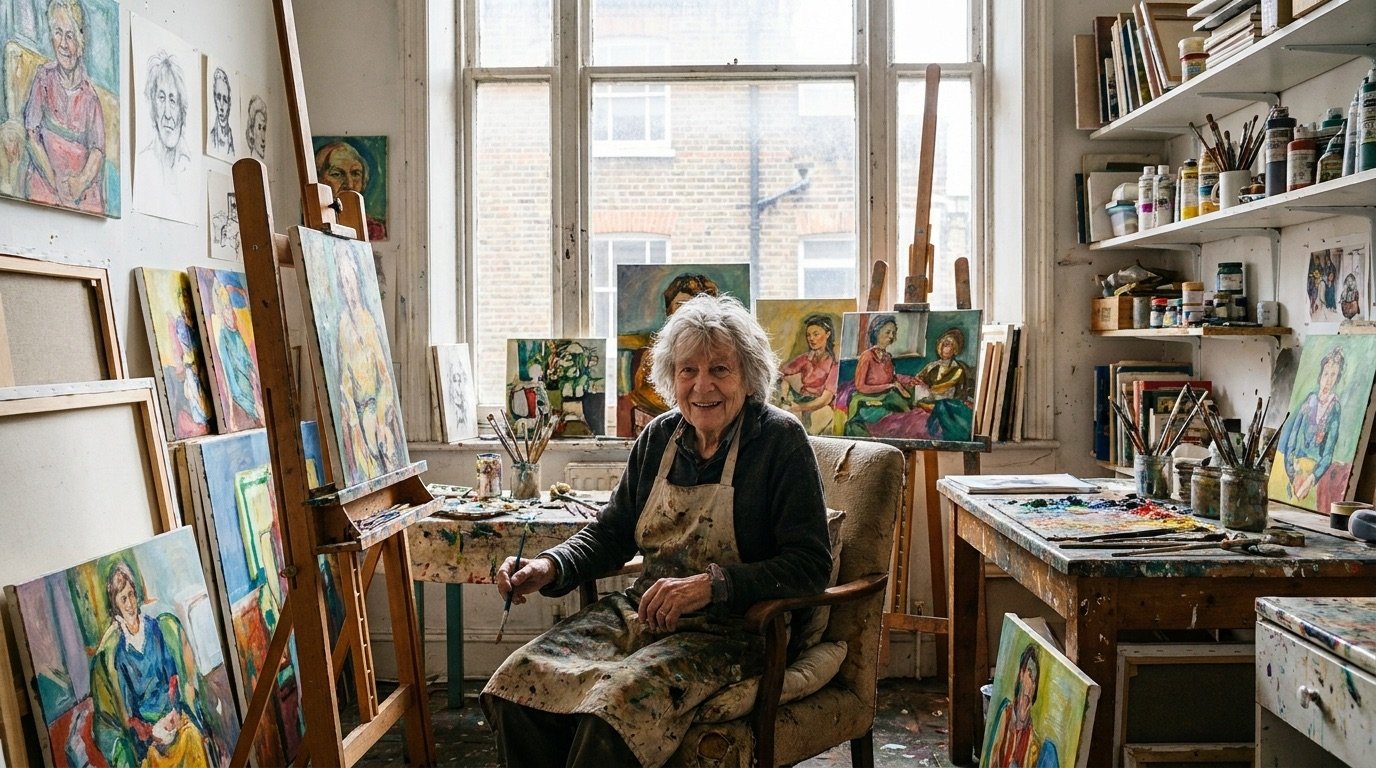
David Hockney, one of the most celebrated and instantly recognisable artists Britain has produced, has died at the age of 88. His representatives confirmed that he passed away peacefully at his home on 11 June, just a month short of his 89th birthday.
Born in Bradford in 1937, Hockney rose to prominence in the 1960s and went on to become a defining presence in contemporary art across two centuries. His sun-drenched depictions of Los Angeles, most famously the 1967 work A Bigger Splash, came to symbolise an entire era and remain among the most reproduced images in modern painting.
News of his death prompted an immediate outpouring of tributes from galleries, fellow artists, collectors and members of the public, many of whom had encountered his work through blockbuster exhibitions that routinely drew record crowds. For a figure who remained prolific well into his eighties, the loss was felt as the closing of a chapter that had run, with extraordinary energy, from post-war Britain to the smartphone age.
From Bradford to the world stage
Hockney studied at the Bradford College of Art before winning a place at the Royal College of Art in London, where his precocious talent and irrepressible personality quickly set him apart. He emerged as a leading light of a generation that would reshape British art, and by his mid-twenties he was already attracting serious critical attention.
It was his move to California, however, that produced the images for which he is best known. Captivated by the light, the architecture and the swimming pools of Los Angeles, he produced a body of work in the 1960s that fused crisp modernist composition with a luminous, almost hypnotic stillness. A Bigger Splash, with its frozen plume of water and empty diving board, distilled that vision into a single unforgettable image.
Beyond the pool paintings, his portraits of friends, lovers and family members became some of the most psychologically acute works of their time, while his Yorkshire landscapes, painted after he returned to live in his native county, demonstrated a continuing appetite for fresh subjects and new ways of seeing.
A restless innovator
Throughout his career Hockney refused to stand still. He experimented with photographic collage in the 1980s, embraced fax machines and early computer graphics, and later became one of the first major artists to treat the iPhone and iPad as serious creative tools, producing vivid digital landscapes that were exhibited around the world.
His enthusiasm for new technology was never a gimmick. He argued repeatedly that artists had always seized on whatever tools their age offered, and he saw the tablet screen as simply the latest instrument for capturing the way light falls across a landscape. Major institutions mounted exhibitions devoted entirely to his digital output, lending the medium a credibility it had not previously enjoyed.
His distinctive milestones across the decades included a number of landmark works and ideas:
- A Bigger Splash (1967), the Los Angeles pool painting that became one of the defining images of modern art
- Photographic 'joiners' in the 1980s, composite images built from many individual Polaroids
- The vast Yorkshire landscapes that marked his return to England
- iPad and iPhone drawings exhibited internationally from the 2010s
- His influential book Secret Knowledge, which explored how old masters may have used optical aids
A life lived openly
Openly gay at a time when homosexuality was still criminalised in Britain, he wove same-sex relationships and personal themes into his work, helping to shift attitudes both within the art world and far beyond it. His candour, expressed without slogans or confrontation, made his art quietly radical.
Friends and collaborators frequently described a man of relentless curiosity and warmth, as comfortable holding forth on colour theory as on music or the weather. He continued to work daily long after most of his contemporaries had slowed, regarding painting less as a profession than as a way of paying attention to the world.
“He looked at the world with more delight and more intensity than almost anyone, and he never stopped wanting to share what he saw.”
— A representative of the art world paying tribute
Background and legacy
Hockney's commercial and critical standing grew steadily over six decades, and in his later years his auction prices reached levels few living artists had ever commanded. Yet he remained, to many admirers, an approachable figure whose images felt generous rather than rarefied, easy to love even for those with little interest in the contemporary art market.
His influence extends across painting, photography, printmaking, stage design and digital media, and his work is held in major public collections around the world. Several commentators reaching for comparison described him as a Picasso of our times, a nod both to his restless reinvention and to his sheer productivity.
What happens next
No cause of death was disclosed. Galleries and institutions that hold his work are expected to mount retrospective tributes in the coming months, and his estate will oversee an enormous archive spanning paintings, prints, photographs and digital files. For a public that grew up with his images, the immediate response has been one of gratitude as much as grief, a recognition that few artists have given so many people so much pleasure across so long a life.
Sources: reporting by NBC News.
The NE Times is an independent news and analysis publisher. Our articles combine factual reporting with clearly-written, impartial analysis. Content is for general information and does not constitute professional advice. Disclaimer.
You may also like to read
Gene Shalit, the Today show's pun-loving film critic, dies at 100
Known for his bushy moustache and wordplay, the broadcaster spent nearly four decades reviewing films and books on American breakfast television.
Buffy and Ted Lasso star Anthony Head dies at 72
The British actor, beloved as Rupert Giles, died of complications from pneumonia, prompting emotional tributes from his former co-stars.

Prince Harry sends surprise message during Trooping the Colour
As the royal family gathered at Buckingham Palace, the Duke of Sussex addressed crowds at the Invictus Games festival in Germany.

Emmy voting opens as Pluribus and The Pitt eye nominations
Television Academy members have begun casting nominating ballots ahead of the 78th Primetime Emmy Awards in September.