EU leaders gather in Brussels for summit on Ukraine accession and 2028-34 budget
European Council President Antonio Costa has set a packed agenda for the 18-19 June summit, with the opening of accession chapters for Ukraine and Moldova, the next long-term budget and the Middle East all on the table.
Marcus Reeve
Writer ·
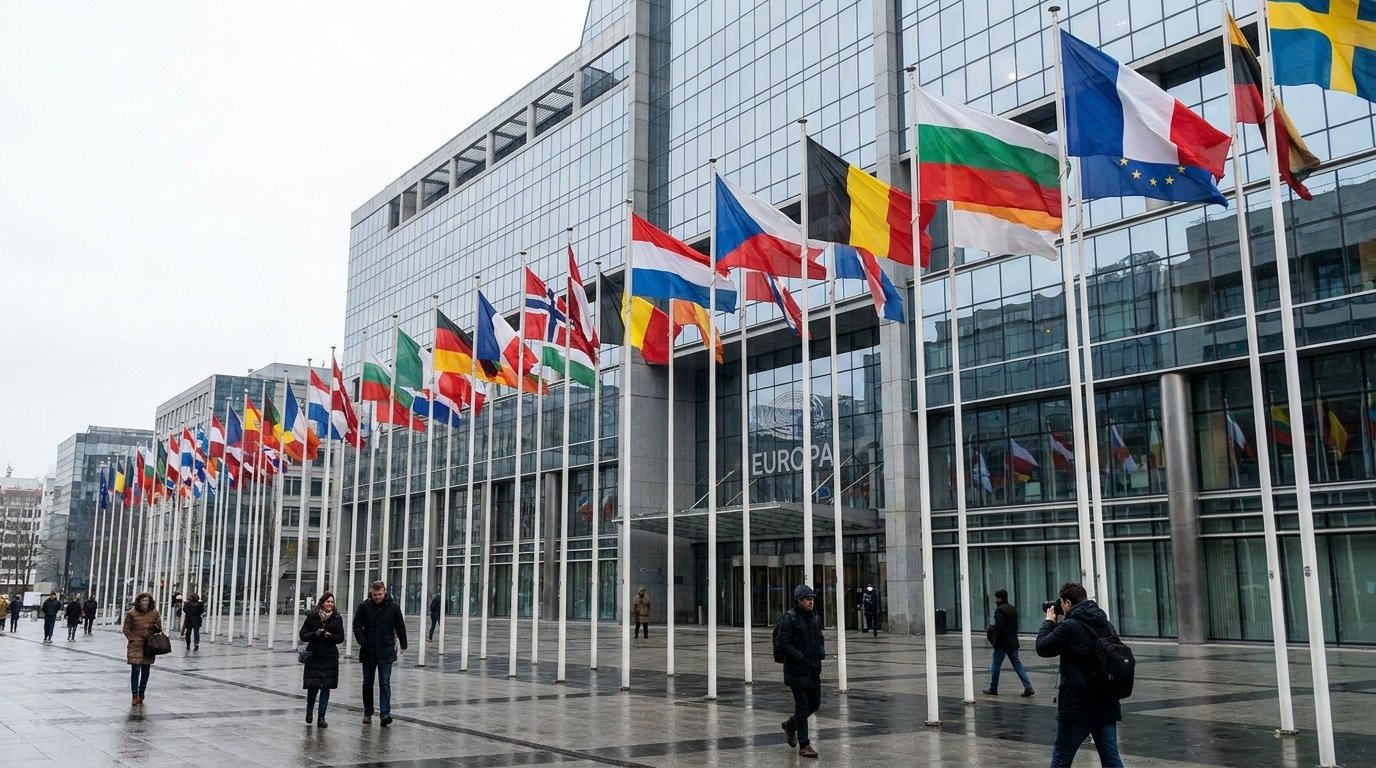
European Union leaders will convene in Brussels on 18 and 19 June for a two-day summit that ranges across some of the bloc's most consequential decisions, from the enlargement process to the shape of its next long-term budget. In his invitation letter, European Council President Antonio Costa framed the meeting as taking place against a challenging geopolitical backdrop, with the war in Ukraine and instability in the Middle East looming over the discussions.
The summit is scheduled to begin on the Thursday evening and conclude after lunch on the Friday. As has become customary, leaders are expected to hear directly from Ukrainian President Volodymyr Zelenskyy on the latest battlefield and diplomatic developments before turning to the bloc's own decisions.
Enlargement back in the spotlight
One of the headline items is the prospect of opening the first cluster of chapters in accession negotiations with Ukraine and Moldova, a step Costa has described as an important milestone on their European path. After years in which enlargement drifted, the process has regained momentum, with renewed attention also paid to the Western Balkans.
Opening a cluster of chapters is a technical but symbolically heavy moment, signalling that candidate countries are moving from aspiration to detailed negotiation across policy areas. For Kyiv and Chisinau, both navigating war and pressure on their borders, it carries political weight well beyond Brussels.
“Ukraine remains high on the agenda of the European Council, and we will start by hearing from President Zelenskyy.”
— Antonio Costa, President of the European Council
The money question: 2028-2034
Alongside enlargement, leaders will grapple with the EU's Multiannual Financial Framework for 2028 to 2034, the bloc's next seven-year budget. The negotiations are among the most contentious the EU undertakes, pitting net contributors against beneficiaries and forcing trade-offs between defence, competitiveness, cohesion and support for Ukraine.
The budget debate is intertwined with a broader push on competitiveness. Leaders are due to review progress on what Brussels has branded a 'One Europe, One Market' agenda, a set of measures and timelines intended to deepen the single market across several priority areas and respond to concerns that Europe is falling behind global rivals.
- Opening the first cluster of accession chapters with Ukraine and Moldova
- Negotiations on the 2028-2034 Multiannual Financial Framework
- Competitiveness and the 'One Europe, One Market' agenda
- The situation in the Middle East and support for Ukraine
- Migration and the fight against illicit drugs
Security, migration and the wider agenda
The summit agenda also covers migration and a coordinated response to illicit drugs, perennial concerns for member states and a recurring source of political tension domestically. The Middle East features too, with leaders expected to weigh the EU's posture amid the fragile diplomacy unfolding in the region.
Running through all of it is the question of how a bloc of 27, soon potentially more, organises itself for an era of strategic competition. Decisions on money, enlargement and the single market are, in effect, decisions about how ambitious the EU intends to be over the coming decade.
Background
European Council summits bring together the heads of state and government of EU members to set the bloc's broad political direction. Antonio Costa, the former Portuguese prime minister, chairs the meetings as European Council President. Ukraine and Moldova were granted candidate status in 2022, and their progress toward membership has become a defining feature of the EU's response to Russia's full-scale invasion.
Separately, the United Kingdom and the EU have agreed to hold their own summit on 22 July, as London seeks closer cooperation on trade, security and the economy, underlining how questions of European alignment extend beyond the bloc's borders.
The bloc has also been deepening ties further afield. At a recent summit in Brussels, the EU and South Korea advanced their strategic partnership, launching a competitiveness partnership and signing a digital trade agreement, a reminder that much of the EU's diplomatic energy is now directed at building resilience through external partnerships as much as internal reform.
What it means
If leaders deliver on enlargement, the summit could mark a genuine turning point for Ukraine and Moldova's membership bids. But the budget talks are likely to be harder and slower, and few expect them to be settled in a single sitting. The meeting is best read as a staging post: a moment to lock in direction on enlargement and competitiveness while the more difficult arithmetic of the next budget plays out over the months ahead.
For ordinary citizens, the abstractions of accession chapters and multiannual frameworks translate into concrete questions about security, jobs and the cost of living. How leaders balance the demands of supporting Ukraine, financing competitiveness and managing migration will shape not just the summit's communique but the political mood across the continent in the months to come.
Sources: reporting by Consilium (European Council).
The NE Times is an independent news and analysis publisher. Our articles combine factual reporting with clearly-written, impartial analysis. Content is for general information and does not constitute professional advice. Disclaimer.
You may also like to read

Moldova's Prime Minister Resignation Tests a Pro-Western Government
Dorin Recean's resignation triggers a government reset that lands at the intersection of domestic reform, EU alignment and persistent regional pressure.
European Leaders Prepare Strong Ukraine Message Before NATO Summit
European allies aim to signal renewed unity on Ukraine ahead of the NATO summit in Ankara, as Trump praises Zelenskyy's resilience against Russia.
Ukraine says long-range strikes hit Russian gas plant and satellite sites
Kyiv widens its campaign against infrastructure it describes as supporting Moscow's war effort, targeting energy and space-linked facilities.

Ukraine Says Russia Is Shifting Air Defences After Drone Strikes
Kyiv claims Moscow is redeploying systems towards the capital, Valdai and the Kerch Bridge, citing the strain caused by its long-range strike campaign.