Moldova's Prime Minister Resignation Tests a Pro-Western Government
Dorin Recean's resignation triggers a government reset that lands at the intersection of domestic reform, EU alignment and persistent regional pressure.
Marcus Reeve
Writer ·
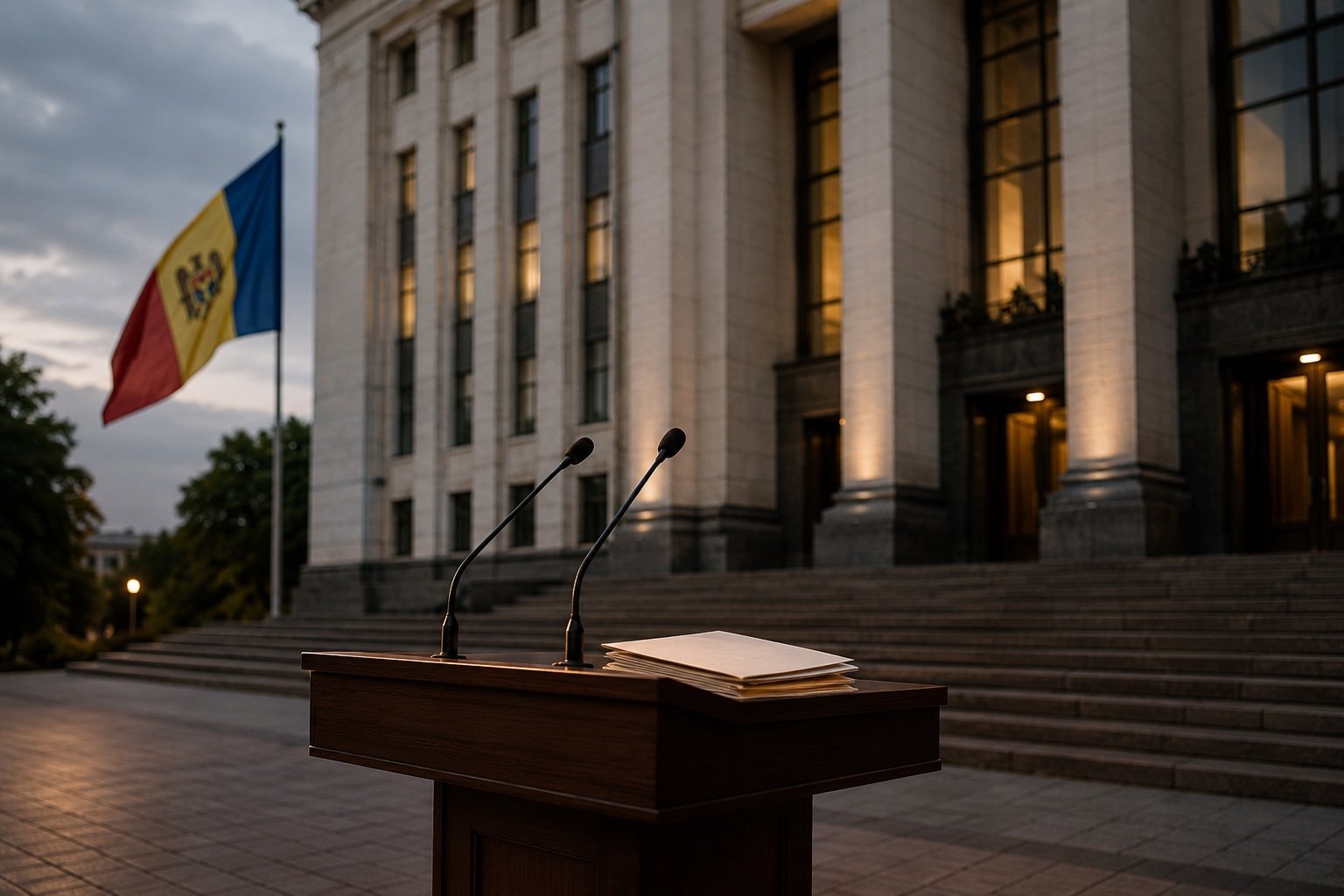
Moldova's political reset after Prime Minister Dorin Recean's resignation is a high-interest story because it lands at the intersection of domestic reform, European alignment and persistent regional pressure. A prime ministerial resignation after an election can look procedural. In Moldova's case, it is more consequential.
What happened
The Associated Press reported that Recean resigned, triggering the resignation of Moldova's government while he remains in office in a caretaker role until a new cabinet is formed. President Maia Sandu's pro-Western Party of Action and Solidarity won a parliamentary election in late June, preserving its majority in the 101-seat legislature. Euronews also reported the resignation and the start of the government-formation process, noting Moldova's continuing European Union ambitions and the pressure around them.
Why it matters
The country has spent recent years trying to reinforce institutions, pursue EU integration and navigate the risks created by Russia's war in neighbouring Ukraine. A cabinet transition is therefore more than personnel movement. It is a test of whether Moldova can keep policy continuity while refreshing leadership after a hard political cycle. Recean's resignation does not automatically signal a collapse of the pro-Western agenda, since the governing party's result gives Sandu's camp the ground to form another government, but transitions still carry risk as ministries pause and rivals test the new balance.
The bigger picture
The central question is whether the next government can maintain momentum on reforms while addressing the everyday concerns that make reform politics difficult. European integration is often discussed in diplomatic language: accession chapters, rule-of-law benchmarks and regulatory changes. For citizens, the same project is judged through jobs, prices, corruption, public services and security. A new cabinet will need to connect the two stories to achieve political durability.
Moldova's geography sharpens the stakes. The country borders Ukraine and has long dealt with the unresolved status of Transnistria, the breakaway region where Russian troops have been present for decades. The war next door has made energy security, border management, disinformation and refugee pressures more immediate, giving domestic decisions in Chisinau a far larger audience.
The counter-view
It would be easy to sensationalise the resignation, but Moldova is not leaderless. It has a caretaker government and an elected majority. The story is really about how quickly and confidently that majority can produce a new executive. Governing also exposes the burden on pro-European parties once they win: anti-corruption work is slow and unpopular when it disrupts entrenched interests, economic reforms can produce costs before benefits, and EU alignment can feel abstract to households worried about energy bills.
What happens next
Democratic resilience is measured not only in dramatic moments but in ordinary constitutional steps: resignation, caretaker administration, nomination, parliamentary approval and cabinet formation. If those steps proceed smoothly, Moldova reinforces the idea that institutional politics can continue under pressure. The choice of a new prime minister will be read for tone as well as competence, and the next government will be judged by whether it can keep institutions steady while making reform feel practical to citizens.
Sources: reporting by Associated Press.
The NE Times is an independent news and analysis publisher. Our articles combine factual reporting with clearly-written, impartial analysis. Content is for general information and does not constitute professional advice. Disclaimer.
You may also like to read
EU leaders gather in Brussels for summit on Ukraine accession and 2028-34 budget
European Council President Antonio Costa has set a packed agenda for the 18-19 June summit, with the opening of accession chapters for Ukraine and Moldova, the next long-term budget and the Middle East all on the table.

EU-Taliban Brussels Talks Spark Backlash From Afghan Women
Closed-door meetings in Brussels have drawn fierce criticism from Afghan women and rights groups who fear the encounter normalises the regime.
Brexit anniversary revives debate over a faster UK route back to the EU
A decade on from the referendum, a former EU negotiator suggested Britain could rejoin on a short timeline if it chose to, while stressing that core EU rules would apply.
Britain and EU set 22 July date for second summit as Starmer pushes 'reset' deeper
Sir Keir Starmer has agreed with European Council President Antonio Costa to hold a second UK-EU summit in Brussels on 22 July, with a youth mobility scheme expected to be among the headline outcomes.