Gaza's musicians reopen their shattered conservatory in tents by the sea
The Edward Said National Conservatory's Gaza branch is teaching again from three tents — a story of cultural survival that resists easy sentimentality.
Marcus Reeve
Writer ·
What happened
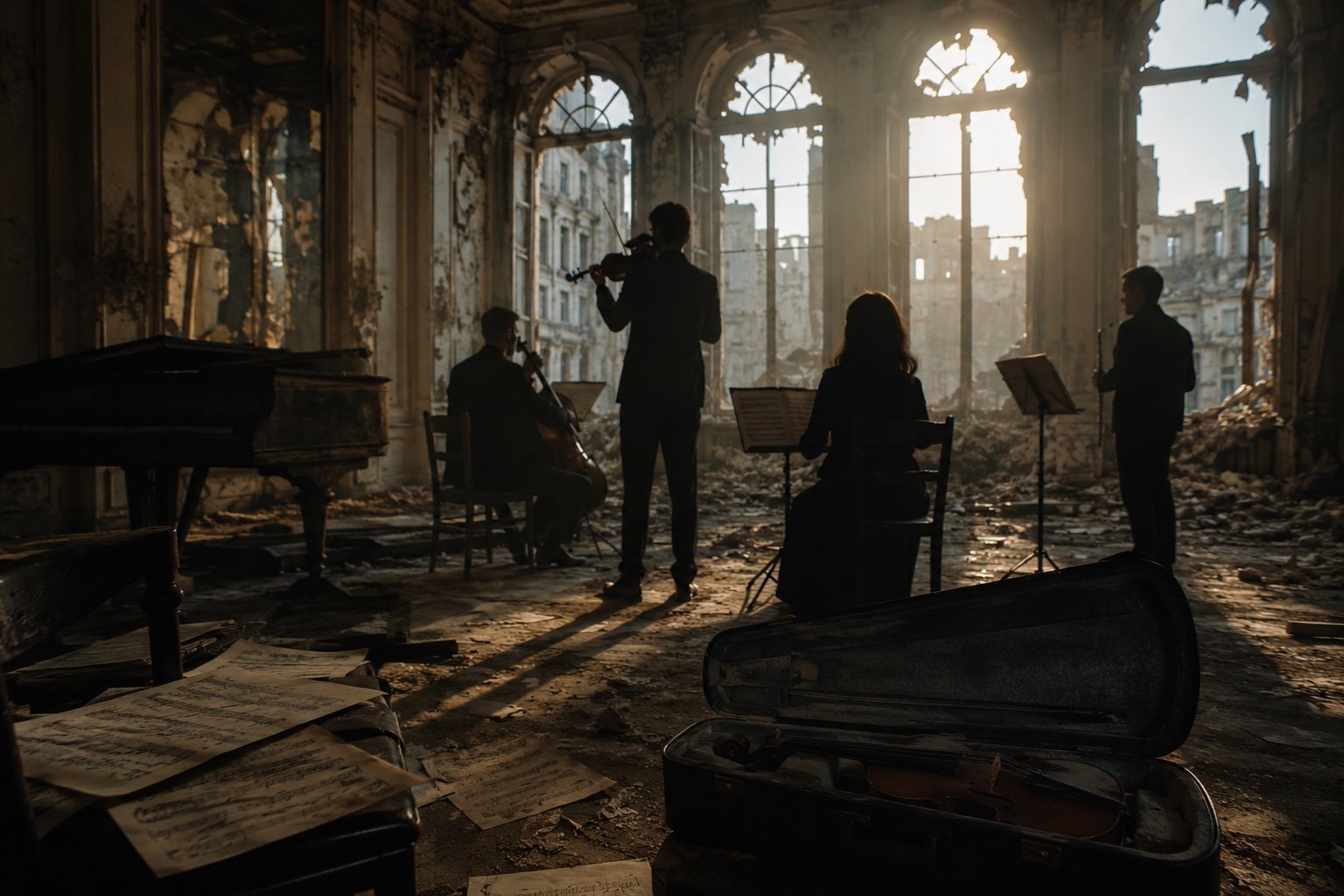
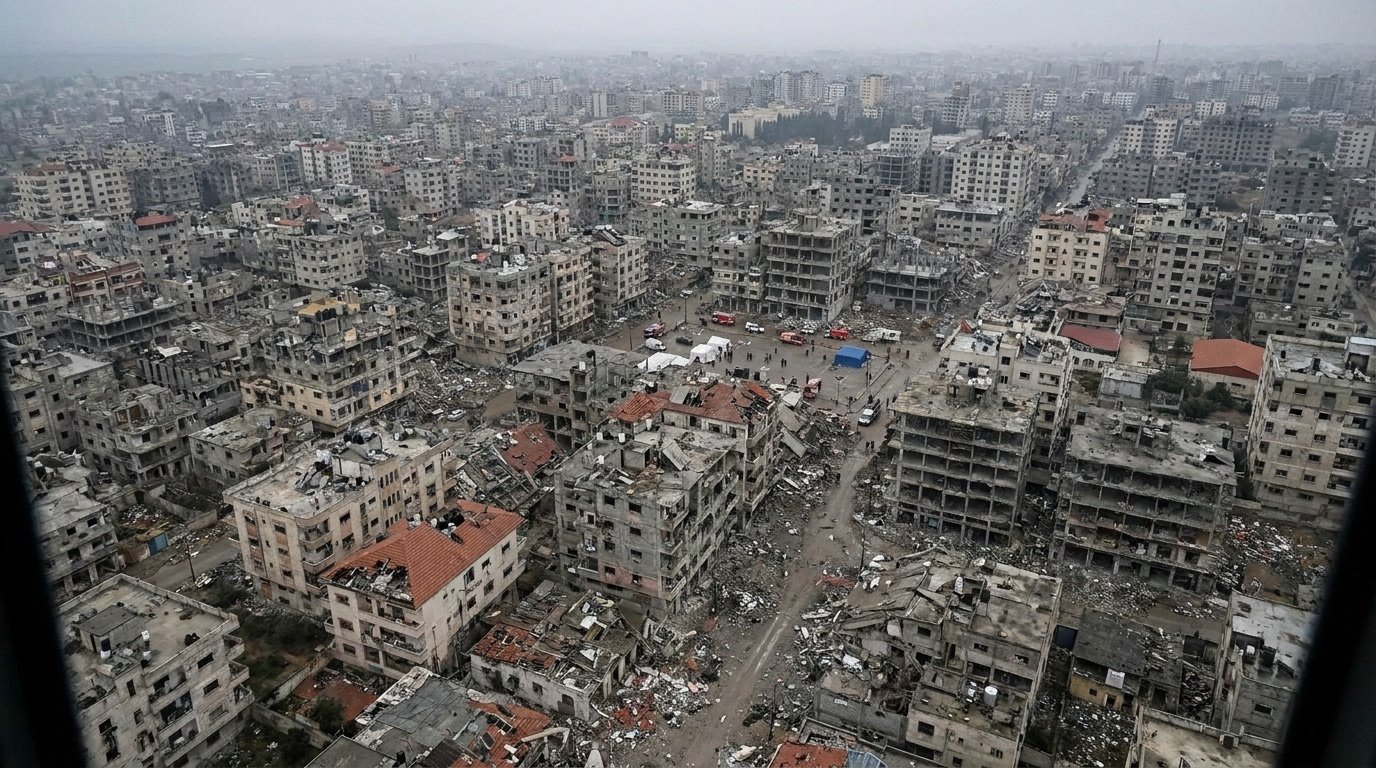
The Gaza branch of the Edward Said National Conservatory of Music, Palestine's national music school, has reopened in three tents near the Mediterranean, according to reporting by the Guardian. The conservatory's building, instruments and archives were lost in the war that devastated Gaza's infrastructure between October 2023 and October 2025, and its teachers and students were caught up in displacement and bereavement. Among the figures highlighted are Ahmed Abu Amsha, Mohammed Khader and Osama Jahjouh, whose work now includes improvisation as basic as a flute rebuilt from plastic tubing.
Why it matters
In crisis coverage, culture is often filed behind survival, and in the immediate language of emergency response that hierarchy is understandable. It becomes incomplete when communities are trying to live beyond the emergency. Music lessons give children rhythm, discipline, social contact and a way to process experience without being reduced to victims. A conservatory operating from tents is therefore both modest and profound: modest because canvas is not a classroom, profound because it insists that civic repair includes the inner life. Rebuilding a music school is not a matter of reopening a door — there may be no door, no intact archive and no assumption that families can prioritise lessons while securing food and shelter.
The bigger picture
There is a careful line to hold in telling this story. The improvised flute is inventive, but it should not be romanticised: ingenuity under deprivation is also evidence of loss. Resilience must not be used to make deprivation look acceptable. Equally, the musicians deserve to be seen as professionals rather than symbols — people making decisions about where to teach, how to adapt instruments and how to preserve standards when everything around those standards has changed. A teacher correcting posture and tone inside a tent is doing ordinary work in extraordinary conditions, and that ordinariness is precisely the point. The conservatory's loss of its archives matters too, because institutional memory — repertoire, records, students' achievements — is part of what a cultural school exists to protect.
What happens next
Sustained recovery will need far more than improvisation: instruments, safe spaces, salaries, transport, mental-health support and time. The reopened conservatory shows what rebuilding actually looks like — incomplete, under-resourced and morally urgent, carried by people who keep teaching anyway. It can be a beacon of hope and an indictment of the conditions that made tents necessary; the honest reading holds both truths at once. What it defends, above all, is the idea of a future in which Gaza's children are more than survivors.
Sources: reporting by The Guardian.
The NE Times is an independent news and analysis publisher. Our articles combine factual reporting with clearly-written, impartial analysis. Content is for general information and does not constitute professional advice. Disclaimer.
You may also like to read
Israeli attacks in Gaza and occupied West Bank kill civilians, including a child
Fresh deaths across both territories deepen humanitarian concern and underline how the two areas remain bound by the same conflict and civilian vulnerability.
Former Israeli Security Figures Urge Inquiry Into Possible Gaza War Crimes
More than 30 ex-officials reportedly called on the attorney general to investigate alleged war crimes in Gaza, adding pressure on accountability from voices with national-security backgrounds.
West Bank raids reshape childhood under a long security squeeze
Repeated night-time operations, checkpoints and arrests are altering the daily lives and schooling of children in the occupied territory.
UN warns Gaza risks 'permanent limbo' as fragile ceasefire and reconstruction stall
Senior UN officials told the Security Council that early momentum on Gaza's transition plan has given way to delays, with the ceasefire fraying, aid underfunded and most buildings destroyed.