UN warns Gaza risks 'permanent limbo' as fragile ceasefire and reconstruction stall
Senior UN officials told the Security Council that early momentum on Gaza's transition plan has given way to delays, with the ceasefire fraying, aid underfunded and most buildings destroyed.
Marcus Reeve
Writer ·
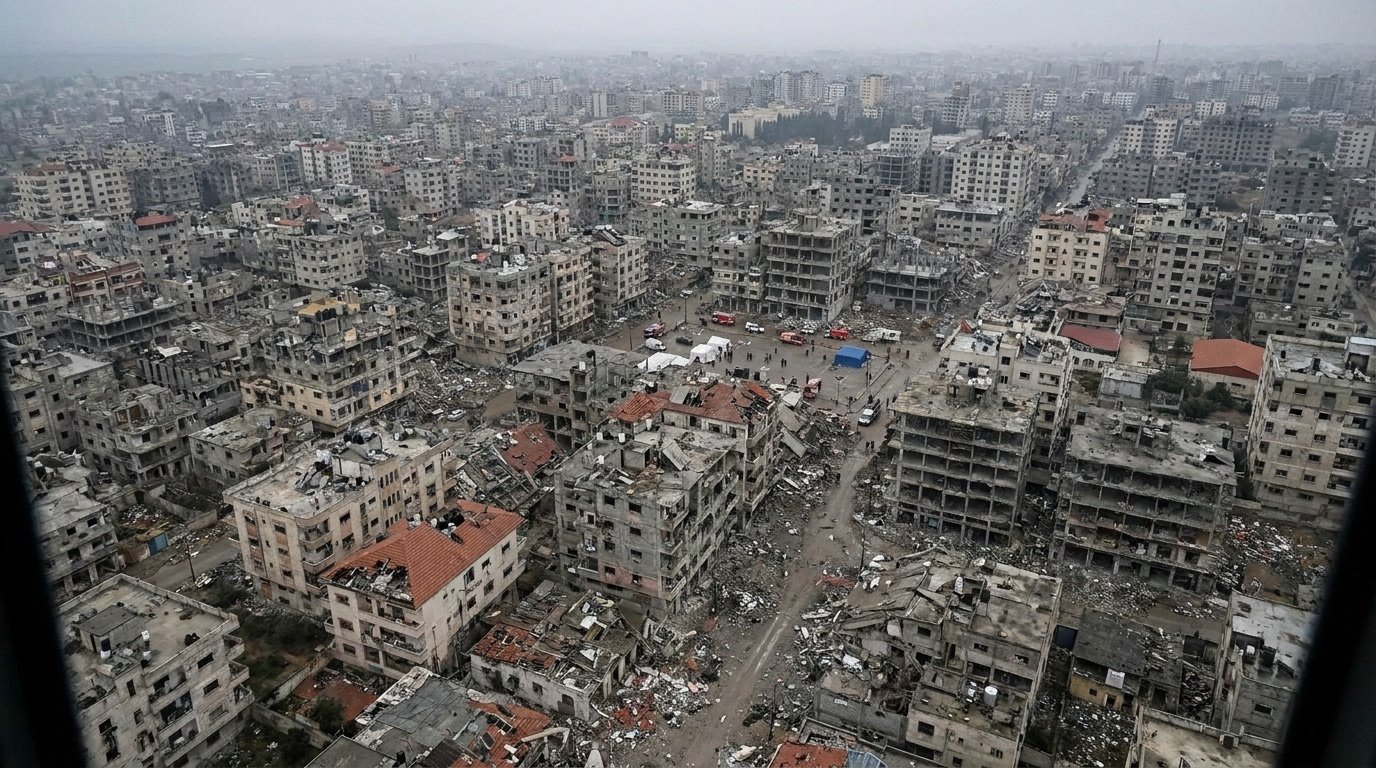
Gaza risks slipping into a permanent state of limbo if the plan to govern and rebuild the territory continues to stall, senior United Nations officials warned the Security Council, cautioning that a deteriorating status quo is becoming entrenched and that the early optimism that followed the ceasefire is fading.
Briefing the council on 21 May, UN Deputy Special Coordinator Ramiz Alakbarov said the ceasefire that began in October had yet to deliver safety for the territory's residents. Nickolay Mladenov, the high representative for Gaza appointed under the internationally backed transition framework, described the truce as fragile and fraying, warning that sporadic violence and political deadlock were eroding confidence in the process.
The officials painted a sobering picture of a population exhausted by war and living amid ruins, where the absence of renewed large-scale fighting has not translated into recovery. Without decisive action, they cautioned, the conditions that produced the conflict could simply harden into a long-term crisis.
Reconstruction far from reach
Around 80 per cent of Gaza's buildings are damaged or destroyed, and roughly one million people need urgent shelter assistance, officials said. The scale of destruction across homes, hospitals, schools and water and sanitation systems is so vast that even clearing rubble and unexploded ordnance is expected to take years before substantial rebuilding can begin.
Funding is a central obstacle. The 2026 humanitarian Flash Appeal, seeking some $4.1 billion, was only around 13 per cent funded at the time of the briefing, leaving aid agencies struggling to meet even the most basic needs. Officials warned that without a major injection of resources, essential services could falter just as winter and disease threaten the most vulnerable.
The transition plan, adopted under Resolution 2803 in November 2025, authorised a Board of Peace and an international stabilisation force but has seen implementation slow markedly. The mechanisms intended to provide governance and security have been slow to take shape on the ground, leaving a vacuum that officials fear could be filled by renewed instability.
“The people of Gaza cannot take more war.”
— Ramiz Alakbarov, UN Deputy Special Coordinator
Officials outlined the principal challenges facing the territory's recovery, which span humanitarian, security and political dimensions:
- Roughly 80 per cent of buildings damaged or destroyed
- About one million people in urgent need of shelter
- A humanitarian appeal of around $4.1 billion only 13 per cent funded
- Slow deployment of the international stabilisation force and Board of Peace
- A fragile ceasefire punctuated by sporadic violence
- Rising tensions in the occupied West Bank
Alarm over the West Bank
Officials also raised alarm over the occupied West Bank, reporting that more than 220 Palestinian communities had faced attacks and that over 2,200 new settlement housing units had recently been advanced. The expansion of settlements, which most of the international community considers illegal under international law, has long been a flashpoint and a major obstacle to a negotiated two-state outcome.
The combination of settler violence, military operations and settlement growth has heightened fears that instability in the West Bank could undermine wider efforts to stabilise the Palestinian territories. UN officials warned that developments there could not be treated in isolation from the situation in Gaza.
Background to the transition framework
The ceasefire that took hold in October 2025 brought an end to the most intense phase of a war that had inflicted catastrophic civilian casualties and destruction across Gaza. Resolution 2803, adopted the following month, established an internationally backed framework intended to manage the territory's transition, provide security and lay the groundwork for reconstruction and eventual governance arrangements.
The framework reflected an attempt by international actors to avoid a vacuum after the fighting, but its success depended on sustained political will, funding and cooperation from the parties on the ground. The slow pace of implementation has revived doubts about whether the arrangement can deliver the stability it promised.
Humanitarian organisations have stressed that the needs are immediate as well as long-term, with families enduring a second winter amid the rubble and aid pipelines stretched to breaking point. The gap between the scale of the destruction and the resources available to address it has widened rather than narrowed since the ceasefire took hold.
What happens next
UN officials urged the Security Council and donor governments to act swiftly to fund the humanitarian response, accelerate the deployment of stabilisation mechanisms and reinvigorate the political process before the window for a durable settlement closes. Much will depend on whether member states translate their commitments into resources and whether the ceasefire can be consolidated rather than allowed to unravel. Without renewed progress, the officials warned, Gaza could be locked into a cycle of deprivation and instability that grows harder to break with each passing month.
Sources: reporting by UN News.
The NE Times is an independent news and analysis publisher. Our articles combine factual reporting with clearly-written, impartial analysis. Content is for general information and does not constitute professional advice. Disclaimer.
You may also like to read

Gaza's musicians reopen their shattered conservatory in tents by the sea
The Edward Said National Conservatory's Gaza branch is teaching again from three tents — a story of cultural survival that resists easy sentimentality.
Israeli attacks in Gaza and occupied West Bank kill civilians, including a child
Fresh deaths across both territories deepen humanitarian concern and underline how the two areas remain bound by the same conflict and civilian vulnerability.
Former Israeli Security Figures Urge Inquiry Into Possible Gaza War Crimes
More than 30 ex-officials reportedly called on the attorney general to investigate alleged war crimes in Gaza, adding pressure on accountability from voices with national-security backgrounds.
Kyiv warns its ceasefire patience is not endless as war passes grim milestone
Ukraine has signalled that its offer of a full and unconditional ceasefire may not stay on the table indefinitely, raising the pressure on diplomacy and on Moscow's response.