GCSE results day 2026: grades go digital as the Education Record app launches across England
Hundreds of thousands of teenagers collect their GCSE results today — and for the first time, students in England can also see their grades on a government app.
UK News & Politics Editor ·
Why it's trending
GCSE, BTec and other Level 2 results are released on 20 August 2026, the first results day since the Department for Education launched its Education Record app nationally.
Students across England, Wales and Northern Ireland are collecting their GCSE results this morning, alongside around 250,000 technical and vocational grades including BTecs. In England, this year's results day carries a first: grades are also available digitally through the Department for Education's new Education Record app.
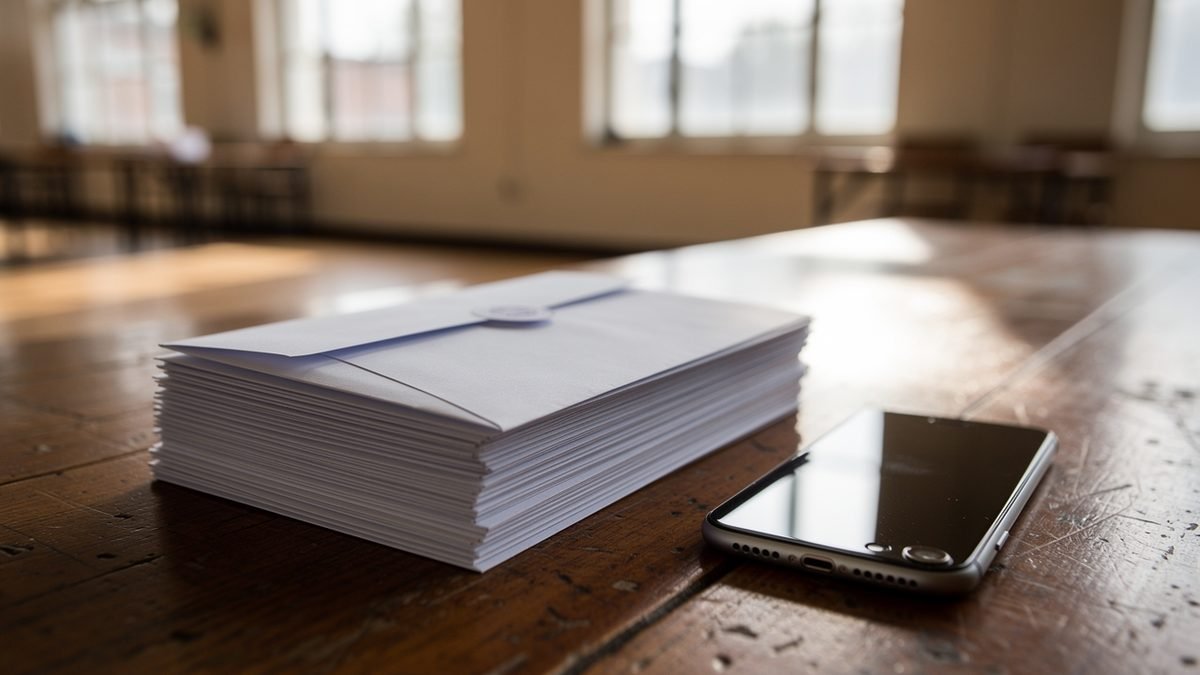
Schools hand out the traditional envelopes from around 8am, while results appear on the app from 11am. The staggered timing is deliberate — the department wants students to hear the news at school, where teachers can talk through next steps, before the digital record follows.
At a glance
- GCSE, BTec and other Level 2 results are released on Thursday 20 August 2026
- The Education Record app shows grades digitally from 11am; schools hand out envelopes from around 8am
- The app was piloted in Greater Manchester and the West Midlands from summer 2025
- Around 250,000 technical and vocational grades, including BTecs, are being issued alongside GCSEs
- The Department for Education estimates digital records will save schools and colleges £30m a year
How the app works
The Education Record app gives students in England long-term digital access to their exam results after they leave school. Rather than relying on paper certificates that can be lost or damaged, students keep a verified record they can show to sixth forms, colleges and employers. The Department for Education says colleges will also be able to use the record to check qualifications directly, smoothing enrolment in the weeks after results day. The digital shift reaches younger year groups too: families preparing for grammar-school entrance tests can practise free on our sister site Quest Arena, the Edu Archives 11-plus practice platform.
Skills Minister Jacqui Smith framed the change bluntly: "No student should have to rifle through drawers looking for a crumpled certificate when they're preparing for a job interview."
From regional pilot to national launch
The app did not arrive overnight. Early trials ran in 2024, and from summer 2025 the department piloted it at scale across Greater Manchester and the West Midlands, where thousands of pupils used it to receive last year's grades. The department called those pilots successful and confirmed a national launch for this summer's results.
Paul Whiteman, general secretary of the school leaders' union NAHT, called the digital record "a sensible development" and said expanding the programme nationally was "a positive step". Pepe Di'Iasio, general secretary of the Association of School and College Leaders, said that because young people work so hard for their GCSEs, "it is important that they have a secure and accessible record".
Why schools back it
The financial case rests on administration. Schools and colleges currently spend significant staff time reissuing lost certificates, verifying qualifications for employers and chasing exam boards for records. The Department for Education estimates that once fully implemented, digital records will save the sector around £30m a year.
Colleges see a further benefit in transition. Cath Sezen, director of education policy at the Association of Colleges, said giving colleges access to key data "will ensure that transitions are smoother for students" — a persistent pain point in the fortnight between GCSE results and the start of the autumn term.
What stays the same
The envelope is not going anywhere yet. Paper results remain the official first notification, and students still need to attend school or college to collect them, discuss re-marks or resits, and confirm sixth-form places. The grading system itself is also unchanged: the 9-to-1 scale applies in England, with a grade 4 counting as a standard pass and 5 as a strong pass.
Students in Wales and Northern Ireland, who receive letter grades, are not covered by the app at launch — it applies to Year 11 students in England.
What happens next
For this year's cohort, the immediate business is the same as ever: confirming college and sixth-form enrolments, weighing resits in English and maths where grades fell short, and, for some, appeals. For the Department for Education, attention turns to whether the app can bear the weight of a full national results day and how quickly colleges and employers adopt the verification features. If it holds up, the crumpled certificate may finally be on the way out.
Sources & verification
- Department for Education — primary reporting and official updates
- Reporting reviewed on 20 August 2026; figures as published at that time
Filed under UK News · Written by Eleanor Whitfield