GE Vernova's wind orders plunge 40% as AI-driven demand for gas turbines and grid equipment surges
GE Vernova's wind business saw orders collapse 40% in the second quarter even as the company's overall order book surged 88% on AI-driven demand for gas turbines and grid equipment — a divergence with direct consequences for UK offshore wind.
Business & Technology Editor ·
Why it's trending
The scale of the divergence emerged from the company's second-quarter figures, which showed wind falling to 5% of total orders while gas and grid demand boomed.
GE Vernova, the power-equipment giant spun out of General Electric, is having two very different years at once. The company's second-quarter revenue rose 22% year on year to $11.1bn, beating analyst estimates by around $330m, while total orders surged 88% organically to $24.2bn on the back of AI-driven demand for gas turbines and grid equipment. Yet inside those numbers, its wind business is shrinking fast: wind orders plunged 40% organically over the same period.
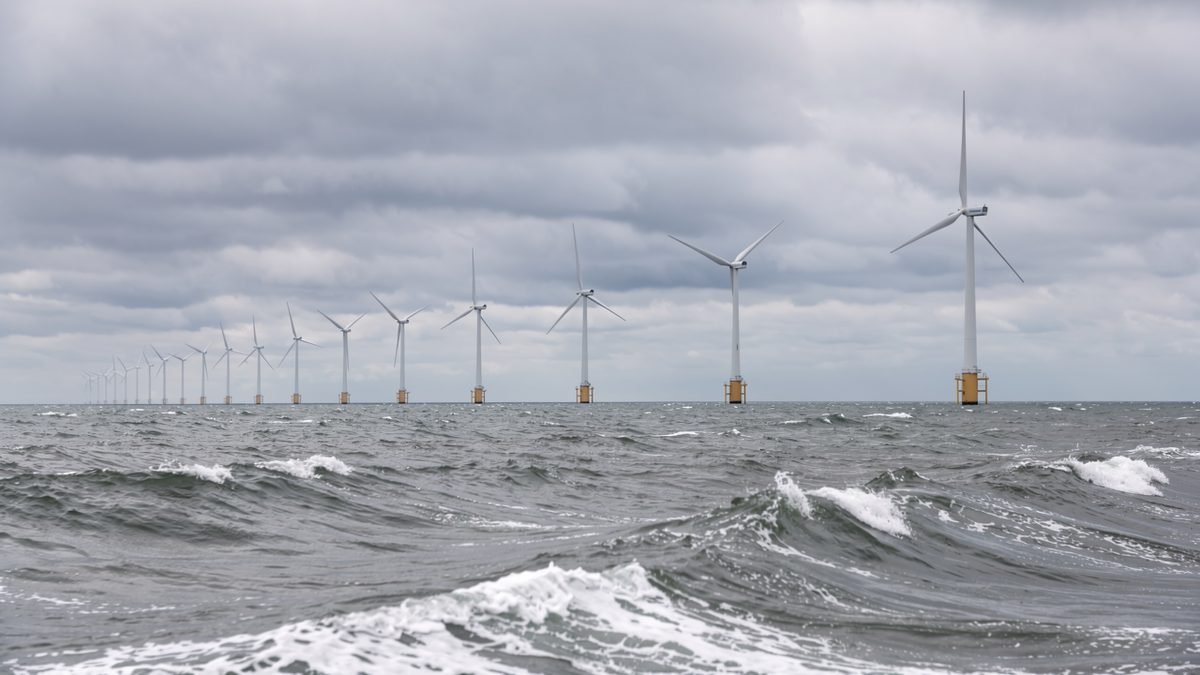
The divergence matters well beyond the company's share price. GE Vernova is the turbine supplier to Dogger Bank, the giant offshore wind farm being built off the Yorkshire coast, where high-profile turbine failures — alongside similar problems at Vineyard Wind in the United States — have contributed to the division's troubles.
At a glance
- GE Vernova's Q2 2026 revenue rose 22% year on year to $11.1bn, about $330m ahead of estimates
- Total orders surged 88% organically to $24.2bn, driven by gas turbines and grid equipment
- Wind segment orders fell 40% organically; wind is now 5% of total orders, down from 13% in 2025
- Power segment orders jumped 134% organically; Electrification orders climbed 66%
- Turbine failures at Dogger Bank and Vineyard Wind, plus fixed-price contract losses, have hit the wind division
The AI boom on one side of the ledger
The engine of GE Vernova's growth is the extraordinary appetite for electricity coming from data centres. The AI build-out has pushed cloud operators to consume power at a rate that has overwhelmed existing grid infrastructure, and utilities are scrambling to secure generation and transmission equipment years in advance. GE Vernova's Power segment — dominated by gas turbines — saw orders jump 134% organically in the quarter, while its Electrification division, which supplies grid equipment, climbed 66%.
These are also the company's highest-margin businesses, which is why investors have largely looked past the wind numbers: the boom is happening exactly where the profits are.
The wind business on the other
Wind tells the opposite story. Orders fell 40% organically, and the segment now represents just 5% of GE Vernova's total order intake, down from 13% in 2025. The causes are cumulative: quality-control problems including turbine failures at flagship projects, inflation that outran the assumptions in fixed-price contracts signed years ago, and supply chain bottlenecks that compressed margins on both onshore and offshore work.
The result is a division that the company has been deliberately shrinking towards profitability rather than growing — fewer orders, stricter pricing, and an emphasis on servicing the fleet already installed.
Why Dogger Bank makes this a UK story
Dogger Bank, a joint venture led by SSE with Equinor and Vattenfall, is designed to be among the world's largest offshore wind farms, and GE Vernova's Haliade-X turbines are its hardware. Turbine failures there have already contributed to schedule slippage, and a supplier now taking 40% fewer wind orders — and pricing the remainder defensively — is a structurally different partner from the one the project signed with.
For the UK's wider offshore pipeline, the signal is uncomfortable: the turbine market's western champion is deprioritising exactly the segment on which British decarbonisation targets lean most heavily.
The strategic bet
GE Vernova's positioning amounts to a wager that the next decade of energy demand will be met first by gas and grid, with wind recovering later and on stricter commercial terms. The AI power squeeze has made that bet look prescient in the short run — orders nearly doubling year on year is an outcome few forecast when the company was spun out.
The risk is longer-dated. If offshore wind costs stabilise and governments re-accelerate procurement, the manufacturers that kept capacity and appetite through the trough will take the recovering market.
What happens next
The company's order book gives it unusual visibility: gas turbine slots are reportedly selling out years ahead, and grid equipment demand shows no sign of cooling while data-centre construction continues. For the wind division — and for UK projects that depend on it — the questions are nearer-term: whether quality problems at Dogger Bank are fully behind it, and whether the segment's 5% share of orders marks the bottom of the cycle or the shape of the company's future.
Sources & verification
- The Motley Fool — primary reporting and official updates
- Reporting reviewed on 21 August 2026; figures as published at that time
Filed under Business · Written by Rajan Mehta