On Gotland, Baltic security has stopped being abstract
Sweden's remilitarisation of Gotland — 275km from Kaliningrad — shows European defence moving from theory into conscription, resilience and daily life.
Marcus Reeve
Writer ·
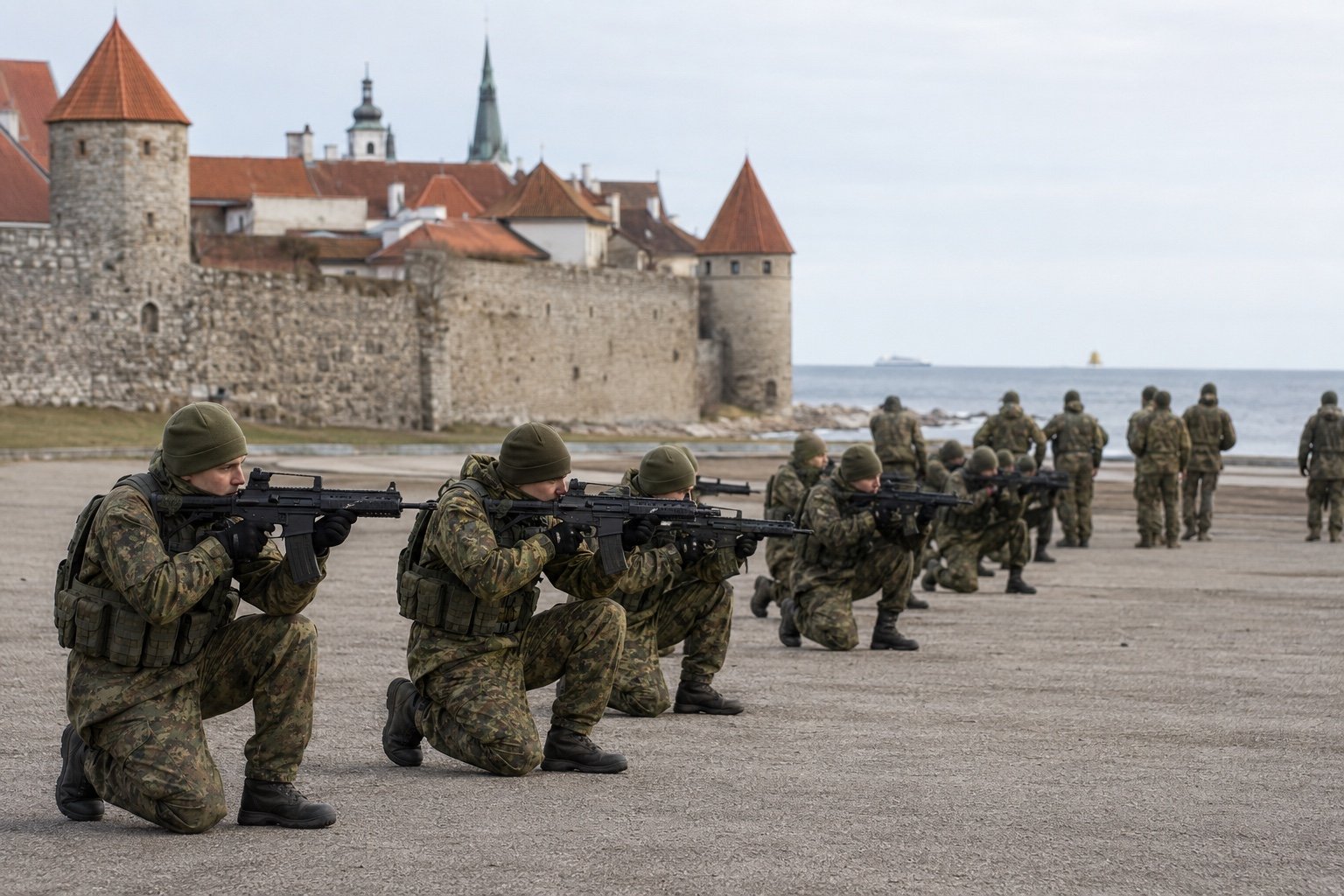
Security policy usually lives in white papers and summit communiqués. On Gotland, it now lives in the school-to-service pipeline of Swedish teenagers, in civil resilience drills and in a community adjusting to the idea that its geography matters again. Guardian reporting from the Baltic island captures a shift that is reshaping northern Europe: defence returning to daily life.
What happened
The reporting describes young conscripts training near Visby — among them 19-year-old Ella Adman, handling an assault rifle months after leaving school — alongside civilian preparedness initiatives gathering pace across the island. The context is stark. Gotland sits 275km from Kaliningrad, Russia's heavily militarised exclave, and 87km from the Swedish mainland. Sweden closed its last regiment on the island in 2005, leaving a reduced Home Guard presence; the current build-up reverses two decades of assumptions about what the Baltic region required.
Why it matters
This is not a prediction of attack, and responsible analysis should resist turning preparedness into prophecy. The significance is structural: after the Cold War, most European democracies treated territorial defence as something to be scaled down and professionalised into the background. Russia's war against Ukraine, Sweden's NATO accession and rearmament across the continent have reversed that logic. Defence now reaches into infrastructure, food supply, communications and the willingness of ordinary citizens to understand their role in a crisis. Gotland, home to 60,000 people, medieval streets and the Almedalen democracy festival, makes the shift vivid precisely because its civilian identity is so strong.
The bigger picture
Modern deterrence is partly theatre — in the serious sense. Training conscripts and rebuilding capacity sends simultaneous messages: to residents, that the state is paying attention; to allies, that Sweden is investing in Baltic security; to any adversary, that the island is not an undefended gap. The Baltic is sometimes called a NATO sea, but geography does not defend itself — ports, cables, airfields and islands all require credible protection at short notice. Small places can become large strategic questions.
There is a human ledger too. Young adults are being asked to rehearse scenarios their parents believed belonged to history, and communities must prepare without becoming permanently afraid. Too little readiness leaves a society brittle; too much alarm corrodes the life being protected. Calibrating between them is the hardest part of resilience policy.
What happens next
The most credible reading of Gotland is adaptation, not panic. Uncertainty has become a standing fact of European life, and Sweden is building routines around it. The test — for Stockholm and for NATO — is whether that preparation proves durable and calm: sustained investment rather than episodic anxiety, and a defence posture that protects daily life without letting fear define it.
Sources: reporting by The Guardian.
The NE Times is an independent news and analysis publisher. Our articles combine factual reporting with clearly-written, impartial analysis. Content is for general information and does not constitute professional advice. Disclaimer.
You may also like to read

Ships as launchpads: the shadow-fleet report that widens Europe's drone problem
An IISS assessment reported by AP suggests Russia likely used shadow-fleet vessels to launch drones over Europe, turning an airspace issue into a maritime one.
European Leaders Prepare Strong Ukraine Message Before NATO Summit
European allies aim to signal renewed unity on Ukraine ahead of the NATO summit in Ankara, as Trump praises Zelenskyy's resilience against Russia.

NATO diplomacy tested by Iran war fallout
Summit preparations and senior officials' remarks place defence spending, Middle East instability and transatlantic cohesion under the same spotlight.
NATO chief Mark Rutte heads to White House ahead of sensitive summit
The secretary-general's visit centres on managing relations with President Trump, defence-spending expectations and keeping allied unity visible.