The Hossam Hassan Dallas incident shows how World Cup security is now part of the story
Egypt's coach says a hotel confrontation with Dallas police is resolved — but the episode shows the fragile line between security and football culture.
Daniel Fletcher
Writer ·
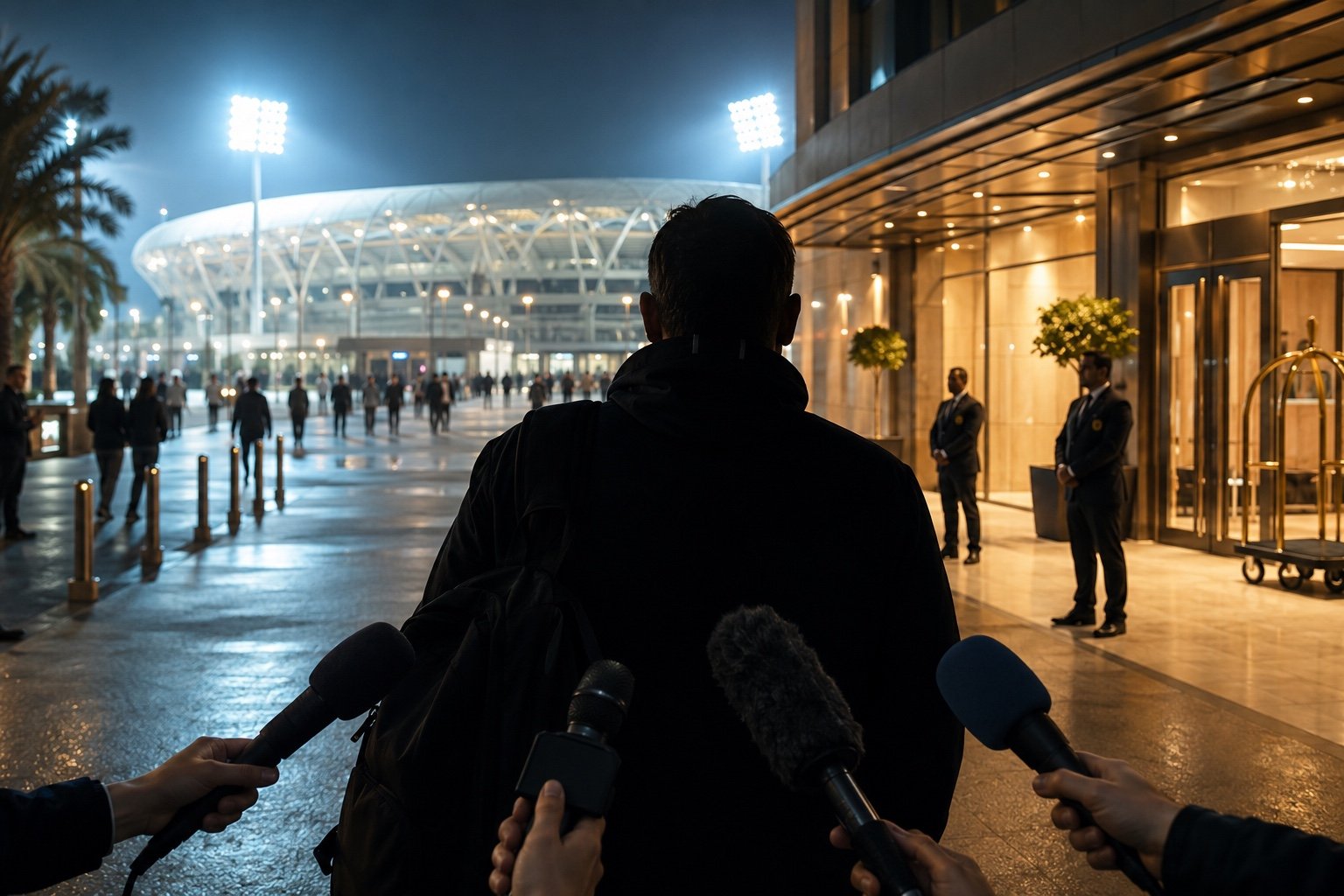
A short confrontation in a hotel lobby became a World Cup story because of where it happened and who was involved. Video circulated before Egypt's last-32 win over Australia showing coach Hossam Hassan and team director Ibrahim Hassan arguing with a Dallas police officer at the team's hotel, in a dispute that reportedly began around a player preparing to take a photo with a young fan.
What happened
According to AP and Guardian coverage, the officer approached Hossam Hassan first, while the exchange with Ibrahim Hassan escalated into a shoving match. Dallas police said officers had been responding to a hotel-security request about an individual without event credentials, that the matter was resolved at the scene, and that they later met Egyptian representatives. Hassan subsequently said, through a translator, that Egypt had accepted an apology and was satisfied with its security arrangements. On the pitch, Egypt drew 1-1 with Australia before advancing 4-2 on penalties — with Hassan becoming, per the Guardian, the first person to both play and coach for Egypt at a World Cup.
Why it matters
Tournament security has to protect players, filter access and manage crowds — but it operates inside a football culture that is not sealed off from emotion. Fan photos in hotel lobbies are, for many supporters, the whole point of following a team across continents. When a security intervention touches that ritual, misunderstanding escalates fast, and social video ensures it escalates publicly. The available reporting supports treating this as a brief, resolved incident; its significance lies in how thin the boundary proved between necessary control and public perception.
The bigger picture
Hassan's post-match gesture added another layer of scrutiny: after the win he waved a Palestinian flag, saying his heart was with Palestinians, with FIFA noting that member-association flags are permitted and no disciplinary action indicated. The two episodes were reported separately, but together they show a coach operating under unusual public attention, where everything around a team — a police response, a translated statement, a flag — becomes part of the tournament's meaning. For host organisers, the practical lesson is that friction happens in ordinary spaces — hotels, bus routes, training bases — not just stadium perimeters. The best security operation is not merely strict; it is legible to the people it governs. International squads travel with different expectations of fan interaction and different sensitivities around authority, and protocols that are not understood will be read as arbitrary.
What happens next
Egypt's task is to stop side stories crowding out a genuine football achievement. The sporting questions are the real ones: whether the side can control matches for longer spells, whether penalty-shootout resilience becomes a platform, and whether Hassan can keep the squad focused as attention around him grows. The knockout rounds will answer them — though at this World Cup, the spaces outside the pitch will keep shaping how what happens on it is understood.
Sources: reporting by Associated Press.
The NE Times is an independent news and analysis publisher. Our articles combine factual reporting with clearly-written, impartial analysis. Content is for general information and does not constitute professional advice. Disclaimer.
You may also like to read
Rodrygo's World Cup observation: football's loudest culture meets its biggest market
Rodrygo's Guardian column on the gulf between Brazilian and American football culture shows what the World Cup can and cannot export.

France grind, Morocco glide: two routes into the World Cup quarter-finals
Mbappe's winner edged Paraguay 1-0 while Morocco swept Canada aside 3-0 to make African football history — two contrasting models of knockout control.
Norway 2-1 Brazil: a World Cup upset built on composure, not chaos
Erling Haaland's late double sent five-time champions Brazil out in the last 16 — an upset that was less a miracle than a masterclass in patience.
Morocco 3-0 Canada: back-to-back quarter-finals turn a surprise into a standard
Azzedine Ounahi's double made Morocco the first African side to reach the World Cup last eight twice — and ended co-hosts Canada's best-ever run.