UK summons Israeli charge d'affaires as E1 settlement tender opens bids on 1,234 West Bank housing units
The UK has summoned Israel's charge d'affaires after Israel opened bids for 1,234 housing units in the E1 settlement project, a move Foreign Secretary Ed Miliband called "an unacceptable and destructive act".
World Affairs Editor ·
Why it's trending
Israel opened the E1 tender for bids on 18 August, and the UK's summons and Ed Miliband's statement the following day set off a sharp diplomatic exchange.
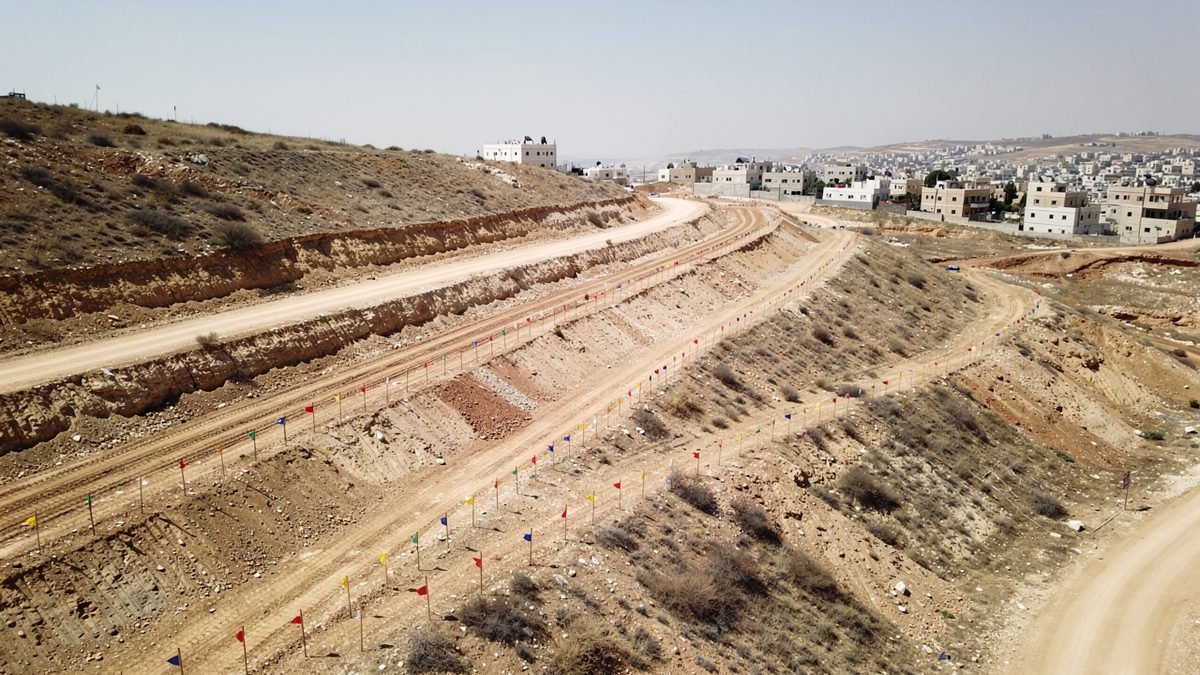
Britain has summoned Israel's charge d'affaires to the Foreign, Commonwealth and Development Office after the Israeli government opened a tender for construction in the E1 settlement project in the occupied West Bank — a tract of land long regarded by diplomats as uniquely consequential, because building there would drive a wedge between East Jerusalem and the rest of the territory.
Israel's housing ministry published the tender on 18 August and immediately opened it for bids, according to the Israeli monitoring group Peace Now. It covers 1,234 housing units — roughly a third of the 3,401 homes approved for construction in E1 — with bids due by 19 October, one week before Israeli elections scheduled for 27 October.
At a glance
- Israel opened a tender on 18 August for 1,234 housing units in the E1 settlement area
- The units are about a third of the 3,401 homes approved for E1 construction
- Bids close on 19 October, a week before Israel's 27 October elections
- Foreign Secretary Ed Miliband called the tender "an unacceptable and destructive act" on 19 August
- The Israeli charge d'affaires was summoned, and the UK pledged sanctions targeting those involved in settlement expansion
Why E1 matters more than most settlements
E1 is a wedge of land between Jerusalem and the settlement of Ma'ale Adumim. Successive British and American governments have pressed Israel not to build there because construction would effectively cut the West Bank in two and sever its connection to East Jerusalem — the territory Palestinians envisage as the capital of a future state.
The Foreign Secretary's statement said E1 construction would traverse Palestinian territory and undermine the prospects for Palestinian statehood.
What the UK has said and done
Ed Miliband issued his statement on 19 August, calling the tender "an unacceptable and destructive act" and saying it would endanger the viability of a two-state solution. He said he had told Israeli Foreign Minister Gideon Sa'ar directly that Israel must halt E1 plans immediately, retract the tender and stop all settlement expansion.
Alongside the summons, the UK promised a comprehensive set of measures in response to Israeli government policies, including sanctions targeted at those who participate in illegal settlement expansion. The statement restated the UK's position that all settlements are a breach of international law.
Israel's response
Israel has rejected the UK's demand. Israeli officials accused the British government of damaging the bilateral relationship, with pointed criticism of Miliband personally in briefings reported by UK media.
The exchange marks another low in a relationship already strained by earlier UK measures over the war in Gaza and settlement activity.
The election timetable
The timing has drawn attention on all sides. With bids closing one week before Israelis vote, opponents of the project argue the tender is designed to lock in construction commitments regardless of the election outcome.
Human Rights Watch, which describes the settlement as illegal under international law, noted the tender's publication and immediate opening for bids as an acceleration of a project that had sat frozen for years precisely because of international pressure.
What happens next
Bids on the tender close on 19 October. The UK has said further measures, including targeted sanctions, will follow if the tender is not retracted. Whether any of it changes behaviour on the ground may depend less on London than on the outcome of Israel's elections on 27 October — and on whether contractors are willing to commit to E1 while its legal and diplomatic status remains so contested.
Sources & verification
- GOV.UK — Foreign Secretary statement — primary reporting and official updates
- Reporting reviewed on 20 August 2026; figures as published at that time
Filed under World · Written by Marcus Reeve