Leclerc's British Grand Prix win turns Ferrari relief into a title-race signal
Charles Leclerc's first F1 victory in nearly two years — Ferrari's 250th — landed as championship leader Kimi Antonelli missed the points again at Silverstone.
Daniel Fletcher
Writer ·
What happened
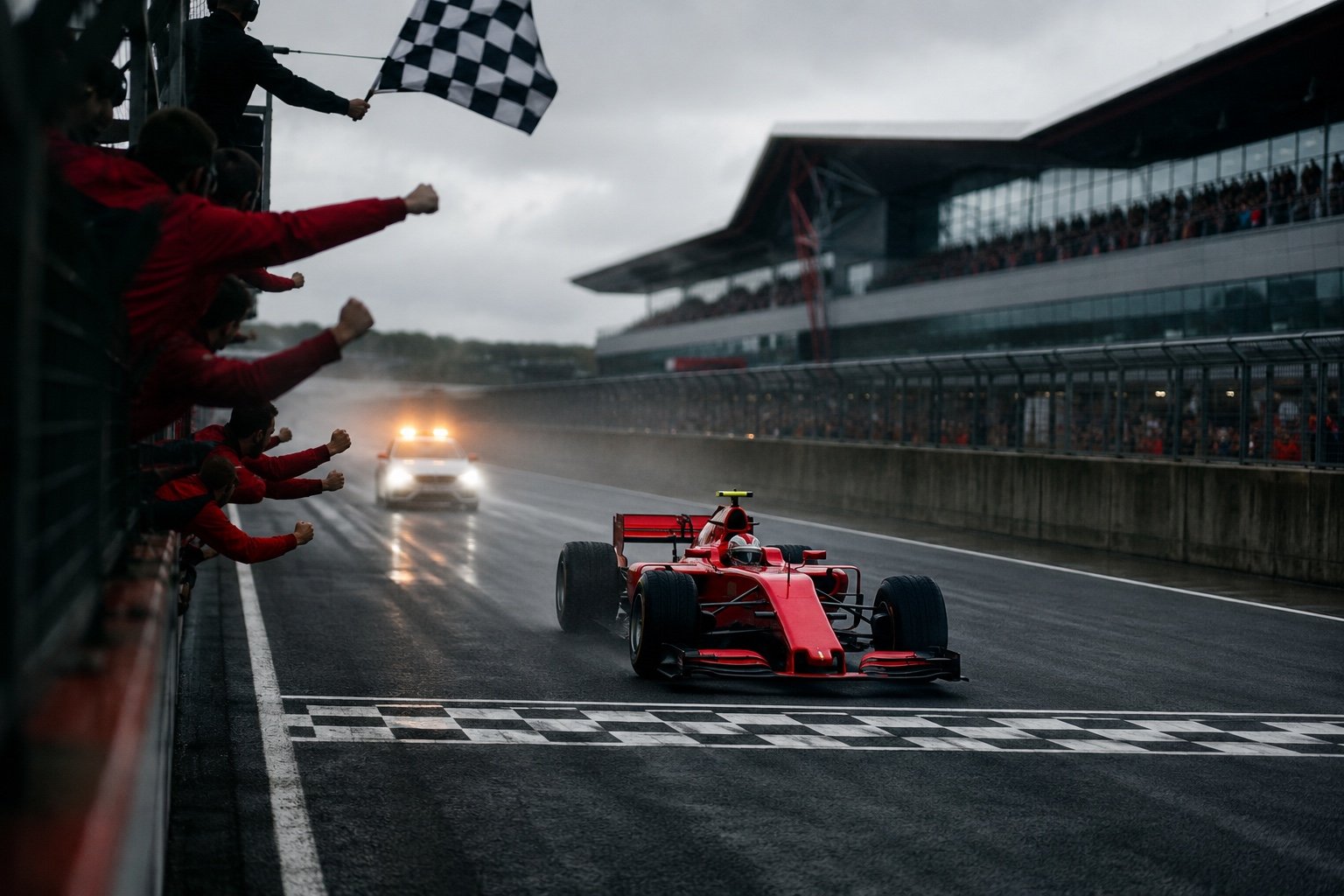
Charles Leclerc won the British Grand Prix on 5 July, taking his first Formula 1 victory in nearly two years as a chaotic Silverstone race finished behind the safety car, the Associated Press reported. Leclerc passed championship leader Kimi Antonelli at the start and held on as Antonelli reported a steering issue and dropped out of the points with car damage. Max Verstappen spun into the gravel from third late on, neutralising the closing laps. The result also gave Ferrari a landmark: the team's 250th win in Formula 1.
Why it matters
Every victory counts the same in the standings, but they do not all feel the same. A routine win confirms what a team already believes; a win after a long wait releases pressure built up across seasons, and Leclerc's radio reaction captured exactly that relief. Ferrari have rarely lacked speed, drama or expectation — converting them into clean race-day reward has been the recurring test. Even with the safety-car ending, Silverstone gave the team something more valuable than a headline: proof that a difficult run can be interrupted by execution. And the manner matters. Some wins come through domination; others require being positioned correctly when disorder arrives. Championship campaigns are built from both.
For Leclerc personally, the result reshapes the narrative around patience. A driver can stay quick while being judged by the gap since his last win, and nearly two years without one becomes a theme trailing every qualifying session. Victory does not erase the reasons the drought existed, but it lets analysis return to what he does well: attacking at the start, managing pressure and carrying Ferrari's emotional weight without letting the moment grow too large.
The counter-view
One British Grand Prix win does not make Ferrari favourites, and Antonelli's troubled weekend should not be read as a collapse. Title races are rarely linear; every contender has days that look worse in hindsight than they felt in the cockpit. Pace varies by circuit, safety cars disguise performance, and a rival's mechanical problem is not evidence of permanent weakness. But repeated missed opportunities are dangerous for a leader because they invite rivals to believe he can be caught — even when the points gap stays healthy, the psychological gap can narrow quickly. For a young driver leading a heavily scrutinised season, every imperfect Sunday now feeds a wider argument about composure.
What happens next
Ferrari's task is to show Silverstone was a sign rather than a one-off — that car, strategy group and driver can repeatedly survive complicated races. Antonelli's side must establish whether the issue is reliability, damage limitation or both, and respond accordingly. For the championship, the value is uncertainty itself: Ferrari have a victory with symbolic weight, the leader has a weekend to explain, and the title race has fresh movement generated by competition rather than speculation. Leclerc's win does not make Ferrari the favourite; it makes them much harder to dismiss.
Sources: reporting by Associated Press.
The NE Times is an independent news and analysis publisher. Our articles combine factual reporting with clearly-written, impartial analysis. Content is for general information and does not constitute professional advice. Disclaimer.
You may also like to read
Antonelli Turns Silverstone Into a Statement: Sprint Win and Pole Make Youth the Story of F1 2026
Kimi Antonelli, 19, beat Hamilton in the Silverstone sprint and took British GP pole at 1:28.111 — the championship leader is now the F1 benchmark.
Lewis Hamilton claims emotional maiden Ferrari win in Barcelona as Antonelli's title lead crumbles
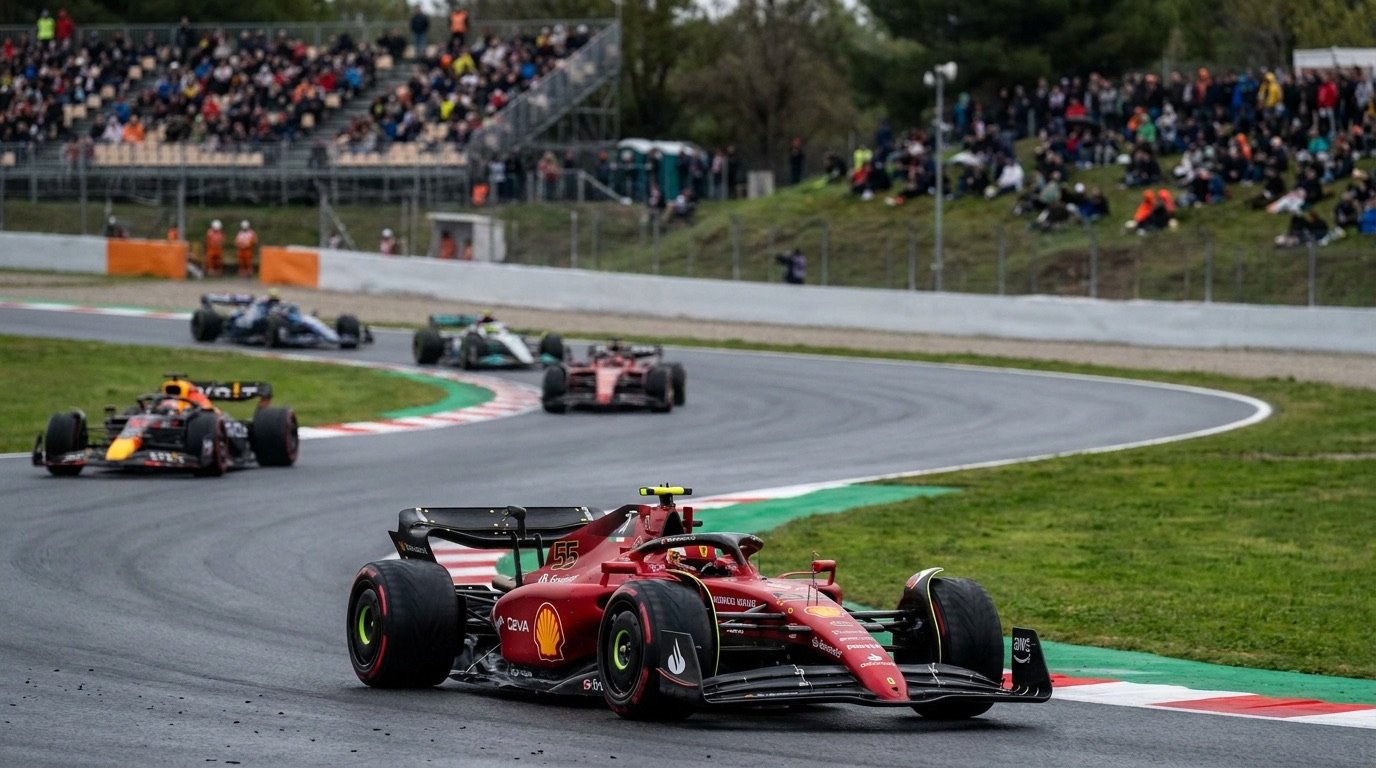
At 41, Lewis Hamilton became the oldest Formula 1 race winner in more than half a century, controlling the Barcelona-Catalunya Grand Prix as championship leader Kimi Antonelli suffered a brutal engine failure.
Red Bull face a defining home Austrian Grand Prix weekend
On familiar ground at Spielberg, strategy, upgrades and internal confidence all come under the microscope as the championship picture tightens.
Lando Norris meets his Madame Tussauds waxwork in London F1 culture moment
The Formula 1 star came face to face with his own wax figure at the London attraction, a lighter moment that shows how modern F1 fame now reaches far beyond the racetrack.