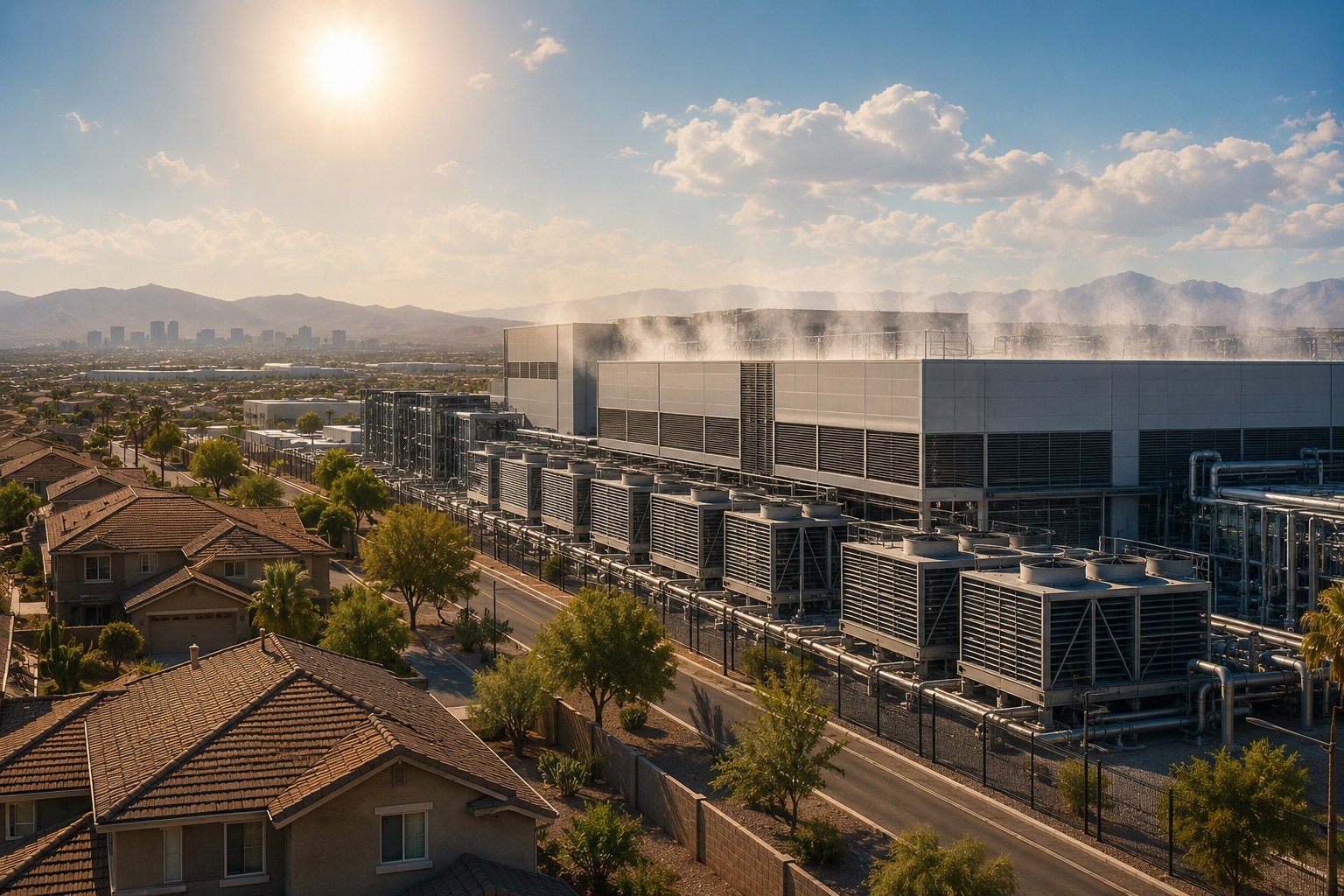
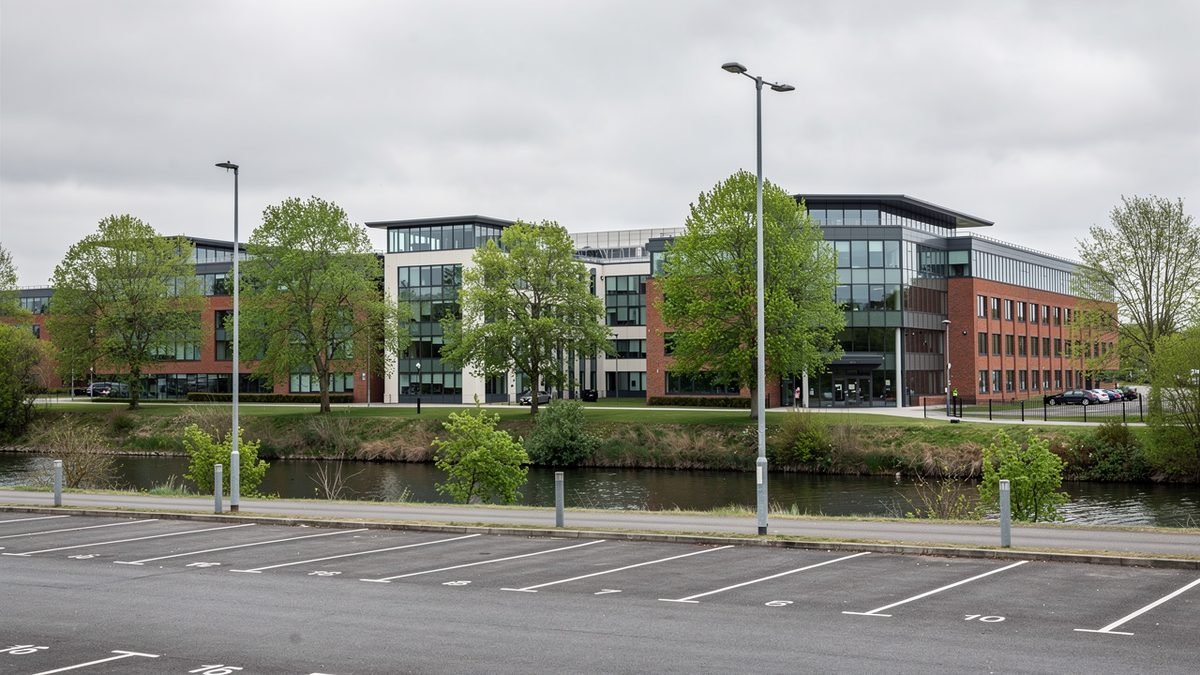
Microsoft's Reading headquarters could be replaced by a 72MW gas-powered data centre
The site of Microsoft's UK headquarters at Thames Valley Park near Reading could be redeveloped as a 72MW data centre powered initially by on-site natural gas fuel cells, with a planning application expected in the autumn.
Business & Technology Editor ·
Why it's trending
The scheme is at public consultation through July and August 2026 ahead of a planning application expected in autumn 2026.
The site of Microsoft's UK headquarters near Reading could be demolished and replaced by a 72MW data centre, under a scheme now at public consultation ahead of a planning application expected this autumn.
The proposal covers roughly 5.3 hectares at Thames Valley Park, beside the A329(M) and within reach of the M4. Microsoft, which has consolidated its local operations into fewer buildings, would move staff into the existing HERE building elsewhere on the park by August 2027, freeing the headquarters site for redevelopment.
At a glance
- A 72MW data centre is proposed for the 5.3-hectare Thames Valley Park site near Reading
- Power would come initially from on-site fuel cells running on natural gas, with a route to biomethane or hydrogen
- Up to 245 construction jobs and at least 115 full-time operational roles are forecast
- Construction investment is put at more than £200m
- Public consultation is running through July and August 2026, with a planning application expected in autumn 2026
- Operation is targeted from 2031; Microsoft staff would relocate within the park by August 2027
Offices out, racks in
The commercial premise is blunt: demand for suburban office space has not recovered, and demand for computing capacity has not stopped rising. Microsoft vacated several buildings in the area and consolidated into one larger site, leaving a campus that the developers describe as underused and that the planning documents treat as functionally obsolete in its current form.
Microsoft, for its part, framed the move around its own workplace rather than the redevelopment. "This move is part of our continued investment in the UK, ensuring our workplaces keep pace with how people work today and what teams will need in the future," the company said.
The gas question
The most contentious element is the power. The facility would run on on-site fuel cells fed initially with natural gas, with the stated intention of switching to greener fuels such as biomethane or hydrogen and moving to grid supply as additional capacity is brought forward.
This is becoming a familiar pattern in the south-east, and it exists because the grid does not. Connection queues in the Thames Valley run for years, and a developer who waits for a grid offer cannot build. Generating on site sidesteps the queue but locks in fossil generation for an indeterminate period, and "until grid capacity arrives" is not a date.
Water, heat and biodiversity
Cooling would be primarily air-based, which materially reduces water consumption compared with evaporative systems, an increasingly decisive point in a water-stressed region. The scheme also commits to a minimum 10 per cent biodiversity net gain, now a statutory requirement in England, and says opportunities for reusing waste heat will be explored.
That last commitment is the softest of the three. Waste-heat reuse depends on a nearby customer with a matching demand profile, and business parks rarely provide one. It is a reasonable thing to explore and a difficult thing to deliver.
Jobs, and the honest number
The economic case rests on more than £200m of construction investment, up to 245 construction jobs and at least 115 full-time equivalent operational roles. The construction figure is real but temporary; the 115 permanent posts are the number that matters for a local authority weighing the long-term use of 5.3 hectares.
It is a modest return in employment terms compared with the offices being replaced, and that trade-off is the substance of the planning argument rather than a detail of it. The counter-case is infrastructure: capacity of this kind has to sit somewhere, and a brownfield business park beside a motorway is a considerably better answer than green belt.
What happens next
Consultation events have been running through the summer, including at Pearson Hall in nearby Sonning, and a planning application is expected in the autumn. If it is approved, the target for operation is 2031, with Microsoft's own staff relocating within Thames Valley Park by August 2027. The grid connection timetable, rather than the planning process, is likely to determine how long the gas fuel cells actually run.
Sources & verification
- DataCenterDynamics — primary reporting and official updates
- Reporting reviewed on 21 August 2026; figures as published at that time
Filed under Technology · Written by Rajan Mehta