Extreme Heat Is Turning AI Data Centres Into a Street-Level Infrastructure Test
AP reporting from Lowell, Massachusetts shows how heatwaves, generators and neighbourhood pressure are making AI's physical footprint a local political issue.
Rajan Mehta
Writer ·
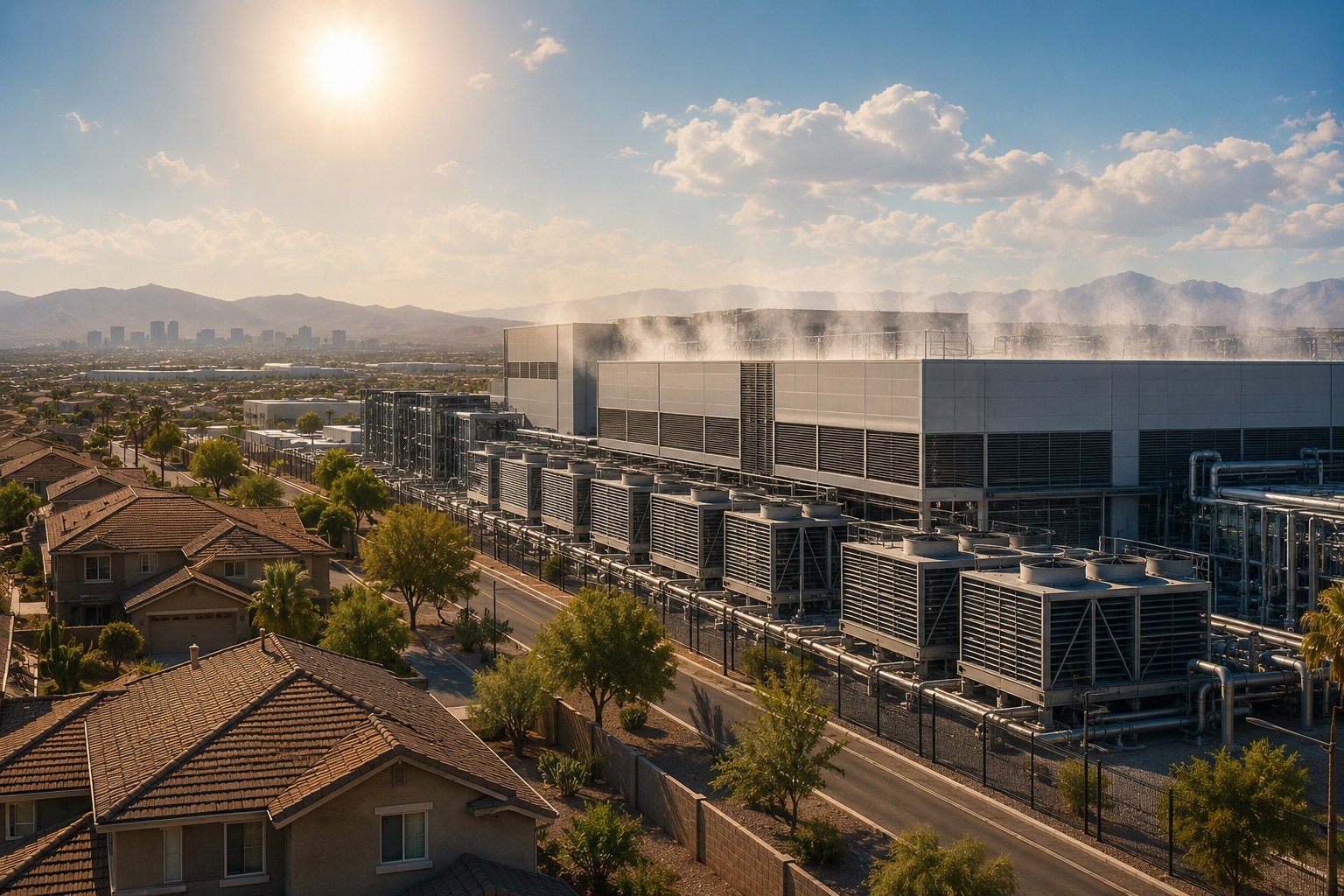
The AI debate is usually conducted in abstractions — model benchmarks, valuations, promises of productivity. The latest flashpoint is far more physical: heat, water, electricity, generator noise and the daily routines of people who live beside the buildings that keep the digital economy running.
What happened
Associated Press reporting from Lowell, Massachusetts describes a Markley Group data centre standing close to homes and a ballpark in the city's Sacred Heart neighbourhood — an area the state has designated as facing elevated environmental and health risks. During a spell of punishing summer heat, residents questioned the local cost of a facility whose cooling systems and backup diesel generators have become part of the neighbourhood's soundscape. The company told AP its generators run only during genuine power disruptions plus brief weekly tests, that it has planted more than 2,000 trees nearby, and that its water use is a small fraction of Lowell's daily consumption. Earlier this year, Lowell's City Council voted for a one-year moratorium on further data centre expansion.
Why it matters
Extreme heat compounds every pressure a data centre places on its surroundings. Regional electricity demand spikes as homes and offices run cooling harder, just as server halls need more of it too. Experts cited by AP note that operators must choose between energy-intensive refrigeration and water-intensive evaporative cooling — and hotter conditions make both harder to defend without careful planning. The Lowell case distils the question every city courting AI infrastructure should ask before the next approval: who receives the economic upside, and who lives with the operational burden? When the answer is that a state-designated environmental justice neighbourhood absorbs the noise and the risk, backlash is not anti-technology sentiment. It is ordinary civic accounting.
The bigger picture
Data centres are not new, and they are not villains by default — they are infrastructure, and the fair question is whether they are sited, governed and monitored at a standard that matches their scale. The AI boom has changed the politics because the pace of demand growth has outrun the permitting habits of most municipalities. The pattern is not confined to Massachusetts: UK and European planning authorities are facing near-identical disputes over grid connections, water abstraction and land use as hyperscale projects multiply. If heatwaves are now stress tests rather than anomalies, approval processes designed around average weather will keep producing facilities that look manageable on paper and contentious in practice. For the industry, the lesson is that community concern is not a public-relations inconvenience. People can believe in digital progress and still ask whether their street is absorbing too much of its cost. The social licence for AI will be negotiated not only in boardrooms and research labs, but in places where residents can hear the cooling systems from their kitchens.
What happens next
Expect more moratoria, tighter disclosure demands and heat-resilience conditions attached to new permits — generator testing schedules, emissions data, water budgets and noise limits specific enough to audit. The question is no longer whether society needs computing infrastructure; it plainly does. It is whether that infrastructure can expand without asking already burdened communities to trade concrete costs for vague promises. Extreme heat has made the question unavoidable, and the AI industry would be wise to treat it as central to growth rather than peripheral to it.
Sources: reporting by Associated Press.
The NE Times is an independent news and analysis publisher. Our articles combine factual reporting with clearly-written, impartial analysis. Content is for general information and does not constitute professional advice. Disclaimer.
You may also like to read

France's heatwave death surge turns climate adaptation into a public health test
Deaths rose 29.1% — 2,025 excess deaths — in France's record June heatwave week, exposing how homes, health systems and cities fail in extreme heat.

Hospitals Keep Improvising Through Heatwaves — the Plan Has to Come First
Europe's latest extreme heat shows health systems built for an older climate cannot keep writing heatwave plans after the wards are already hot.
Forty mayors sign data centre pact — and turn AI infrastructure into a city problem
A C40-linked pact signed during London Climate Action Week gives city halls a formal voice on where AI data centres are built, powered and cooled.

Del Toro's Barcelona breakthrough: a Tour stage won against rivals and rising heat
The 22-year-old Mexican's stage-two win on Montjuic, gifted by Pogacar, signals UAE's depth — as 38C heat and Pyrenees wildfires reshape the 2026 Tour.