Neck of the Woods' relaunch is a blueprint for saving small venues
The Auckland club's Hoki Mai reopening on 10 July, rescued by community fundraising, shows what it takes to keep grassroots music infrastructure alive.
Sophie Bennett
Writer ·
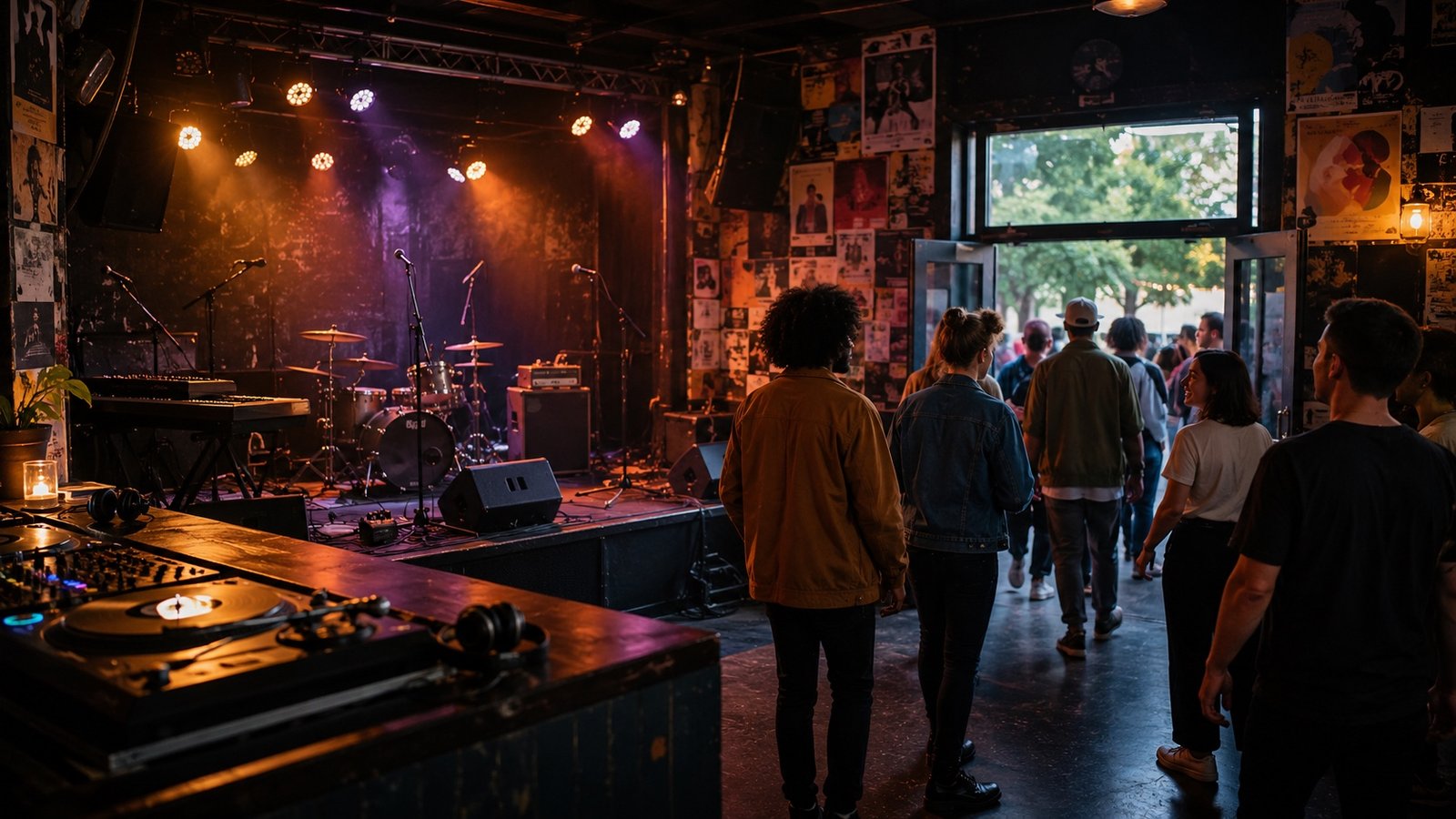
A venue reopening reads as a small entertainment item until it is placed in the right frame. Neck of the Woods, the Tāmaki Makaurau Auckland club that appeared destined to close after 11 years, has announced its first official relaunch event after community fundraising and organising bought it a lifeline — and the way it is returning says as much as the fact that it is.
What happened
Rolling Stone Australia reported that the venue's first event back, Hoki Mai, is scheduled for 10 July and built around a Māori and Pasifika DJ line-up during the Matariki season. The timing carries weight: Matariki is associated with reflection, remembrance and renewal, which makes it a pointed frame for a room pulled back from the edge. This is not a standard comeback party; it reads as a statement about what kind of institution the venue intends to be.
Why it matters
Across many cities — Britain's included — small and mid-sized venues are being squeezed by rent, insurance, staffing costs, licensing uncertainty and audiences with less to spend. The phrase 'music ecosystem' is often vague, but rooms like this make it concrete: they are where early-career artists learn to hold a room, where DJs test sets on actual bodies, where promoters build trust and scenes form before the wider industry names them. When a room disappears, a city loses a piece of informal training infrastructure, not just a stage. The community response matters for the same reason — a crowdfunding campaign is evidence that audiences grasp the difference between consuming culture and sustaining it.
The counter-view
Sentiment alone will not keep the doors open. Community energy can stop an immediate closure, but it cannot substitute for a workable business model, and not every beloved venue can or should be rescued the same way. The owners themselves, as reported, spoke of short-, mid- and long-term goals and the need to repair and reimagine the venue system — an admission that the real work starts after the celebration. A reopening night is symbolic; survival is administrative, financial and repetitive. The test is whether the affection that funded the rescue converts into habits: early ticket purchases, turnout for unknown acts, membership models that outlast the emergency.
What happens next
Hoki Mai on 10 July is a proof point in a debate every self-declared 'creative city' should be having: who pays for culture before it becomes profitable? Cities find it easy to celebrate music once it turns into tourism or export success, and much harder to protect the unglamorous rooms that make those outcomes possible. If the community that rallied keeps participating once the crisis feeling fades — through governance, programming and simple attendance — Neck of the Woods becomes a model other scenes will study. The best version of this story is not that nostalgia saved a venue, but that people recognised a cultural room as shared infrastructure and acted before the lights went out for good.
Sources: reporting by Rolling Stone Australia.
The NE Times is an independent news and analysis publisher. Our articles combine factual reporting with clearly-written, impartial analysis. Content is for general information and does not constitute professional advice. Disclaimer.
You may also like to read

Beyoncé's surprise Morning Dew drop turns the B'Day anniversary into a streaming-era event
Her first new song in two years, dropped without warning on 4 July, opens the countdown to a 20th-anniversary B'Day reissue — pop monetising memory.

Clive Davis remembered as music industry's great starmaker after death at 94
Tributes have poured in for record executive Clive Davis, who has died at 94, with artists and industry figures crediting him with discovering, developing and reviving careers across generations.

Artists push back after finding songs in AI music training datasets
SZA, Kenneth Blume and other musicians have criticised the appearance of their work in datasets used by AI music systems, deepening the industry's rights fight.

Musicians' union lawsuit turns AI licensing into a labour-rights battle
The American Federation of Musicians has sued Universal and Warner over AI-related licensing, arguing session players should be compensated when recordings feed new technology.