England Expands Newborn SMA Screening: How the Heel-Prick Test Could Transform Early Treatment
Babies in England are to be screened for spinal muscular atrophy through an expanded heel-prick evaluation. How SMA screening works and why early treatment matters.
Culture & Features Editor ·
Why it's trending
Expanding newborn screening for spinal muscular atrophy could allow life-changing treatment before symptoms appear, making it a major development for families and the NHS.
A major change to newborn testing
Babies across England are to be screened for spinal muscular atrophy through an expanded national evaluation using the newborn blood spot, commonly known as the heel-prick test. Laboratories are scheduled to begin joining the programme from October 2026, three months earlier than previously planned, with wider implementation continuing through 2027. The aim is to identify affected babies before symptoms appear, when treatment may have the greatest ability to protect movement, breathing and development.
The announcement is significant because SMA can progress rapidly in its most severe forms. A baby may appear healthy at birth while irreversible damage to motor neurons is already beginning. Once nerve cells are lost, treatment cannot simply restore all function. Screening changes the timeline: instead of waiting for weakness or feeding difficulties to become obvious, clinicians can investigate immediately and discuss treatment with specialist teams.
What spinal muscular atrophy is
Spinal muscular atrophy is a rare inherited condition that affects the motor neurons controlling voluntary muscles. It is usually caused by changes involving the SMN1 gene, which reduce production of a protein essential for motor-neuron survival. The condition has a spectrum of severity. Some babies develop profound weakness in the first months of life and may struggle to breathe or swallow, while people with later-onset forms can retain more function.
SMA is inherited in an autosomal recessive pattern, meaning a child generally receives an altered gene copy from each parent. Carriers are usually healthy and may not know they carry the variant. Newborn screening is not intended to assign blame or predict every detail of a child's future. It is a population-health tool designed to identify a small number of babies who need rapid confirmatory testing and specialist care.
How the heel-prick screening process works
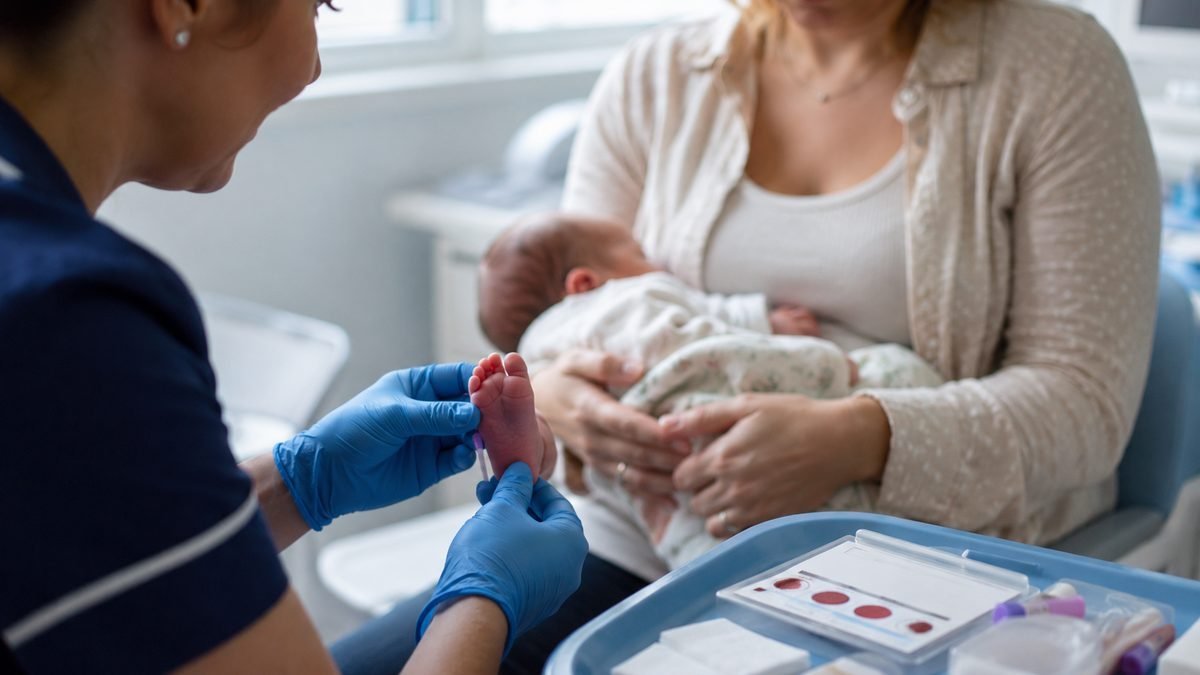
The existing newborn blood spot test involves collecting small drops of blood from a baby's heel onto a card shortly after birth. The sample is already used to screen for several serious but treatable conditions. Adding SMA analysis means laboratories can look for the most common genetic pattern associated with the disease using the same sample, avoiding a separate invasive procedure for most families.
A screening result is not the same as a final diagnosis. Screening tests are designed to identify babies with a higher likelihood of a condition. A positive or uncertain result leads to urgent contact, further genetic tests and assessment by specialists. Parents should receive clear explanations about what has been found, how quickly confirmatory testing will occur and what support is available. False positives and rare genetic patterns are among the issues the evaluation must monitor carefully.
Why treatment before symptoms can be decisive
The modern treatment landscape for SMA is very different from a decade ago. Gene-targeted and disease-modifying therapies can increase functional SMN protein or address the genetic cause. Outcomes are generally best when treatment begins before substantial motor-neuron loss. Some children treated very early can reach developmental milestones that would have been unlikely under the natural course of severe SMA.
That does not mean every screened child will have an identical outcome. Treatment choice depends on clinical circumstances, eligibility, timing and specialist judgment. Therapies can have important risks and require careful follow-up. Families may also need physiotherapy, respiratory support, nutritional advice and psychosocial help. The central advantage of screening is that it creates options earlier, rather than forcing clinicians and parents to race against symptoms after damage has become visible.
An evaluation, not the end of the evidence process
The government describes the rollout as an England-wide evaluation programme, supported by £4.1 million of National Institute for Health and Care Research funding and led by researchers at Oxford. Hundreds of thousands of babies are expected to be screened. The evaluation will examine how testing works in real clinical settings, how quickly families receive results, treatment pathways, equity of access and the balance of benefits and harms.
This distinction matters. The announcement brings widespread access forward, but the programme will still generate evidence for long-term decisions about the permanent national screening offer. Screening policy must consider test accuracy, clinical benefit, capacity, cost, informed consent and the consequences of identifying variants whose effects may be uncertain. Reporting should avoid suggesting that every scientific and policy question has already been settled.
What parents should expect
Parents of babies born during the phased rollout should receive information from maternity or newborn-screening services about the tests offered in their area. Because laboratories will join at different points, the exact start date may vary locally. Families should not assume that a delayed result means something is wrong, but they should contact their midwife, health visitor or screening service if they are unsure whether a sample was taken or need help understanding a result.
Campaigners have welcomed the move after years of arguing that the absence of routine SMA screening delayed life-changing care. Public attention has also grown through the experience shared by singer Jesy Nelson and other families. Their advocacy has helped explain the human stakes, but clinical information should still come from NHS professionals. The lasting importance of today's announcement will depend on smooth laboratory implementation, rapid specialist referral and equal access to treatment wherever a baby is born in England.
Sources & verification
- UK Government - Every baby in England to get genetic test from birth
- NHS - Newborn blood spot test
Filed under Health · Written by Sophie Bennett