Alzheimer's Blood Test Trial Expands in Scotland: What the Landmark Study Could Change
A Scottish study is evaluating blood tests for Alzheimer's disease through GP referrals. Learn how p-tau biomarkers work and what the trial does not yet prove.
Culture & Features Editor ·
Why it's trending
The prospect of a simpler blood test for Alzheimer's has generated strong public interest because current diagnostic pathways can be slow and invasive. The story is prominent in UK health coverage today.
A new real-world study in primary care
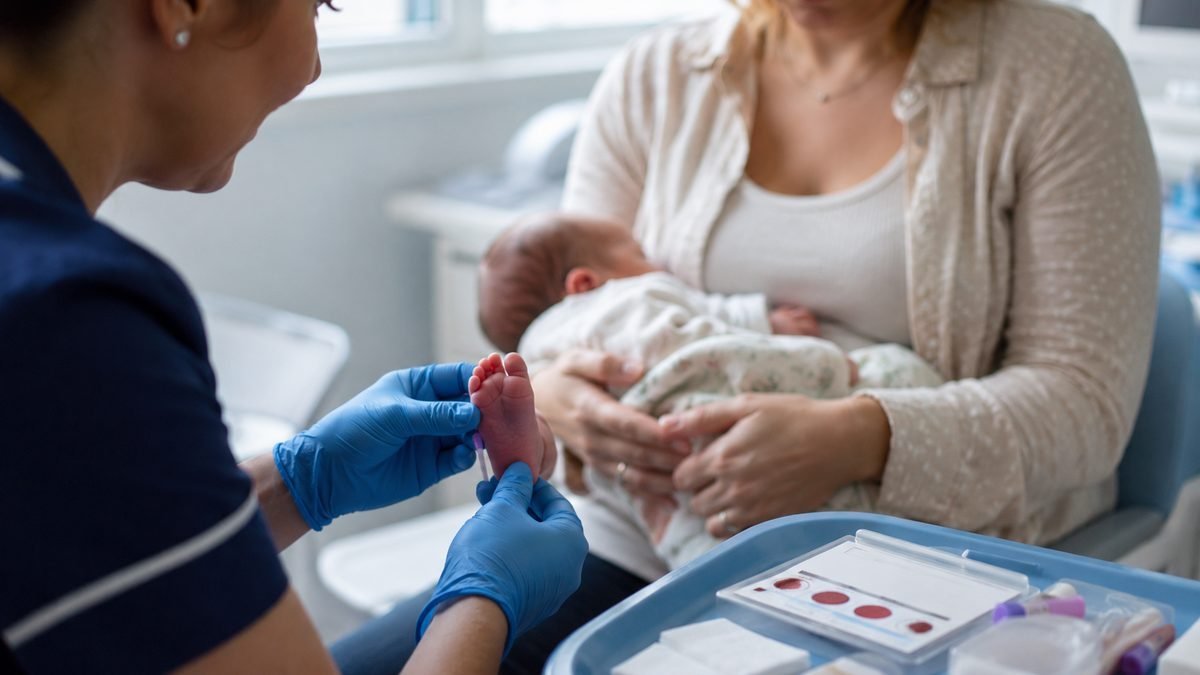
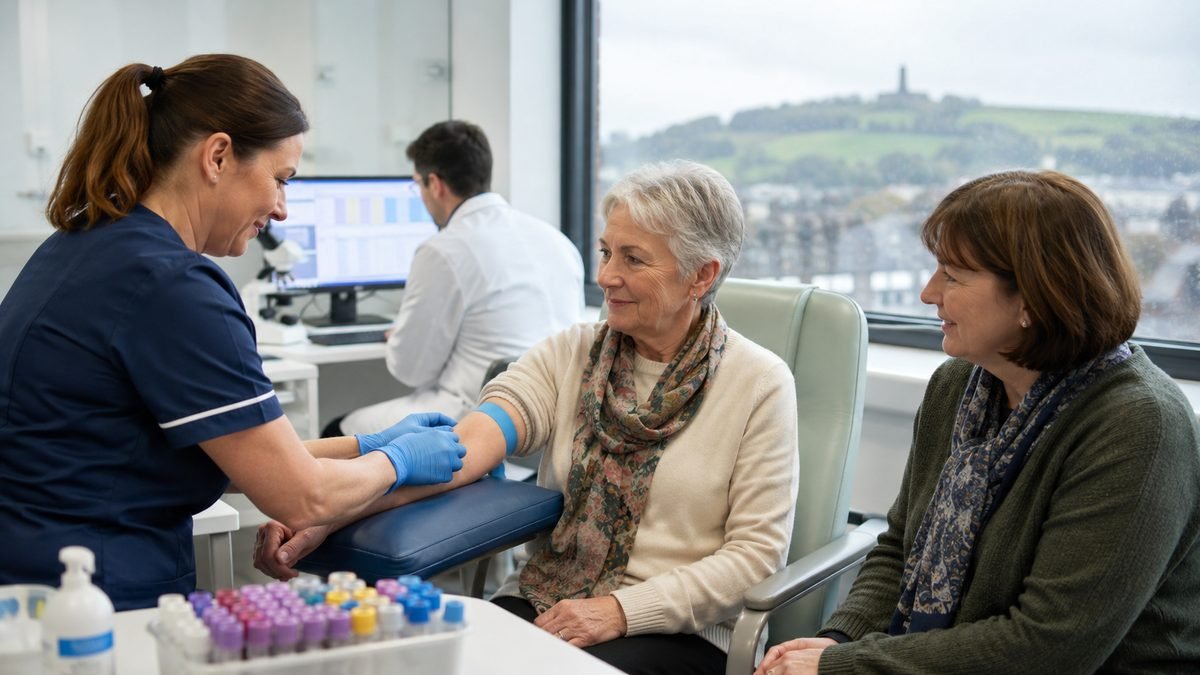
A landmark Scottish study is beginning to evaluate whether blood tests can improve the way people with possible Alzheimer's disease move from a GP consultation to specialist diagnosis. The BriDGe programme, led by Scottish Brain Sciences, plans to work with more than 50 GP practices and assess up to 500 referrals. The study will examine commercially available Roche tests that measure forms of phosphorylated tau, commonly written as p-tau181 and p-tau217.
The attraction is clear. A blood sample is cheaper, quicker and less invasive than a lumbar puncture and more widely available than specialist brain imaging. If a reliable test can indicate whether Alzheimer's-related changes are likely, clinicians may be able to refer the right patients sooner, reassure some people whose symptoms have another cause and reduce pressure on memory clinics.
However, the programme is a study, not the launch of a universal NHS screening service. It will test how biomarkers perform in ordinary primary-care pathways, including people with other illnesses and varied symptoms. That real-world evidence is essential before a laboratory result can be used routinely across Scotland or the wider UK.
What p-tau biomarkers measure
Alzheimer's disease is associated with abnormal accumulation of amyloid-beta plaques and tau tangles in the brain. Phosphorylated tau proteins can enter the bloodstream at very low concentrations. Modern assays are sensitive enough to measure particular forms, and studies have shown that p-tau217 in particular can correlate strongly with the presence of Alzheimer's pathology.
A biomarker does not read memory or determine how well a person can manage daily life. It provides evidence about a biological process. A person can have underlying pathology before obvious symptoms, while memory problems can arise from depression, sleep disorders, medication effects, vascular disease, vitamin deficiency and many other causes. Diagnosis therefore combines history, cognitive assessment, physical examination, laboratory tests and sometimes imaging or cerebrospinal-fluid analysis.
The Scottish study will help determine thresholds, referral rules and the rate of false positive and false negative results in the population for which the test is intended. A highly accurate test in a specialist research cohort may perform differently when used among patients whose symptoms are uncertain.
Why diagnosis is currently difficult
Around 90,000 people in Scotland are estimated to live with dementia, including roughly 60,000 with Alzheimer's disease. Many people wait months for a specialist assessment, and some never receive a precise diagnosis. Rural distance, workforce shortages and variation between health boards can lengthen the pathway. Existing definitive investigations are not available or appropriate for everyone.
Delay has practical consequences. A diagnosis can help families plan care, access benefits, discuss driving and legal arrangements, and receive treatment for symptoms. New disease-modifying medicines also make biological confirmation more important because they target amyloid and are intended for selected patients at an early stage. These drugs require careful monitoring and are not suitable for everyone, but their arrival changes the value of identifying pathology accurately.
Earlier information can also be emotionally difficult. Some people prefer to know the likely cause of symptoms, while others may experience anxiety, stigma or fear about employment and insurance. Testing must therefore be accompanied by informed consent, explanation and support rather than offered as a simple yes-or-no answer.
What the study could demonstrate
Researchers will assess more than laboratory accuracy. They need to know whether GPs can identify suitable patients, whether samples are processed consistently, how results change referral decisions and whether the pathway saves specialist time without missing important alternative diagnoses. Cost-effectiveness will be crucial: a test can be relatively inexpensive but still add cost if it is used too broadly or produces many uncertain results.
Equity is another test. Biomarker research has historically involved populations that may not represent the full diversity of patients. Performance and interpretation must be checked across age groups, ethnic backgrounds, kidney function and coexisting conditions. Access should not depend on living near a research centre or being confident enough to request a test.
Data governance also matters. A biomarker result is sensitive medical information. Patients need to know who can see it, how long it is retained and whether samples may be used for further research.
What the test cannot yet do
The blood test is not a home diagnostic kit and should not be purchased or interpreted without clinical context. It cannot predict with certainty when a person will develop symptoms, how quickly a condition will progress or whether a particular treatment will work. A negative result does not explain every cognitive complaint, and a positive result does not replace assessment of a person's function and wellbeing.
It is also not population screening for people without symptoms. Screening millions of healthy adults would create different evidence and ethical requirements, including the possibility of detecting biological changes years before useful treatment decisions can be made. The present study is focused on people entering a clinical pathway because there is already concern about cognitive symptoms.
Headlines describing a breakthrough should therefore be read carefully. The breakthrough is the possibility of bringing a sophisticated biomarker into ordinary care, not proof that diagnosis has become instant or that Alzheimer's disease can be cured.
What patients and families should know
Anyone worried about memory changes should contact a GP rather than waiting for access to a new test. Keeping a record of symptoms, medication, sleep and examples of changes in daily tasks can help the consultation. Sudden confusion requires urgent medical assessment because it may be caused by infection, stroke or another acute problem rather than dementia.
People referred through participating Scottish practices will receive information about the study and should have an opportunity to ask what the result can and cannot show. Participation in research is voluntary. Those outside the study remain entitled to existing assessment pathways, and no one should stop prescribed treatment or make major decisions on the basis of a media report.
If the BriDGe programme demonstrates safe, accurate and cost-effective use, it could help create a more consistent route to diagnosis and support a wider NHS rollout. The promise is not merely a faster laboratory result; it is a pathway that gives patients clearer answers at the right time. This article provides general information and is not medical advice.
Sources & verification
- Sky News - Scotland Alzheimer's blood-test study
- UCL - UK p-tau217 Alzheimer's blood-test trial
- Alzheimer's Research UK - New treatment and diagnosis context
Filed under Health · Written by Sophie Bennett
You may also like to read