North Korea's Kang Kon Destroyer Tests Signal a Navy Built for Attention
Kim Jong Un oversaw weapons tests aboard the repaired destroyer Kang Kon, pushing Pyongyang's naval ambitions to the centre of regional security debate.
Marcus Reeve
Writer ·
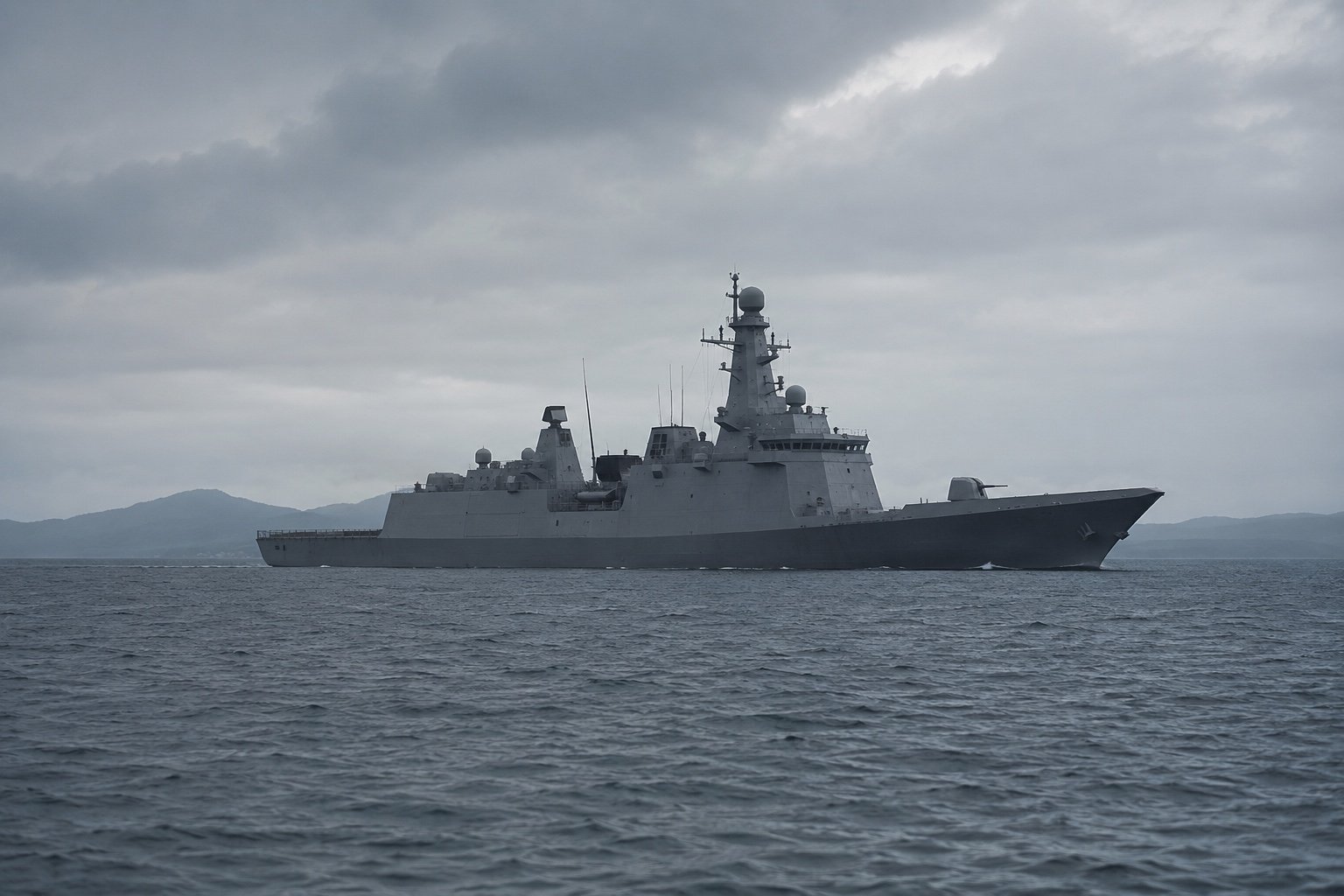
North Korea has staged another carefully choreographed weapons display, and this time the stage itself was the message. Kim Jong Un supervised a series of tests aboard the Kang Kon, a 5,000-ton destroyer that had to be repaired after a botched launch ceremony last year, according to the Associated Press. The choice of platform tells outside observers as much as the weapons fired from it.
What happened
The reported drills included a nuclear-capable cruise missile alongside trials of the ship's main gun, automatic cannons, electronic warfare equipment and target-detection systems. Kim ordered the vessel into active service within two months. The Kang Kon is the second of North Korea's new class of large destroyers, following the Choe Hyon, which was commissioned in June as part of a stated plan for regular production of major warships.
Why it matters
A cruise missile tested from a naval platform complicates the assumptions that South Korea, Japan and the United States build into their monitoring and missile-defence planning. Fixed launch sites can be watched; a warship moves. Even if the system's real-world reliability is unproven, forcing adversaries to plan for additional launch vectors is itself a form of strategic pressure. There is also a domestic dimension. The Kang Kon's failed launch in 2025 was a rare public embarrassment for a state that treats military hardware as proof of national competence. Parading the repaired ship as the centrepiece of a weapons test converts that failure into a story of recovery.
The counter-view
Analysts quoted in AP reporting remain cautious about how effective these vessels actually are, and questions persist about possible Russian technical assistance. Large surface combatants demand trained crews, integrated sensors, air defence and constant maintenance — layers of capability that cannot be conjured by a launch ceremony. A destroyer is also more visible and arguably more vulnerable than the submarines and mobile land systems on which Pyongyang has traditionally relied. The gap between image and operational capability may be wide, which is why sober analysis should avoid both alarmism and dismissal.
What happens next
Expect the Kang Kon to enter service on or near Kim's two-month deadline, accompanied by further state-media spectacle, and expect neighbouring capitals to fold a nascent North Korean surface fleet into their surveillance and anti-ship planning. The harder question is sanctions enforcement: if Russian assistance is confirmed as a factor in this naval build-out, the debate over how Pyongyang funds and equips its modernisation will intensify. The Kang Kon is not yet a proven weapon of war, but it is already a functioning instrument of attention — and in deterrence politics, attention is rarely wasted.
Sources: reporting by Associated Press.
The NE Times is an independent news and analysis publisher. Our articles combine factual reporting with clearly-written, impartial analysis. Content is for general information and does not constitute professional advice. Disclaimer.
You may also like to read
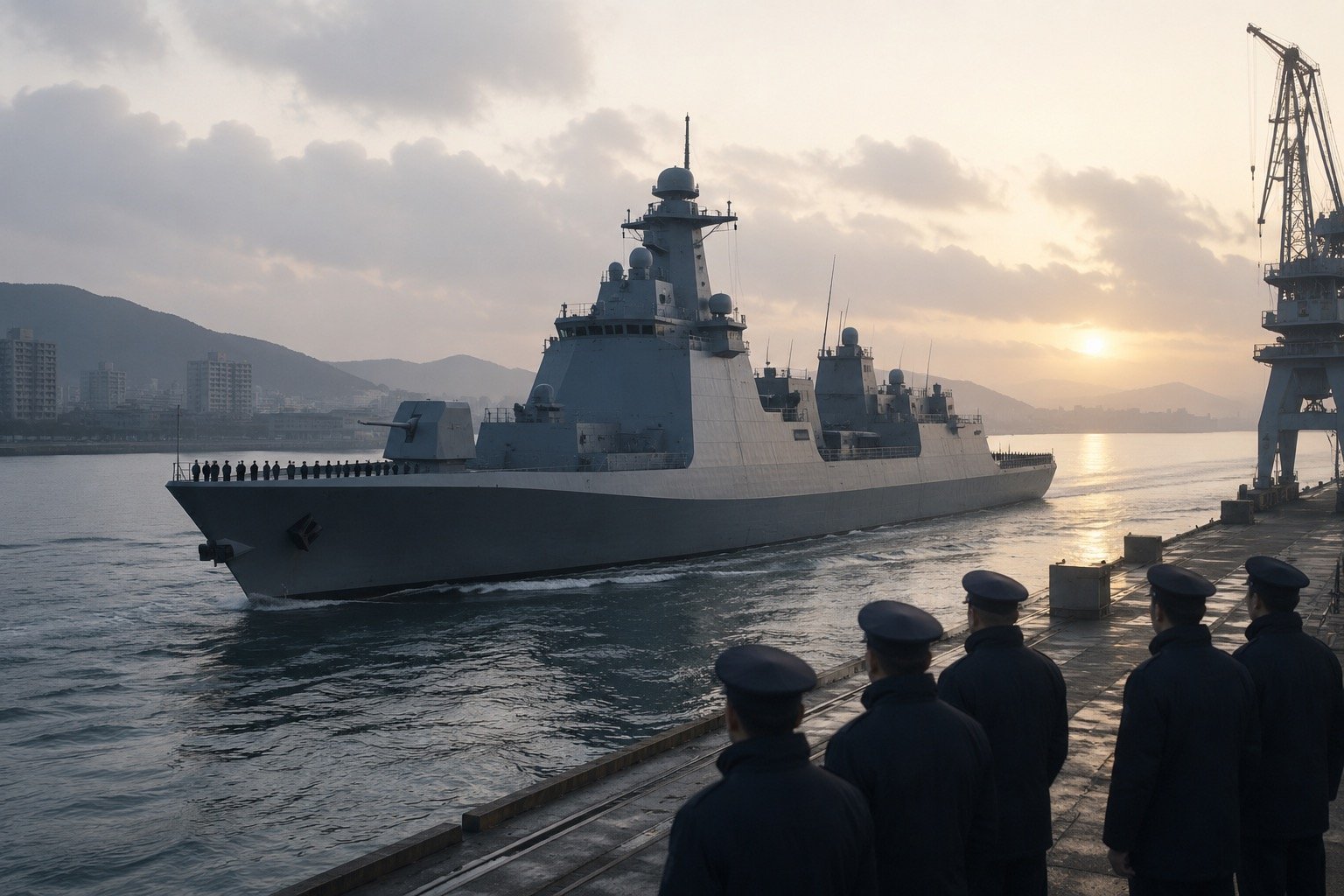
Kim Jong Un Claims Progress Towards Nuclear-Armed Navy
North Korea has commissioned the destroyer Choe Hyon at Nampo as Kim Jong Un touts advances towards a nuclear-capable fleet.
Seoul keeps brakes on closer defence ties with Japan despite regional pressure
President Lee Jae-myung has ruled out a rapid expansion of military cooperation with Tokyo, insisting historical grievances be addressed first, even as North Korea, China and Russia draw closer together.
South Korea's former president Yoon handed 30-year term over secret drone flights into North Korea
A Seoul court has sentenced ousted leader Yoon Suk Yeol to 30 years in prison after finding he conspired to fly military drones over Pyongyang, a verdict prosecutors say was tied to his failed bid to impose martial law.
When Confidentiality Feels Like a Gag: Australia's Parliamentary Watchdog Under Scrutiny
A staffer's account of jail-threat confidentiality warnings puts Australia's parliamentary complaints body — and workplace reform everywhere — to the test.