Great British Railways moves closer as flagship bill clears the Commons
MPs approved the legislation that will fold most train operators and Network Rail into a single public body, sending it on to the House of Lords.
Eleanor Whitfield
Writer ·

The government's Railways Bill has cleared the House of Commons, clearing the way for the creation of Great British Railways, the single organisation intended to bring most of the rail network under public control. MPs backed the legislation at third reading by 278 votes to 149 before sending it on to the House of Lords for further scrutiny.
At the heart of the Bill is a plan to fold most passenger train operators in England together with Network Rail, which runs the tracks, signalling and stations, into one body. Ministers argue that ending the long-standing split between track and train will cut duplication, simplify fares and ticketing, and finally give passengers a single organisation to hold to account when things go wrong.
The vote marks a significant milestone in a reform that has been promised, in various forms, for several years. Successive governments have accepted that the structure of the railway is too fragmented, but turning that diagnosis into legislation has proved slow. Passage through the Commons gives the project fresh momentum, even as substantial questions about implementation remain unresolved.
What Great British Railways would do
Great British Railways is conceived as a single guiding mind for the network, responsible for both infrastructure and the running of most passenger services. Supporters say a unified body can plan timetables, investment and maintenance in a joined-up way, removing the contractual friction that arises when separate companies are responsible for the trains and the tracks they run on.
Ministers have set out a number of objectives they expect the new body to pursue once it is operational:
- Bringing most passenger operators into public ownership as existing contracts expire, rather than through costly early termination.
- Integrating Network Rail's infrastructure responsibilities with the running of services under one organisation.
- Simplifying the fares and ticketing system that passengers have long found confusing and inconsistent.
- Providing a single, accountable point of contact for passengers, watchdogs and government.
- Co-ordinating long-term planning of investment, timetables and maintenance across the network.
The government has stressed that the transition will be gradual, with operators absorbed as their current franchises or contracts come to an end. That phased approach is intended to avoid the expense of buying out private operators early, but it means the full benefits of the reform may take years to be felt by passengers.
“For decades passengers have paid the price of a fragmented railway. Great British Railways will put the travelling public at the centre of the system.”
— A Department for Transport spokesperson
Amendments and opposition
During the remaining stages, MPs approved a series of government amendments while voting down a final batch of changes pressed by opposition members. Critics warned that consolidating so much of the network into one state-run body risked creating a sprawling monopoly with little competitive pressure to keep costs down, and pressed for stronger guarantees on open-access services and value for money.
Open-access operators, which run services on commercial terms outside the franchising system, attracted particular attention during the debates. Some MPs argued that these operators have driven innovation and lower fares on certain routes, and they sought assurances that the new structure would not squeeze them out. An opposition spokesperson said the government risked entrenching a monopoly that would be answerable to ministers rather than to passengers.
Ministers responded that accountability would in fact improve, because a single body could no longer pass blame to others when services failed. They also pointed to the potential savings from removing duplicated management and overlapping contracts, savings they argue can be reinvested in the network.
Background
Britain's railways were privatised in the mid-1990s, splitting the running of trains from the ownership and maintenance of the tracks. The structure was intended to introduce competition and private investment, but it has been criticised over the years for its complexity, its cost and the difficulty passengers face in identifying who is responsible when journeys go wrong. A series of high-profile timetable failures and disputes between operators and the infrastructure owner intensified calls for reform.
The idea of a single body to oversee the railway gained cross-party traction following an independent review of the sector, and the broad principle has survived changes of government. What has remained contested is the detail: how much should be brought into public hands, how quickly, and what role should remain for private and open-access operators.
What happens next
With the Bill now in the Lords, peers are expected to probe the detail of how the new body will be governed, how quickly operators will be brought in as existing contracts expire, and what powers passengers and watchdogs will have. The Lords have a track record of pressing for safeguards on accountability and value for money, and the government may face pressure to accept further amendments before the legislation can receive royal assent. Even once the Bill becomes law, standing up Great British Railways as a functioning organisation will be a substantial administrative undertaking that unfolds over the coming years.
Sources: reporting by UK Parliament.
The NE Times is an independent news and analysis publisher. Our articles combine factual reporting with clearly-written, impartial analysis. Content is for general information and does not constitute professional advice. Disclaimer.
You may also like to read

Great British Railways takes shape as more operators return to public hands
The Government's flagship rail reform is gathering pace, with further operators set to fall under public ownership through 2026 as the Railways Bill makes its way through Parliament.
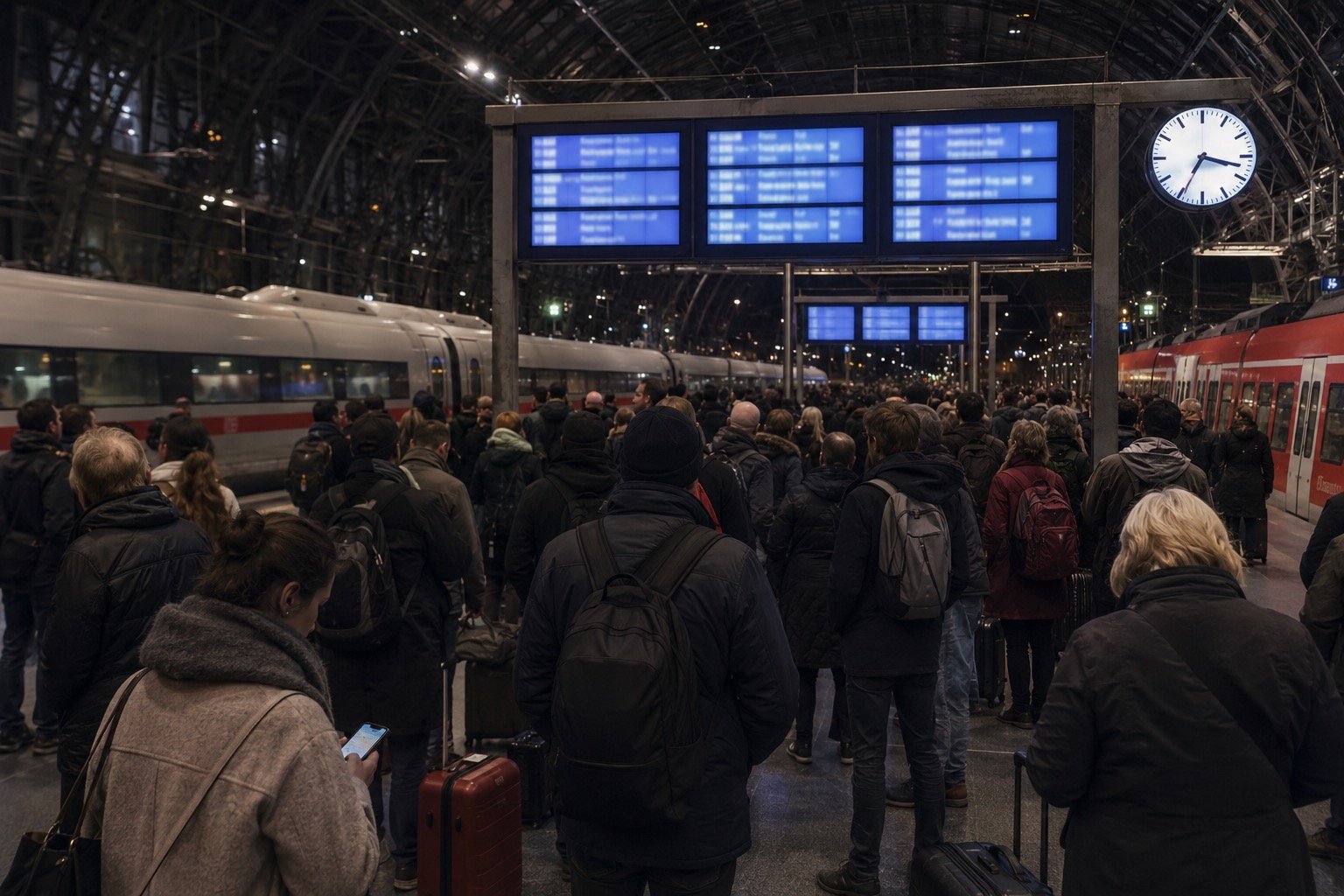
Germany rail outage strands passengers overnight
A nationwide communications fault halted trains across Germany, forcing Deutsche Bahn to hand out taxi and hotel vouchers.
Opinion: If Thames Water is nationalised, let us at least admit the experiment failed
Ministers are edging towards temporary state control of Britain's biggest water company. Whatever happens next, the priority must be customers and rivers, not the creditors who profited on the way up.

Opinion: The public has made up its mind on water. The government has not
With Thames Water lurching from crisis to crisis and a mayor calling for nationalisation, ministers are clinging to a reform plan the voters have already rejected in principle.