Opinion: If Thames Water is nationalised, let us at least admit the experiment failed
Ministers are edging towards temporary state control of Britain's biggest water company. Whatever happens next, the priority must be customers and rivers, not the creditors who profited on the way up.
Sophie Bennett
Writer ·
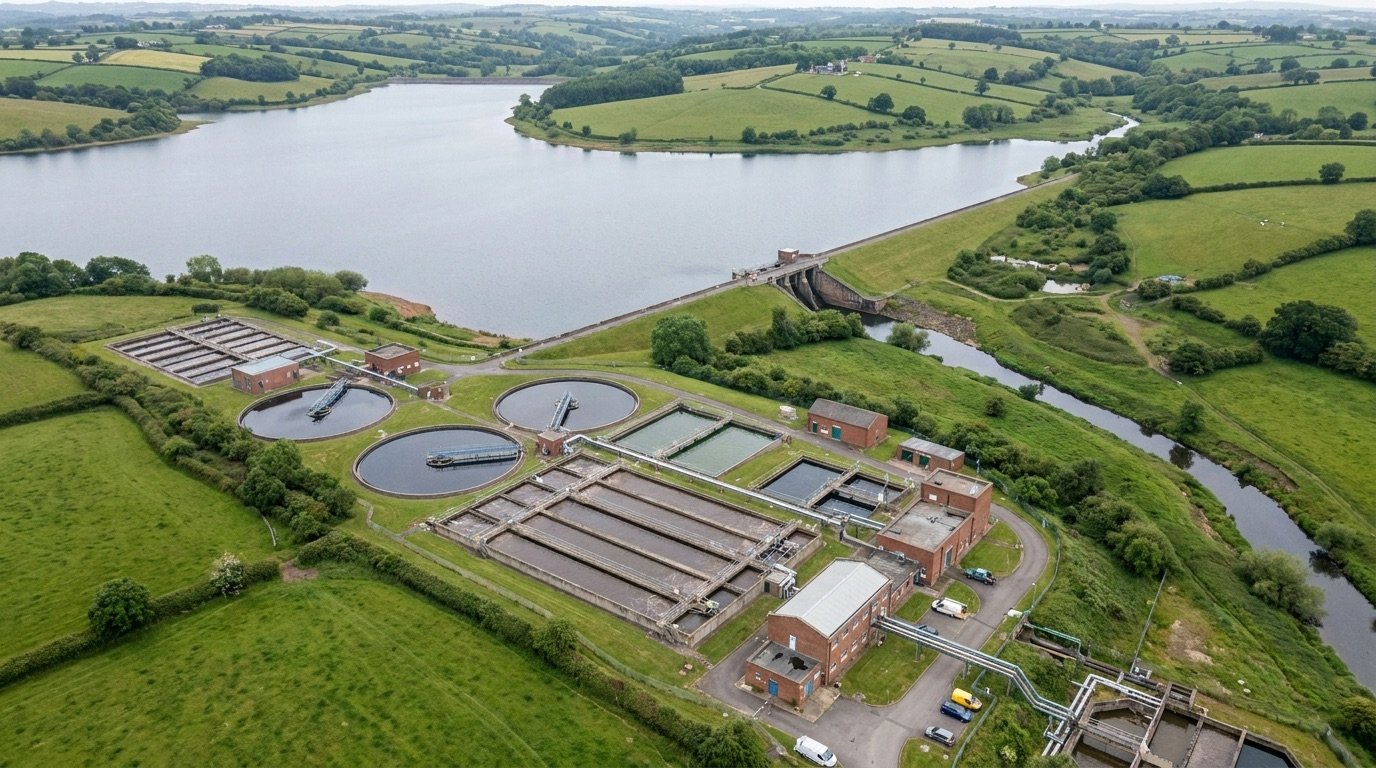
Thames Water has lurched another step towards temporary nationalisation. Reports today suggest the Environment Secretary has warned regulators that a proposed £10bn rescue package would place an 'undue burden' on customers, casting doubt over what many had treated as the company's last realistic chance of avoiding government control. Administrators have reportedly already been lined up should the firm be pushed into the special administration regime, a form of temporary nationalisation designed to keep the taps running and the sewers working while a longer-term answer is found.
With something close to £20bn of liabilities and a record of sewage discharges that has made it a national byword for corporate failure, Thames has become one of the biggest crises on the government's desk. It supplies a quarter of the country, around 16 million people in and around London. Its collapse is not an option, and everyone in the negotiation knows it. That knowledge is precisely the problem: a company that cannot be allowed to fail has every incentive to behave as though the rules do not apply to it.
Whatever route ministers finally take, they should resist the temptation to dress up a bailout as a rescue. What is failing here is not one badly run firm. It is a model.
How a public good became a financial instrument
The story of Thames Water is the story of privatisation's central flaw laid bare. Water is a natural monopoly. You cannot shop around for a rival pipe to your kitchen tap, which means the usual disciplines of competition simply do not exist. In their absence, successive owners treated a captive customer base as a reliable annuity, loading the company with debt, paying out generous dividends and deferring the unglamorous business of fixing pipes and treatment works. The infrastructure aged while the balance sheet was hollowed out.
Defenders of the model will say, fairly, that privatisation did bring in capital and that the regulator, Ofwat, was too timid for too long. Both points have force. But the deeper issue is structural. When the upside is privatised and the downside, an essential service that cannot be switched off, is ultimately underwritten by the public, you have built a machine for transferring risk to citizens and reward to shareholders. Thames is what that machine looks like when it finally seizes.
Temporary nationalisation is the lesser evil, with one condition
Bringing Thames into the special administration regime is not an ideological triumph for anyone; it is a damage-limitation exercise. But it is the right one, provided ministers hold their nerve on a single point: the people who lent to and profited from this company during the good years must take their losses. The Environment Secretary's reported worry about the burden falling on customers is exactly the right instinct. A 'rescue' that protects creditors by raising bills or by quietly socialising the debt would reward the very behaviour that caused the crisis.
Consider what a fair settlement would actually involve:
- Creditors and shareholders absorbing losses before a single penny falls on bill-payers
- Binding, enforceable investment targets on leaks, sewage and treatment capacity
- Transparent public accounts, so customers can see where their money goes
- A clear test for any future ownership, public, mutual or private, judged on delivery rather than dogma
“The question is not whether the state should step in. It plainly must. The question is who pays for the years in which a public necessity was run as a private cash machine.”
— Daniel Okafor
Beware swapping one dogma for another
It would be easy, and politically tempting, to treat Thames as proof that nationalisation is the universal answer and to wave the whole sector into permanent public ownership. Caution is warranted here too. State ownership is not a magic solution; it brings its own risks, of underinvestment when budgets are squeezed, of political interference in pricing, of the slow ossification that afflicts monopolies whoever owns them. The failure of one model is not automatic vindication of its opposite.
The honest position is less tribal and more demanding. What customers and rivers need is not a flag on the building but accountable, well-capitalised management with a legal duty to invest, robust independent regulation with teeth, and an end to the financial engineering that treated drinking water as a leveraged bet. Those things can in principle be delivered through public ownership, a not-for-profit mutual on the Welsh model, or a tightly regulated private operator. The structure matters less than the incentives it creates.
So let Thames Water pass into temporary public hands if that is what it takes to keep the water clean and the system intact. But let us be clear-eyed about why we are here. For more than three decades we ran an experiment that assumed market discipline would do the work that competition could not. The experiment has failed in the most visible way imaginable, in rivers thick with sewage and a flagship company on the brink. The least we owe the people now footing the bill is to learn the actual lesson, rather than reaching for the most comfortable slogan and starting the cycle again.
Sources: reporting by New Civil Engineer.
The NE Times is an independent news and analysis publisher. Our articles combine factual reporting with clearly-written, impartial analysis. Content is for general information and does not constitute professional advice. Disclaimer.
You may also like to read

Opinion: The public has made up its mind on water. The government has not
With Thames Water lurching from crisis to crisis and a mayor calling for nationalisation, ministers are clinging to a reform plan the voters have already rejected in principle.

Water firms face mounting penalties as Ofwat presses sewage crackdown and fines are diverted to clean-up
Regulator Ofwat is pursuing a series of enforcement cases against England's biggest water companies over storm overflow spills, with hundreds of millions of pounds in penalties now earmarked for environmental repair.

Great British Railways takes shape as more operators return to public hands
The Government's flagship rail reform is gathering pace, with further operators set to fall under public ownership through 2026 as the Railways Bill makes its way through Parliament.

Great British Railways moves closer as flagship bill clears the Commons
MPs approved the legislation that will fold most train operators and Network Rail into a single public body, sending it on to the House of Lords.