South Korea jails former justice minister for 25 years over 2024 martial law plot
A Seoul court has handed former justice minister Park Sung-jae a 25-year prison term for aiding ex-president Yoon Suk Yeol's short-lived 2024 martial law declaration, widening the legal reckoning over the crisis.
Marcus Reeve
Writer ·
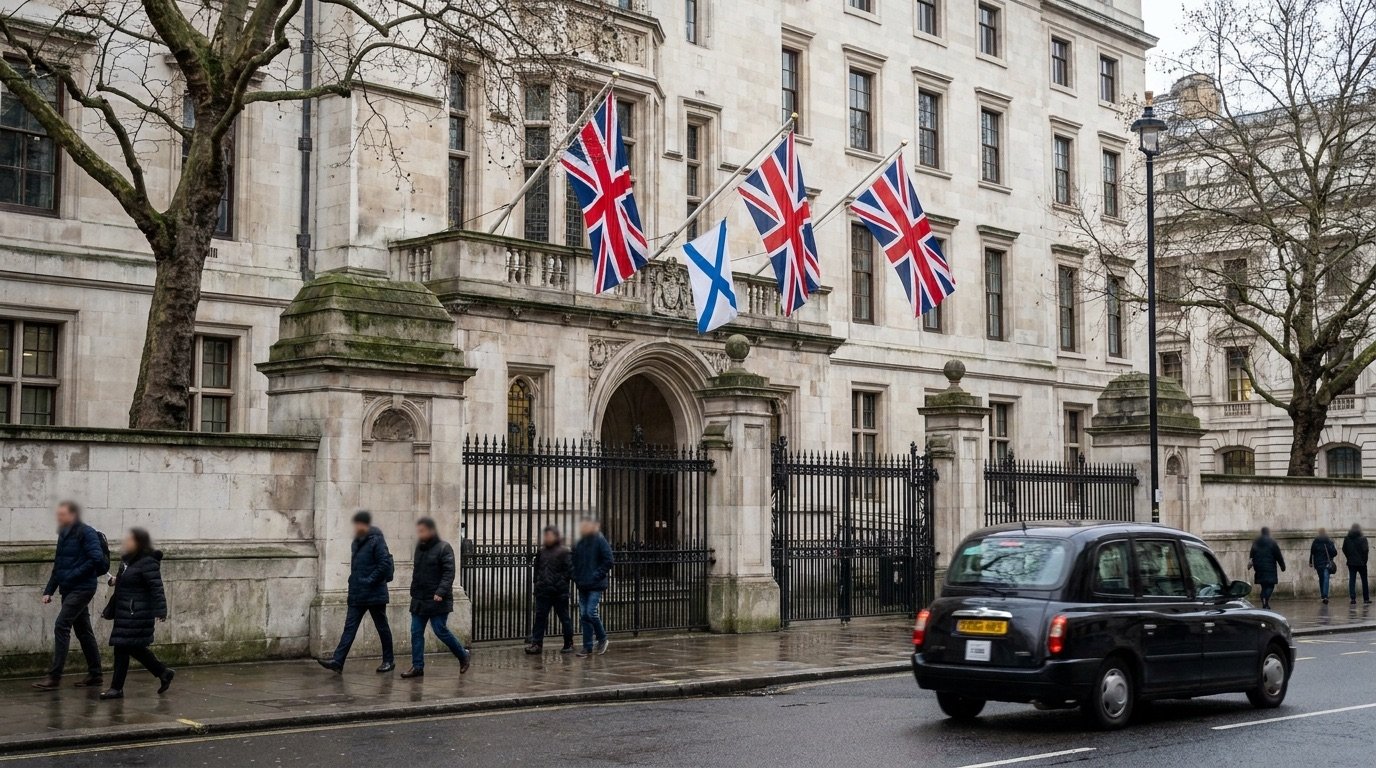
A South Korean court has sentenced former justice minister Park Sung-jae to 25 years in prison for his part in the country's failed 2024 attempt to impose martial law, one of the heaviest penalties yet handed down over a crisis that pushed the nation to the edge of authoritarian rule.
The Seoul Central District Court found Park guilty of helping former president Yoon Suk Yeol enforce the decree on 3 December 2024. Martial law lasted only a matter of hours before lawmakers forced their way into the National Assembly and voted it down, yet the episode triggered the gravest constitutional emergency the country has faced in decades.
The ruling lands at a moment when South Korea is still weighing how to record a night that tested the limits of its post-authoritarian institutions, and how severely those who took part should answer for it.
What prosecutors alleged
Prosecutors argued that Park helped prepare plans for arrests, travel bans and investigations aimed at political opponents, measures linked to Yoon's unproven claims of election fraud. Park denied any wrongdoing, insisting he had acted within the bounds of his official duties as a member of the cabinet.
The court took a markedly different view. By imposing such a long sentence on a former senior law officer, judges signalled that they regarded the martial law effort as a coordinated assault on the democratic order rather than a brief lapse of political judgement.
A widening reckoning
The verdict adds to a chain of prosecutions that has followed the failed power grab. Yoon was impeached in December 2024, removed from office in April 2025 and later sentenced in related proceedings. A number of other former senior officials have also received prison terms.
The significance of the Park case lies in how it extends criminal responsibility well beyond the former president himself, reinforcing the courts' willingness to hold the wider chain of command to account. Key milestones in the saga include:
- 3 December 2024: martial law declared, then voted down by the National Assembly within hours
- December 2024: President Yoon Suk Yeol impeached by parliament
- April 2025: Yoon formally removed from office
- 2025-2026: a series of trials of former senior officials, including the conviction of Park Sung-jae
Testing the institutions
South Korea's democracy survived the immediate shock because legislators and ordinary citizens resisted the decree on the night it was declared. The trials since then are now shaping the historical record of how close the country came to a rupture, and what price those who participated will pay.
For a country that emerged from military rule only in the late 1980s, the prosecutions carry a weight beyond the individuals in the dock. They serve as a public test of whether the safeguards built since then can withstand pressure from the very top of government, and the 25-year sentence suggests the courts intend to answer firmly.
Sources: reporting by Associated Press.
The NE Times is an independent news and analysis publisher. Our articles combine factual reporting with clearly-written, impartial analysis. Content is for general information and does not constitute professional advice. Disclaimer.
You may also like to read
South Korea's former president Yoon handed 30-year term over secret drone flights into North Korea
A Seoul court has sentenced ousted leader Yoon Suk Yeol to 30 years in prison after finding he conspired to fly military drones over Pyongyang, a verdict prosecutors say was tied to his failed bid to impose martial law.
Israeli attacks in Gaza and occupied West Bank kill civilians, including a child
Fresh deaths across both territories deepen humanitarian concern and underline how the two areas remain bound by the same conflict and civilian vulnerability.
Germany rail outage strands passengers overnight
A nationwide communications fault halted trains across Germany, forcing Deutsche Bahn to hand out taxi and hotel vouchers.
Mexico World Cup crowd incident prompts safety questions
A vehicle hit a crowd in Cabo San Lucas after Mexico's win over Czechia, turning celebrations into a public-safety story.