Squid Game: The Challenge — How Netflix's Mega-Format Works
Format anatomy · The record-breaking competition built from a fiction
Culture & Features Editor ·
Few reality formats have arrived with a stranger origin story. Squid Game: The Challenge takes the premise of a globally successful drama — a brutal fictional competition — and rebuilds it, without the fatal stakes, as an actual game show. Hundreds of players, reimagined children's games, and a life-changing cash prize. It became one of the most-watched competition formats Netflix has produced, and it returns as a cornerstone of the platform's unscripted slate.
The scale is the spectacle. The single most striking thing about the format is its sheer size. Where a typical reality competition begins with a dozen or two contestants, this one begins with hundreds, and that scale fundamentally changes the viewing experience. The opening episodes have a genuinely overwhelming quality — a sea of identically dressed players, most of whom the audience will never know by name, being winnowed down en masse. It produces images that no ordinary game show can match, and it lends every elimination round an epic, almost architectural grandeur.
The games themselves. The competition is built around reimagined children's games — simple, familiar playground contests transformed by scale and stakes into something tense and unforgiving. The genius of this choice is its accessibility. Every viewer instantly understands the rules, because they played these games as a child. There is no need to explain a complicated format; you simply watch, and the tension does the rest. That immediate comprehensibility is a large part of why the show travels so well internationally, the UK included.
Where the real drama lives. The physical games provide the structure, but the format's most compelling material is social. With hundreds of players and a vast prize, alliances form, betrayals occur, and trust becomes a currency. Some rounds require cooperation; others force players to sacrifice one another. The show consistently finds its best moments not in the games themselves but in the agonising human decisions around them — who to trust, who to abandon, and what a person is willing to do to strangers when a fortune is at stake. It is a study in ordinary people under extraordinary pressure, and it is frequently uncomfortable in exactly the way it intends to be.
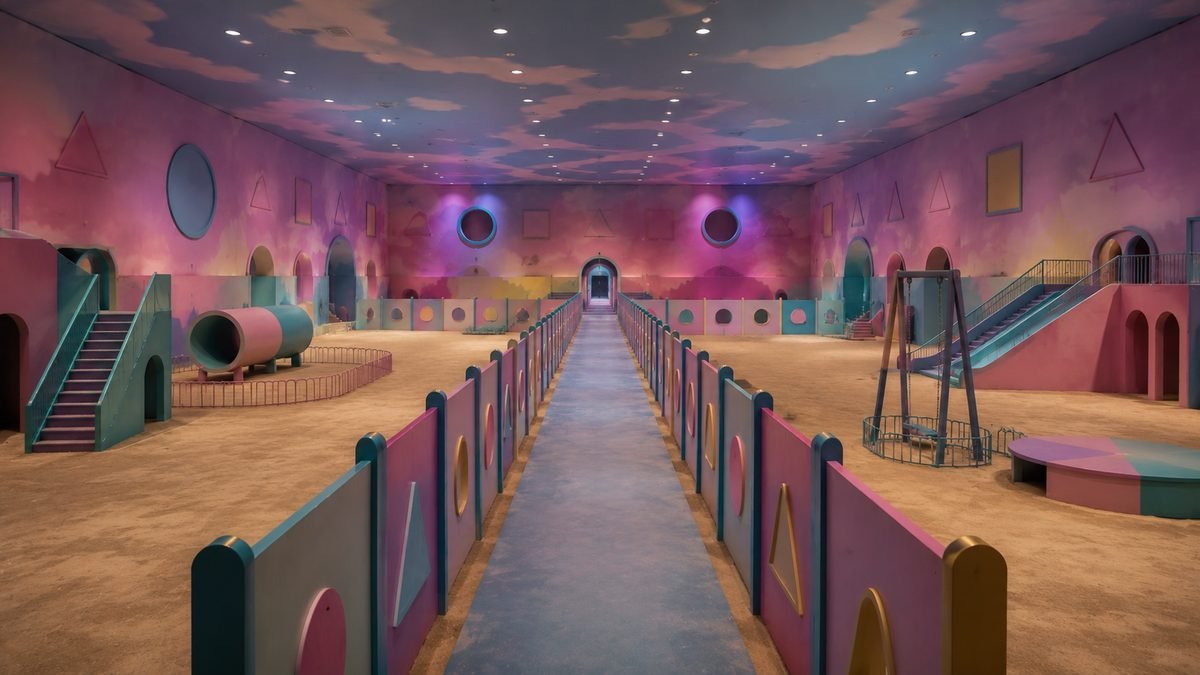
The production design. Visually, the show is extraordinary. The vast, stylised sets — the towering bunk-bed dormitory, the pastel geometry of the game arenas, the long corridors — recreate the striking aesthetic of its source material with real fidelity, and give the series an unmistakable identity. Reality television rarely gets to look this cinematic, and the design work is a significant part of the appeal.
The uncomfortable question. There is an inherent tension at the heart of the format, and it is worth naming honestly. The original drama was, at its core, a critique of economic desperation and the way systems exploit people willing to risk everything for money. Turning that critique into an actual competition, in which real people compete for a real fortune, creates an obvious irony — one that critics have not been slow to point out. The show has drawn commentary precisely because it enacts, in a sanitised form, the very dynamic its source material condemned. Whether that irony undermines the show or gives it an extra, uneasy layer of interest is a genuinely interesting question, and one viewers tend to answer differently.
Why it works regardless. For all that, the format is undeniably effective television. The scale, the visual design, the instantly legible games and the escalating social pressure combine into something genuinely gripping. The stakes feel real because the money is real, and the elimination structure — steadily reducing hundreds to a handful — creates a natural, compulsive momentum. It is a show engineered for binge-watching, and it does that job extremely well.
Its place in the slate. Its record-breaking performance confirmed something important for Netflix: that its scripted hits could be extended into unscripted franchises, and that audiences would follow. It represents a new model of brand extension, turning a beloved drama into a participatory competition, and its success has made it a template others will surely follow.
What to expect. Returning viewers can anticipate exactly the ingredients that made the format a phenomenon: an enormous starting field, faithfully recreated sets, reimagined playground games played with deadly seriousness, brutal social manoeuvring, and a prize large enough to justify every betrayal. Precise scheduling for UK audiences was not confirmed at the time of writing, so it is worth checking availability before publishing dates.
The format remains one of the boldest swings in modern reality — a game show built from a story about the horror of game shows, executed with such scale and craft that the contradiction becomes part of the fascination. Hundreds will enter. One will leave with a fortune. And the rest of us, complicit and unable to look away, will watch every single round.
Filed under Reality TV · Written by Sophie Bennett