The Neighbourhood: Graham Norton's £250,000 Game Show
Everything you need to know · Graham Norton's £250,000 street-sized game show, explained
Culture & Features Editor ·
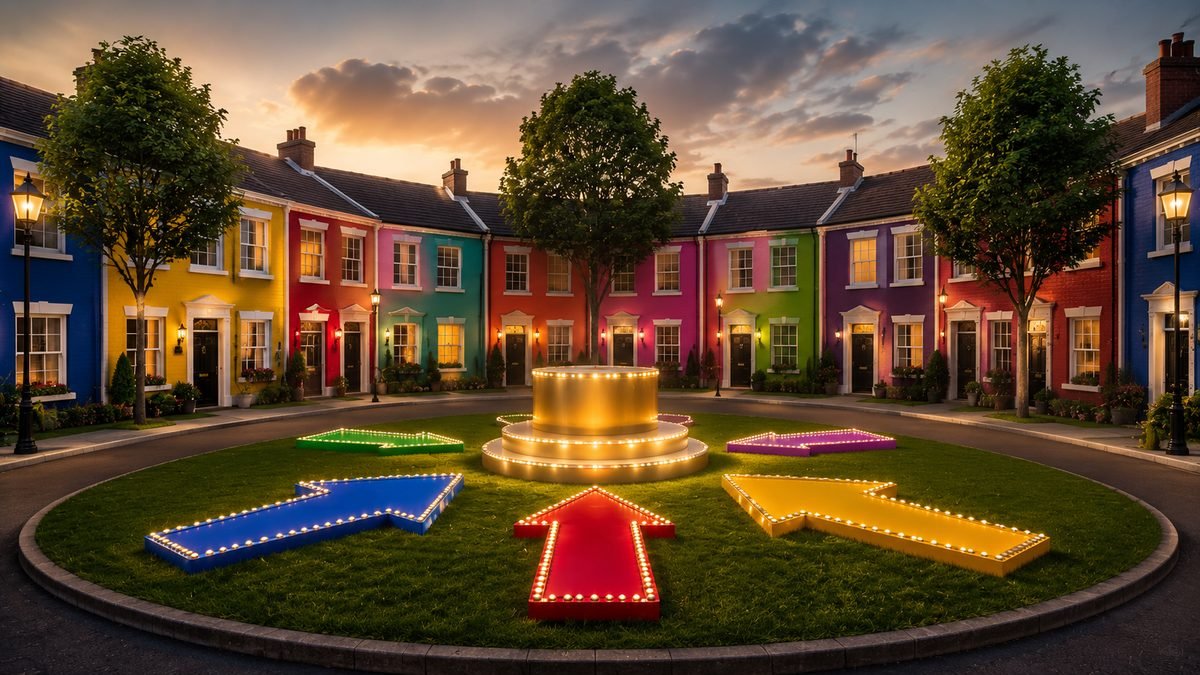
So what exactly is The Neighbourhood? It is a brand-new reality entertainment format in which real-life households move in side by side and then compete against one another in what is best described as a street-sized game show. Think of the familiar rhythms of a big Saturday-night competition, transplanted into a mock neighbourhood where your rivals are also, technically, your neighbours. The prize on the line is a life-changing £250,000.
Who is hosting? Graham Norton, which tells you a great deal about the tone the producers are aiming for. Norton is one of Britain's most bankable broadcasters — a BAFTA winner with an easy warmth and a sharp wit — and handing him a competition format signals that this is meant to be big, mainstream, feel-good television rather than anything spiky or mean-spirited. His presence is the show's headline draw and its tonal compass.
How does the competition actually work? The households live together in the neighbourhood and face a series of challenges, quickly learning that with big decisions come even bigger consequences. The format marries three ingredients that do not usually share a screen: high-stakes competition, neighbourhood-based challenges, and the relatable domestic drama of people living cheek by jowl. It is pitched explicitly as "a gameshow as you've never seen it before" — an attempt to offer a different flavour of reality by grounding the competition in something every viewer understands, namely what it is like to live next to other people.
Why does that combination matter? Because it targets a very broad audience. Pure competition shows can feel cold; pure domestic reality can feel aimless. By fusing the two, The Neighbourhood aims to give viewers both the satisfying structure of a game — clear challenges, clear stakes, a clear prize — and the warm, gossipy pleasure of watching households navigate proximity, rivalry and alliance. It is a format engineered for the whole family to watch together, which is increasingly the holy grail for broadcasters chasing the shrinking pool of appointment-to-view television.
Who takes part? Real households from all walks of life — the phrase the producers have leaned on. That mix is the point. Part of the entertainment lies in the contrast between very different kinds of household thrown into the same street and the same competition, finding themselves neighbours and fierce competitors at once. Expect the usual reality-casting craft: a spread of ages, backgrounds and personalities designed to generate both camaraderie and friction.
What kind of drama should viewers expect? The clue is in the framing. Living side by side breeds the small tensions and unexpected bonds that anyone who has ever had neighbours will recognise — borrowed sugar and boundary disputes, in game-show form. Layer a £250,000 prize on top and those everyday dynamics acquire real edge. The show is betting that "domestic drama with stakes" is a rich and underexploited seam, and on paper it is right: neighbourhood conflict is one of the most universally relatable premises there is.
How does it fit into the wider reality landscape? The Neighbourhood is part of a noticeable trend towards big-prize, big-format entertainment competitions that give ordinary members of the public a shot at genuinely life-changing money. It sits alongside other new British formats built on the same instinct — take a relatable premise, attach a serious cash prize, and let ordinary people compete. What distinguishes this one is the household unit: most competitions pit individuals against each other, whereas The Neighbourhood pits entire homes, which raises the emotional stakes and adds a layer of internal dynamics within each competing unit.
Is it a game show or a reality show? Both, deliberately. It borrows the architecture of a game show — host, challenges, elimination, prize — but the "reality" comes from the fact that the contestants are living together for the duration, so the competition is threaded through genuine cohabitation. That hybrid quality is exactly what the producers are selling as its novelty.
What's the strategy behind it? For the broadcaster, a Graham Norton-fronted, family-friendly, big-money competition is a strong play for a marquee slot. It has the ingredients of a tentpole: a star host, a huge prize, a premise that requires no explanation, and a format flexible enough to run challenges of almost any kind. If it lands, it is the sort of show that can anchor a schedule and return year after year.
When can people watch, and should the date be trusted yet? As with several of the newer formats announced for 2026, exact transmission details were still being firmed up at announcement, so anyone reporting on it should confirm the slot before committing to a date in print. That caveat aside, The Neighbourhood has been positioned as one of the more ambitious new entertainment swings of the year.
The verdict? On paper, this is a shrewd piece of format-building: a universally understood premise, a heavyweight host, a life-changing prize, and a hybrid structure that hedges between game show and reality. Whether it clicks will come down to execution — the quality of the challenges, the casting chemistry, and whether the "neighbourhood" conceit generates real stories or just a gimmicky backdrop. But the fundamentals are sound, and in Graham Norton it has a host who can carry a lot of weight. If the households deliver, this could be one of the year's breakout entertainment formats.
Filed under Reality TV · Written by Sophie Bennett