Storm Maysak and deadly rains in the north show how China's flood risk compounds
Five deaths in northern China and Maysak's landfall in Vietnam and Guangxi reveal how separate weather hazards converge into one public-safety crisis.
Marcus Reeve
Writer ·
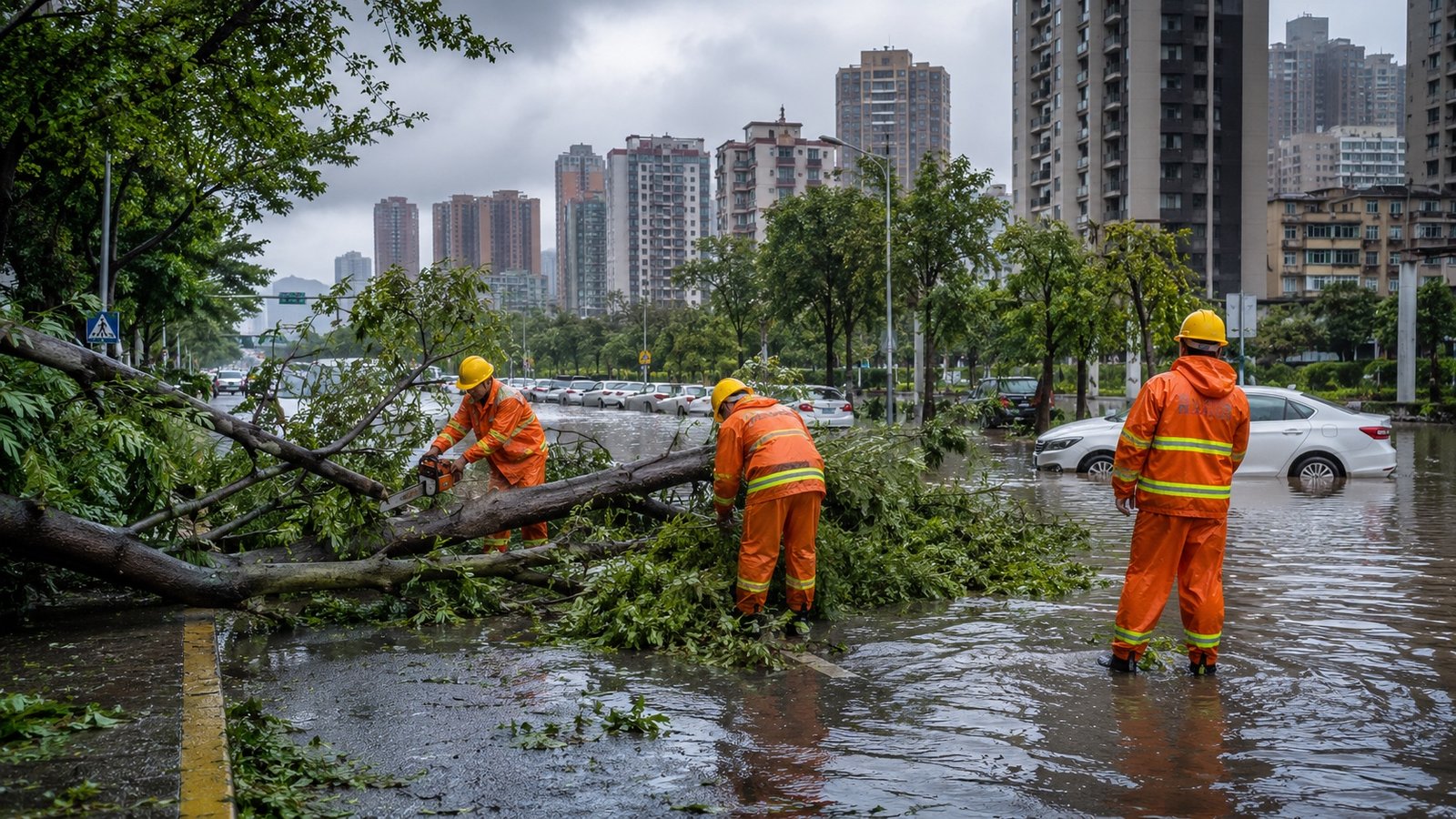
Weather disasters rarely arrive one at a time. This weekend, China faced two at once: deadly rain in the north and a tropical storm pushing in from the south. The combination — not either event alone — is the real story.
What happened
The Associated Press reports that heavy rain killed five people in northern China: two villagers in a mountain flash flood in eastern Inner Mongolia, and three in Fushun city, Liaoning province, where rainfall reached 32.9cm in one area over several hours and about 3,600 residents were moved to safety. Meanwhile Tropical Storm Maysak, having already dumped rain on Hainan, made landfall in Vietnam's Quang Ninh province with winds of 101km/h before weakening as it crossed into Guangxi — still toppling trees, flooding roads and tearing roofs. In Fangchenggang, rivers overflowed and cars sat submerged to their roofs; in Vietnam's Mong Cai, crews with chainsaws and heavy machinery cleared downed trees and sheet metal.
Why it matters
A storm is a stress test for everything around it: drainage, housing quality, transport networks, warning systems and the capacity of officials to move people before danger becomes visible. The details here show the layers. Wind is rarely the killer, but it creates the debris and access problems that make flood response harder — a road blocked by trees delays a rescue; a flooded street hides deeper hazards. And a system that has 'weakened' in category terms can retain more than enough moisture to devastate places far from the coast, as Maysak's inland track demonstrates.
The bigger picture
The most consequential detail may be the least dramatic: 3,600 people relocated in Fushun before conditions worsened. Successful evacuations are invisible next to dramatic rescues, but they are how deaths are actually prevented — and they depend on trust, timing and somewhere safe to go. Disaster management should be judged as much by how many people never needed rescuing as by the boat rescues that make the footage. Maysak's path across Hainan, Vietnam and Guangxi is also a reminder that storm preparedness does not respect borders; public warnings have to travel faster than the weather.
A note of caution on framing: no single storm should be conscripted into a slogan, and attributing one event to any single cause outruns the evidence. What can be said is that compound hazards — flash floods in rural terrain, urban drainage failure, coastal wind damage, cross-border movement — are now the planning reality, and they demand resilient drainage, better local forecasting and stronger building standards regardless of how any one season is interpreted.
What happens next
Maysak will keep shedding rain as it decays inland, which means the flood risk outlives the wind headlines. Recovery crews face days of debris clearance and road reopening, and the familiar pattern will repeat with the next system. The names and locations change; the underlying test — whether preparedness is regional, flexible and fast enough for hazards that arrive together — stays the same.
Sources: reporting by Associated Press.
The NE Times is an independent news and analysis publisher. Our articles combine factual reporting with clearly-written, impartial analysis. Content is for general information and does not constitute professional advice. Disclaimer.
You may also like to read

What is a heat dome? The high-pressure system behind Europe's scorching spell
As temperatures climb well above seasonal norms across the continent, meteorologists point to a heat dome trapping hot air and straining health services, transport and energy networks.

Europe's record heatwave becomes a public-safety emergency as drownings mount and red alerts spread
Extreme temperatures across the continent have moved beyond a weather story into a wider safety crisis, with dozens of heat-related deaths, school closures and warnings that Britain could see record June heat.

Heat-health alert issued as second heatwave grips southern England
The UK Health Security Agency has warned of health risks across London, the South East and parts of eastern and central England as temperatures climb, with older and unwell people most at risk.

When Confidentiality Feels Like a Gag: Australia's Parliamentary Watchdog Under Scrutiny
A staffer's account of jail-threat confidentiality warnings puts Australia's parliamentary complaints body — and workplace reform everywhere — to the test.