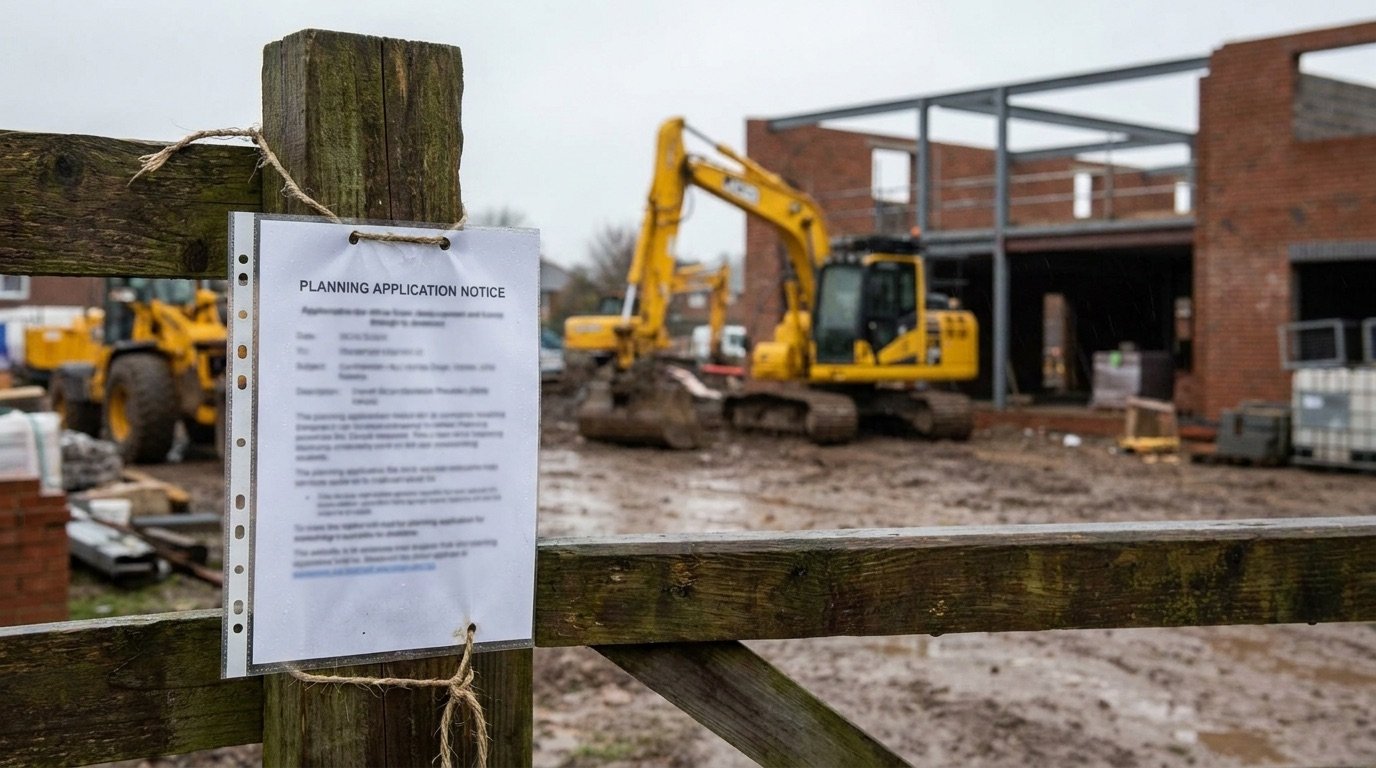
Councils to get AI planning tools as government chases 1.5 million homes
Ministers are rolling out artificial intelligence tools to local planning departments in a bid to halve decision times, part of a wider package of reforms designed to accelerate housebuilding across England.
UK News & Politics Editor ·
Why it's trending
Ministers are handing councils AI tools designed to halve planning decision times as part of the push to build 1.5 million homes.
England's planning departments are getting an artificial-intelligence upgrade. The government has announced that AI tools designed to speed up planning decisions are now available to every council in England, part of its drive to deliver 1.5 million homes over the parliament.
The headline promise, set out on GOV.UK, is speed. A prototype aims to halve decision times on householder applications — the extensions, conversions and small projects that make up the bulk of planning caseloads — from eight weeks to four. A second tool, Extract, converts decades-old paper planning documents into structured digital data in minutes rather than days.
At a glance
- AI prototype aims to halve householder decision times from 8 to 4 weeks
- Extract tool converts old planning documents into digital data in minutes
- Now available to all councils in England
- Part of a drive to build 1.5 million homes
- Human planners retain the final decision on applications
What the tools actually do
Extract addresses one of the least glamorous blockages in the system: the archive problem. Councils hold millions of legacy planning records — handwritten decision notices, scanned site maps, faded conditions — that officers must locate and interpret before deciding anything. Turning those into searchable digital data removes hours of manual work per case.
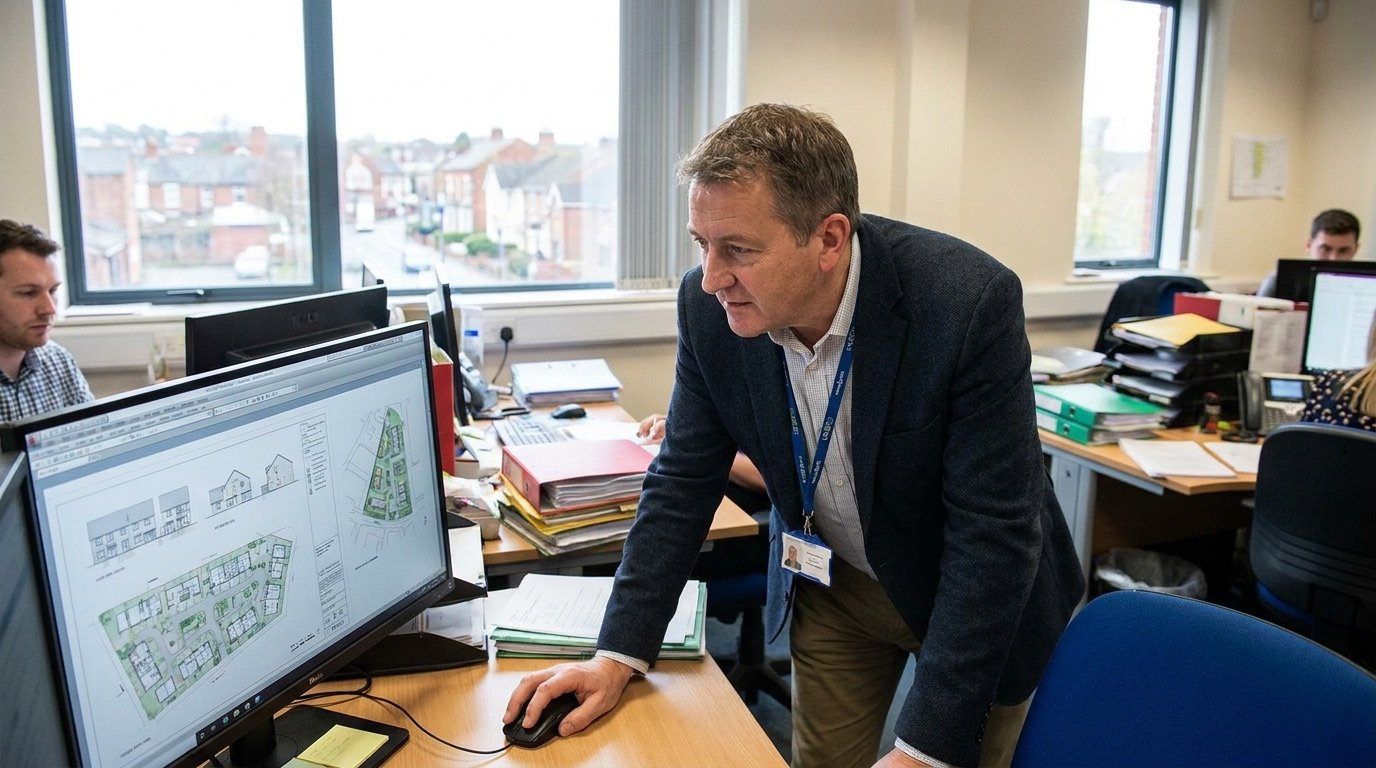
The decision-support prototype goes further, assembling the relevant policies, constraints and history for an application so that a planning officer starts from an organised case file rather than a blank screen. The government is explicit on one point: human planners retain the final decision on every application.
Why planning speed matters to housebuilding
The 1.5 million homes target has always depended less on grand policy than on thousands of local decisions moving faster. Slow determination periods add cost and uncertainty for builders of every size, and small and medium developers — who lack the legal teams of the volume housebuilders — feel the delays hardest.
Halving householder decision times would not itself build a single home, but it would free scarce planning officers for the major applications that do. Council planning departments have endured years of underfunding and staff shortages; the government's bet is that automation can return capacity the workforce cannot currently supply.
The case for cautious optimism
Planning is, in one sense, a natural fit for AI assistance: it is document-heavy, rule-based and drowning in repetitive administrative work. Early productivity gains from the pilot councils informed the national rollout, and the decision to keep humans as the deciding authority answers the most obvious legal objection.
Accountability in planning is personal and statutory — decisions must be defensible at appeal and in court. An AI that assembles the case file is helpful; an AI that appeared to make the judgment would invite challenge. The design reflects that line.
The risks councils will weigh
Adoption is where national announcements meet local reality. Councils vary enormously in digital maturity, and tools are only as good as the records they are fed; badly digitised archives could embed errors at machine speed. Officers will also need training and confidence before they trust AI-prepared summaries on contentious cases.
There is also a political dimension. Planning disputes are among the most emotive in local government, and residents on the losing side of a decision may seize on any suggestion that software shaped the outcome. Transparency about how the tools are used will matter.
What happens next
With the tools now available to all English councils, the test moves from technology to uptake: how many authorities adopt them, and whether the promised four-week householder decisions materialise in published planning statistics over the coming year.
The housebuilding target gives ministers every incentive to press adoption hard. For households planning an extension — and builders planning estates — the measure of success will be simple: decisions that arrive in weeks rather than months.
Sources & verification
- GOV.UK / AI tool to slash planning decision times — primary reporting referenced by this article
Filed under UK News · Written by Eleanor Whitfield
You may also like to read