Bathing water reforms come into force as new sites added but river quality concerns persist
Changes to bathing water rules took effect for the 2026 season, adding 13 new monitored sites and tightening the path to designation, even as campaigners warn many inland waters remain badly polluted.
Eleanor Whitfield
Writer ·
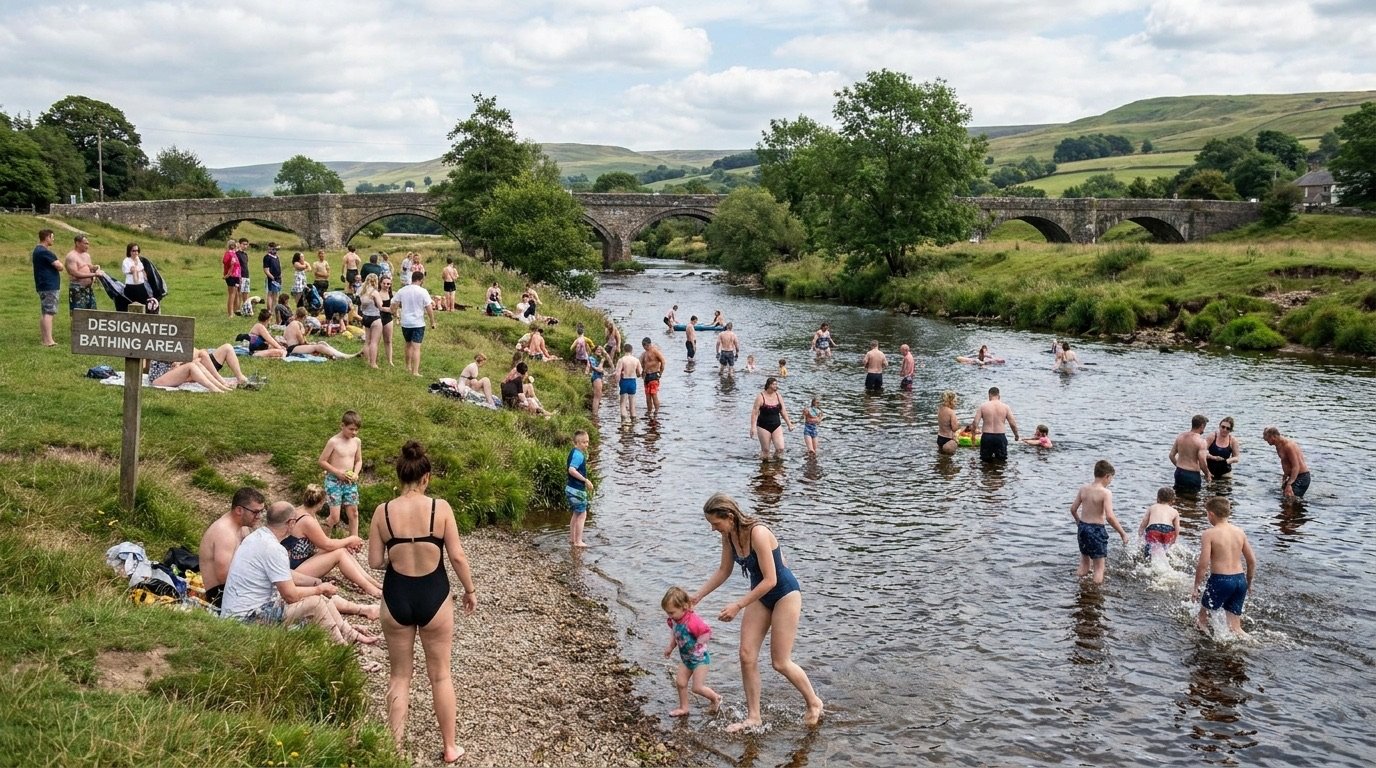
A package of reforms to the way England's bathing waters are designated and monitored has come into force for the 2026 season, expanding the list of protected sites while introducing tougher tests before a location can be added. The changes took effect on 15 May, the start of the official bathing season, which runs until 30 September.
Thirteen new sites have been added to the list of designated bathing waters monitored by the Environment Agency, extending protection to more of the rivers, lakes and beaches where people swim, paddle and play. But campaigners caution that designation alone does not guarantee clean water, with many inland sites still affected by pollution.
The Environment Agency classifies designated bathing waters annually as excellent, good, sufficient or poor, based on sampling carried out throughout the season.
What the reforms change
Under the revised Bathing Water Regulations, a new assessment process now takes place before a site can be designated. Crucially, this includes an evaluation of whether it is feasible to improve a location's water quality to at least sufficient, the minimum acceptable standard.
Officials say the change is designed to ensure that designation leads to genuine improvement rather than simply labelling waters that cannot realistically be cleaned up. Guidance accompanying the new criteria is being developed in full over the coming period.
“Designating a bathing water means it is monitored and held to a clear standard, but the public rightly expects that designation to be the start of action to clean it up, not the end.”
Coast versus river
While the headline figures show that the large majority of designated bathing waters are rated excellent or good, the picture varies sharply between coastal and inland sites. Water quality at coastal locations is generally far better than in rivers, where pollution pressures are more concentrated.
Inland waterways face a complex mix of long-standing problems, including sewage discharges, agricultural run-off, groundwater contamination and impacts from wildlife, all of which can push bacterial levels above safe thresholds for swimmers.
- The bathing season runs from 15 May to 30 September each year
- Sites are classified as excellent, good, sufficient or poor
- 13 new designated sites were added for the 2026 season
- New rules assess whether a site's quality can realistically be improved
- Coastal waters generally score better than inland rivers
Rising demand for clean water
The reforms come amid a surge in popularity of wild swimming and a growing public demand for clean rivers and lakes. River and sea swimming groups have campaigned vigorously for more sites to be designated and for tougher action against the sewage discharges that periodically render waters unsafe.
Health bodies advise bathers to check the latest water quality information before swimming, particularly after heavy rainfall, when storm overflows are more likely to have discharged untreated sewage into rivers and the sea.
Background
Designated bathing waters are stretches of coast or inland water formally recognised because large numbers of people swim there, triggering regular monitoring by the Environment Agency. The system has historically focused on beaches, but recent years have seen growing pressure to extend protection to popular river and lake swimming spots.
The expansion of designations sits alongside intense public scrutiny of water companies over sewage pollution, with the two issues increasingly linked in the minds of swimmers and campaigners demanding cleaner waterways.
What happens next
Monitoring of the newly designated sites will continue throughout the 2026 season, with classifications published after it ends. Campaigners say the real test of the reforms will be whether the tougher designation process drives measurable improvements in water quality, particularly at the inland sites where the challenges are greatest.
Sources: reporting by GOV.UK.
The NE Times is an independent news and analysis publisher. Our articles combine factual reporting with clearly-written, impartial analysis. Content is for general information and does not constitute professional advice. Disclaimer.
You may also like to read

Water firms face mounting penalties as Ofwat presses sewage crackdown and fines are diverted to clean-up
Regulator Ofwat is pursuing a series of enforcement cases against England's biggest water companies over storm overflow spills, with hundreds of millions of pounds in penalties now earmarked for environmental repair.

South East faces first major hosepipe-ban summer in years as reservoirs run low and drought risk climbs
With 41 per cent of England's reservoirs less than half full and 14 water companies already in drought status, the Environment Agency has placed the South East and East Anglia at the highest level of summer drought risk.

Green Man's refugee training scheme shows what a festival can do beyond the stage
The Welsh festival's decade-old programme has trained 191 refugees from 52 countries, turning a music event into practical civic infrastructure.

Gatwick expansion gains momentum as campaigners lose court battle
A ruling against opponents of the airport's growth plans has reinvigorated a contested infrastructure scheme, even as arguments over noise, emissions and capacity remain firmly alive.