Britain switches on 'Borealis' space defence system to guard its satellites
The UK has unveiled a new system to track satellites, debris and potentially hostile objects in orbit, alongside the first images from a powerful military telescope, as ministers warn space is becoming a contested frontier.
Eleanor Whitfield
Writer ·
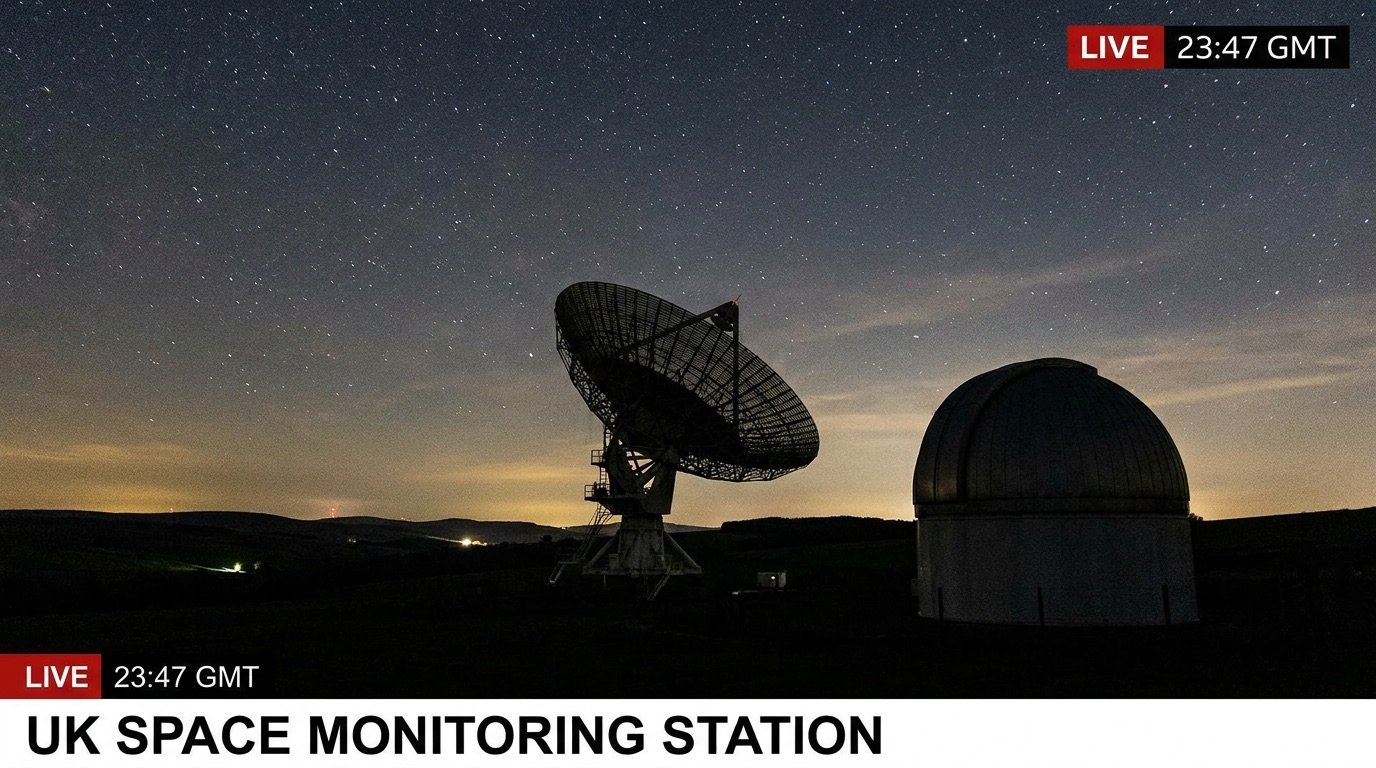
Britain has switched on a new space defence system designed to track satellites, space debris and potentially hostile objects orbiting the Earth, in a sign of how seriously the government now treats threats far above the planet's surface.
The system, named Borealis, became operational around six months ahead of schedule. It was developed as part of a roughly £65 million investment over five years and is intended to give the UK a clearer, independent picture of what is happening in orbit, where its civilian and military satellites operate.
Alongside the announcement, the government released the first publicly available images captured by a UK military telescope previously known by the codename Nyx-Alpha and now called Noctis-1, including views of the International Space Station and Britain's Skynet military communications satellites.
Watching a crowded sky
Low Earth orbit has become increasingly congested, with thousands of active satellites and a far larger cloud of defunct hardware and fragments circling the planet at high speed. Even small pieces of debris can disable a working spacecraft on impact, and collisions can spawn yet more debris in a dangerous chain reaction.
Borealis is built to monitor that environment continuously, helping operators spot potential collisions and giving defence planners early warning of any object behaving in a way that looks deliberately threatening. The ability to track objects independently, rather than relying solely on allies, is seen as a matter of national resilience.
The early activation of the system was presented as evidence that British industry can deliver complex defence capability at pace, an increasingly important message as the government seeks to grow the country's space sector.
First light from Noctis-1
The newly released images from the Noctis-1 telescope offer a glimpse of the kind of surveillance the UK can now perform from the ground. Capable of observing objects in orbit in detail, the instrument can keep watch over critical assets such as the Skynet satellites that carry secure military communications.
“Space is no longer a benign environment; protecting the satellites that underpin everyday life, from navigation to banking, is now a core part of national security.”
Officials framed the telescope and the wider system as part of a layered approach to space domain awareness, combining ground-based sensors with data sharing among allies.
- Borealis went live around six months ahead of schedule
- Backed by roughly £65 million of investment over five years
- Tracks satellites, debris and potentially hostile objects in orbit
- Noctis-1 telescope, formerly Nyx-Alpha, released its first public images
- Images included the International Space Station and UK Skynet satellites
Why it matters on the ground
Modern life leans heavily on space-based infrastructure. Satellite navigation underpins everything from logistics to financial timestamps, while communications satellites carry data across the globe. A serious disruption in orbit, whether from a collision or a deliberate act, could ripple through the economy and critical services.
By investing in its own surveillance, the UK is trying to ensure it is not left in the dark if relations with rival powers deteriorate or if a fast-moving incident demands an immediate response.
Background
The announcement comes amid a broader push to expand Britain's space ambitions, including efforts to establish domestic launch capability in Scotland and to grow commercial satellite manufacturing. A parliamentary committee has warned that 'time is running out' for the government to turn its launch ambitions into reality, adding urgency to investment decisions across the sector.
Several nations, including the United States, China and Russia, have developed space-tracking and counter-space capabilities, and the militarisation of orbit has become a growing concern for defence planners worldwide.
What happens next
With Borealis now operational, attention turns to integrating its data into wider defence and civil systems and to expanding the network of sensors that feed it. Ministers will also face questions about how the UK's space defence spending fits alongside its commercial space goals, and whether the funding can be sustained as budgets across government come under pressure.
Sources: reporting by Open Access Government.
The NE Times is an independent news and analysis publisher. Our articles combine factual reporting with clearly-written, impartial analysis. Content is for general information and does not constitute professional advice. Disclaimer.
You may also like to read

Police facial recognition expands rapidly as watchdogs warn law is lagging behind
Forces have scanned millions of faces this year and ministers plan a national rollout, but biometrics regulators caution that the legal framework is struggling to keep pace with the technology.
Ministers pledge AI-driven NHS overhaul, insisting service must 'transform its way out' of crisis
The Health and Social Care Secretary has set out plans to accelerate the digitisation of the NHS, telling the ConfedExpo conference that the service cannot manage its way out of pressure but must reform through technology.

Ministers move to close the AI chatbot loophole in online safety law
The government is fast-tracking reforms to bring standalone AI chatbots within the scope of online safety rules, after an Ofcom investigation exposed a gap that left some tools outside the law entirely.

Reeves sets out multi-year spending plans with billions for NHS and defence
The chancellor unveiled her first multi-year settlement, boosting health, defence and nuclear power, but warned that some departments would lose out.