Tesco with a Clubcard crowned cheapest big supermarket as discounters pile on the pressure
Tesco has held on to the title of cheapest large supermarket for a comparable trolley when shoppers use a Clubcard, but Aldi and Lidl remain unbeaten on a like-for-like basket as the battle for value-conscious customers intensifies.
Eleanor Whitfield
Writer ·
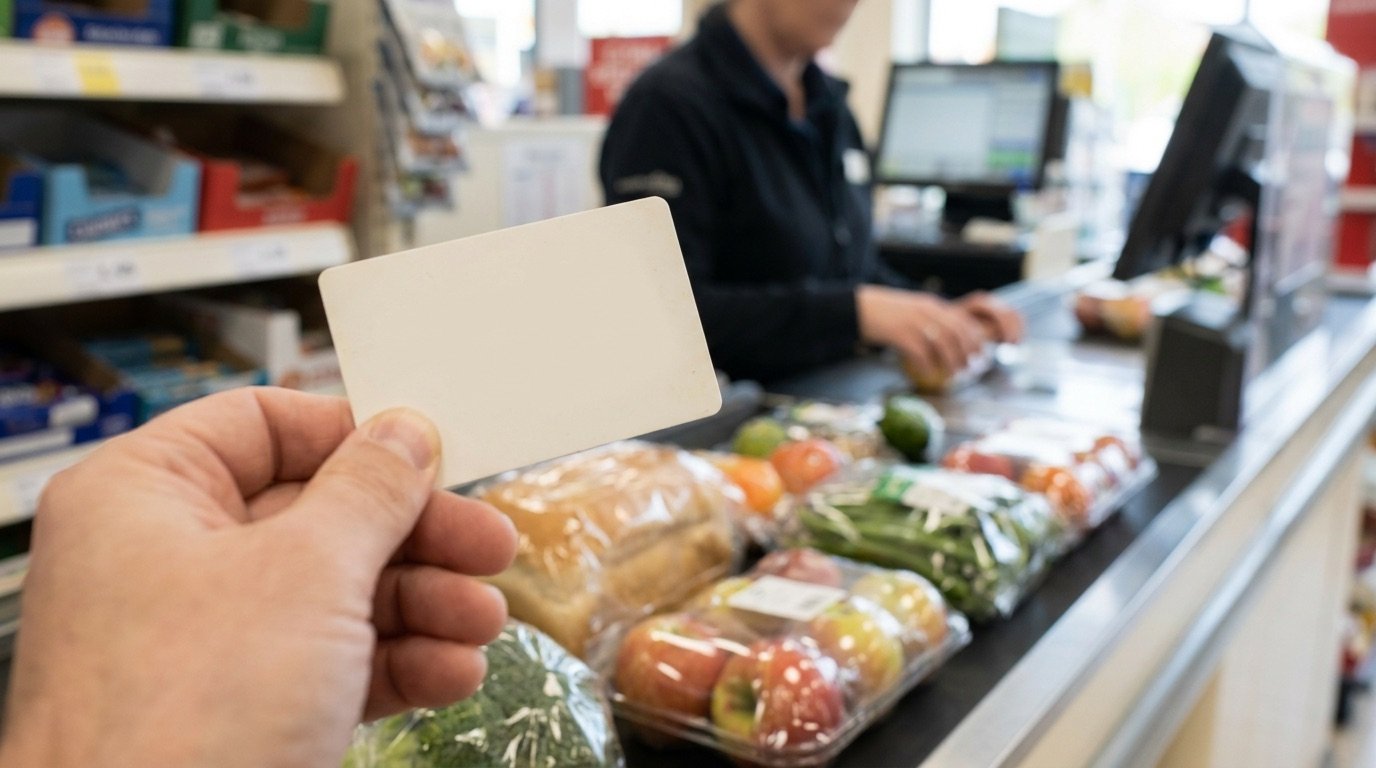
Tesco has once again been named the cheapest of the big traditional supermarkets for a comparable trolley of branded and own-label goods, but only when shoppers swipe a Clubcard at the till. The findings, from monthly basket comparisons, underline how loyalty pricing has reshaped the value league table and how far the gap to the discounters has narrowed.
The chain took the top spot among the traditional grocers after knocking Asda off a perch it had occupied for thirteen consecutive months earlier in the year, a striking reversal in a sector where the cheapest crown has long been hard fought.
But the comparison also lays bare an awkward truth for the established players: even the cheapest of them cannot beat Aldi and Lidl on a straightforward like-for-like basket of everyday essentials, a gap the discounters have defended for years.
The Clubcard effect
Loyalty pricing has become the defining feature of the modern grocery aisle, with Tesco's Clubcard Prices and Sainsbury's Nectar Prices offering members substantially lower costs on hundreds of lines. Researchers found that the discount unlocked by a Clubcard was often the difference between Tesco topping the table and slipping down it.
Consumer groups have repeatedly warned, however, that two-tier pricing risks penalising those who do not, or cannot, sign up, and have urged regulators to keep a close watch on whether the advertised member savings are always genuine.
“Loyalty schemes can deliver real savings, but only if shoppers actually have a card and remember to use it. The danger is a system where the headline price is quietly inflated and the discount simply restores it to something fair.”
Discounters still set the pace
On a basic basket of own-label staples, Aldi and Lidl continued to undercut every one of the traditional chains, a position they have held with remarkable consistency. The discounters' lean ranges, limited choice and no-frills stores allow them to strip costs out of the supply chain in ways the larger rivals struggle to match.
That enduring advantage has driven the discounters' steady march in market share, and has forced the established grocers into ever more aggressive price-matching and loyalty schemes simply to stay in the conversation.
- Tesco with a Clubcard was cheapest of the big traditional supermarkets for a comparable trolley.
- Tesco overtook Asda earlier in the year after Asda had led for thirteen straight months.
- Aldi and Lidl remain unbeaten on a like-for-like basket of own-label essentials.
- Loyalty pricing through Clubcard and Nectar is now central to the value league.
- Consumer groups continue to scrutinise whether member discounts are genuine.
How to shop the gaps
For shoppers, the message is to be ruthless about where each part of the shop is done. Signing up to the major loyalty schemes is effectively free money for those who use them, while a top-up trip to a discounter for cupboard staples can shave a noticeable amount off the monthly bill.
Price-comparison tools and apps that track the cost of a regular basket across chains have grown in popularity, allowing households to see at a glance which store offers the best value for their particular shopping habits rather than relying on a single store's marketing.
“There is no single cheapest supermarket for everyone. The smart move is to match your basket to the store, use the loyalty card where it helps, and not be loyal to a brand that is no longer giving you the best deal.”
Background
The grocery price war has intensified since the cost-of-living crisis pushed value to the top of shoppers' priorities. The rise of Aldi and Lidl forced the big four into repeated rounds of price-matching, and the spread of supermarket loyalty schemes has turned the simple question of which store is cheapest into a far more complicated calculation.
Competition authorities have taken an increasing interest in the sector, examining everything from loyalty pricing to unit-pricing labels designed to help shoppers compare value across different pack sizes.
What happens next: with food inflation easing but household budgets still tight, the chains are expected to keep competing hard on price through the summer. Shoppers can expect more loyalty-led deals and price-match promotions, but the structural gap to the discounters looks unlikely to close any time soon.
Sources: reporting by Which?.
The NE Times is an independent news and analysis publisher. Our articles combine factual reporting with clearly-written, impartial analysis. Content is for general information and does not constitute professional advice. Disclaimer.
You may also like to read

Food inflation eases to 2.2% as grocery price pressure finally loosens its grip
Annual food and drink inflation slowed from 3.0% to 2.2% in the year to May, the latest tracking shows, offering tentative relief to households even as the weekly shop remains far dearer than it was three years ago.

'Do not eat' warning as Tesco recalls cured beef over deadly listeria fears
Shoppers have been urged not to eat packs of The Curing Barn British Bresaola sold at Tesco after the potentially fatal bacterium listeria was detected, in the latest of a string of food safety alerts this month.

Aldi named the UK's cheapest supermarket for the fifth month running
A Which? basket of 95 everyday groceries cost almost 40% less at Aldi than at Waitrose in May, with Lidl close behind in the race for shoppers' pounds.

Britain's biggest retailers shed nearly 18,000 jobs as costs bite
Higher employer National Insurance and wage rises have driven a wave of cuts across the high street, with Tesco accounting for the steepest reduction.