Duke and Duchess of Edinburgh mark 640 years of the world's oldest alliance in Portugal
Prince Edward and Sophie undertook a three-day visit to Portugal to celebrate the anniversary of the Treaty of Windsor, laying wreaths at Batalha Monastery and viewing the original 1386 documents.
Eleanor Whitfield
Writer ·
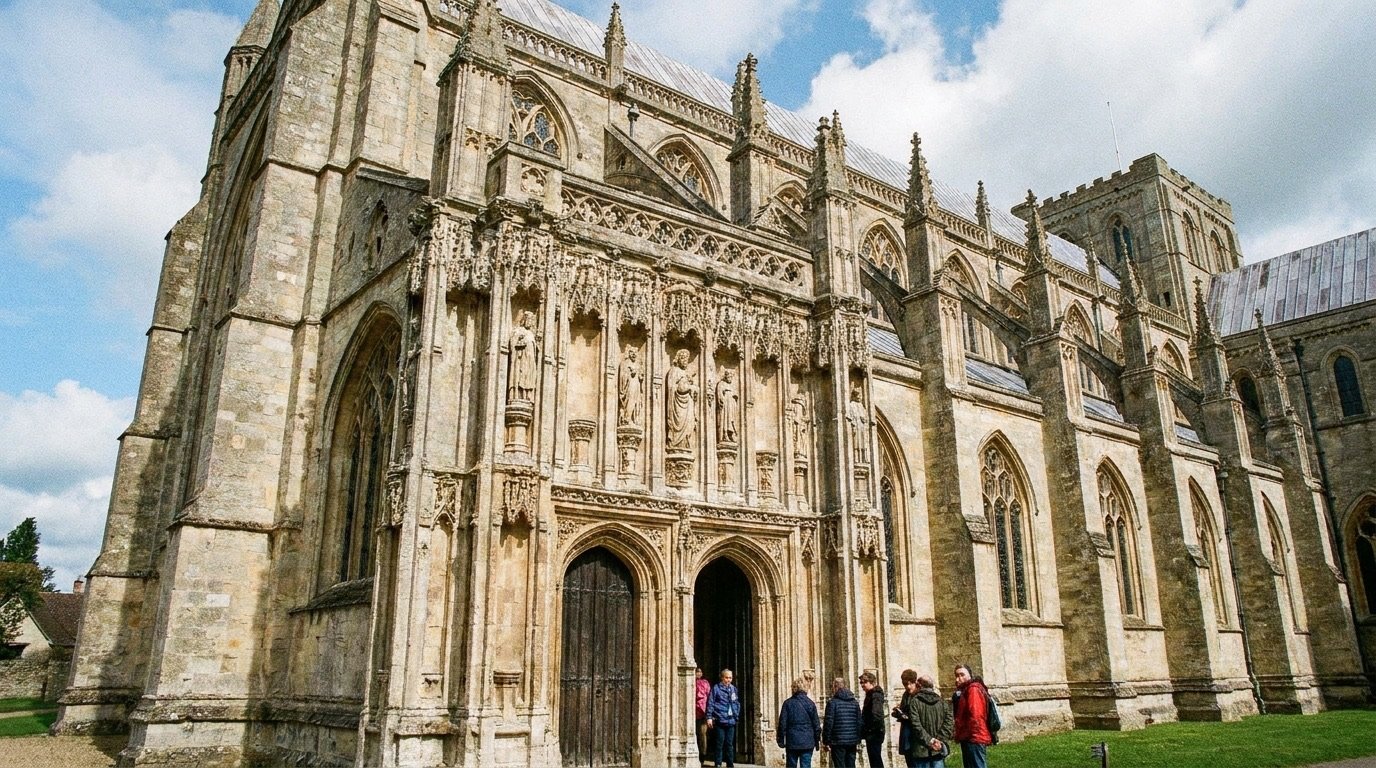
The Duke and Duchess of Edinburgh visited Portugal from 1 to 3 June to mark the 640th anniversary of the Treaty of Windsor, the agreement that underpins what is often described as the world's oldest diplomatic alliance. Their visit underlined the enduring nature of a partnership first sealed in the fourteenth century.
Across three days, Prince Edward and Sophie undertook a programme of engagements that combined historical commemoration with contemporary themes, reflecting both the long history of Anglo-Portuguese ties and the priorities the couple bring to their overseas work.
The visit followed a pattern increasingly common for the working royals, in which a long-standing relationship is used as a platform to highlight present-day cooperation.
Honouring a fourteenth-century alliance
A central moment of the visit came at Batalha Monastery, where the couple marked the anniversary of the treaty. The Duke laid a wreath at the Tomb of the Unknown Soldier, while the Duchess laid flowers at the tomb of King John I of Portugal and Queen Philippa of Lancaster.
The personal link between the two royal houses runs through that very marriage: the alliance was cemented by the union of Portugal's King John I and Philippa of Lancaster, a daughter of John of Gaunt, who became Queen of Portugal. The visit drew out the deep dynastic roots of the partnership.
At the Portuguese National Archive, the couple viewed a striking historical display in which the original English and Portuguese copies of the Treaty of Windsor were shown side by side, a rare juxtaposition of the founding documents of the alliance.
Modern themes alongside the ceremony
Beyond the commemorations, the couple met students and community organisations and visited historic sites, using the engagements to showcase shared priorities. Their programme reflected themes including youth opportunity, inclusion in sport, the role of women, and peace and security.
Those priorities echo the wider focus of both the Duke and the Duchess in their public roles, where engagement with young people and support for inclusion have been recurring strands of their work at home and abroad.
The couple's itinerary balanced formal commemoration with the kind of grassroots engagement that has become a hallmark of their overseas tours, allowing them to meet Portuguese citizens directly rather than confining the visit to ceremonial set pieces. The Duchess in particular has built a profile around her work on conflict prevention and the role of women in peace processes, themes reflected in the programme.
- The visit ran from 1 to 3 June 2026
- It marked the 640th anniversary of the Treaty of Windsor
- The couple laid wreaths and flowers at Batalha Monastery
- The original 1386 treaty documents were displayed at the National Archive
- Engagements highlighted youth, sport, women, and peace and security
Soft power and the working royals
Overseas visits of this kind are a familiar instrument of British soft power, in which members of the Royal Family represent the country and reinforce bilateral relationships on behalf of the government. The Edinburgh visit was a clear example of that role in action.
The choice of an anniversary as the occasion allowed the couple to weave historical symbolism into a modern diplomatic programme, a combination that the monarchy has long used to project continuity and goodwill abroad.
Such visits are typically undertaken at the request of, or in coordination with, the Foreign Office, and they form part of a broader pattern in which members of the Royal Family represent British interests overseas without the political baggage that can attach to ministerial trips. The longevity of the Anglo-Portuguese alliance made it an especially fitting subject for that kind of representation.
“Few alliances can claim more than six centuries of continuity, and the anniversary offered a natural moment to renew the friendship.”
Background
The Treaty of Windsor was drafted in 1386 and ratified the following year between the Kingdom of Portugal and the Kingdom of England. It established a pact of mutual friendship and support that has, in various forms, survived to the present day, making it the oldest active diplomatic alliance in the world.
The marriage of John I and Philippa of Lancaster bound the two royal houses together and gave the alliance a personal as well as a political dimension, a connection the Edinburgh visit was carefully designed to recall.
“The treaty established a pact of friendship that has endured, in various forms, for more than six hundred years.”
What happens next: the Duke and Duchess returned to a busy domestic schedule, with further engagements expected through the summer as the working royals share the load of the season's commitments.
Sources: reporting by The Royal Family.
The NE Times is an independent news and analysis publisher. Our articles combine factual reporting with clearly-written, impartial analysis. Content is for general information and does not constitute professional advice. Disclaimer.
You may also like to read
Britain and EU set 22 July date for second summit as Starmer pushes 'reset' deeper
Sir Keir Starmer has agreed with European Council President Antonio Costa to hold a second UK-EU summit in Brussels on 22 July, with a youth mobility scheme expected to be among the headline outcomes.

Ezra Jin's Release Puts Quiet Diplomacy and China's House Churches Back in Focus
The Zion Church founder has been released from prison in China and reunited with his family in the US, in a rare case that tests case-by-case diplomacy.

Southern Europe's wildfires are stress-testing the continent, not just its firefighters
Simultaneous blazes in Portugal, Greece and Spain — 12,000 hectares burned near Vouzela, toxic smoke near Thessaloniki — test Europe's shared capacity.

Ronaldo answers critics with double in Portugal's 5-0 rout of Uzbekistan
Cristiano Ronaldo becomes the first player to score in six men's World Cups and hits back at a hostile week as Portugal revive their group campaign.