South East faces first major hosepipe-ban summer in years as reservoirs run low and drought risk climbs
With 41 per cent of England's reservoirs less than half full and 14 water companies already in drought status, the Environment Agency has placed the South East and East Anglia at the highest level of summer drought risk.
Eleanor Whitfield
Writer ·

England is heading into what could be its driest summer in years, with water companies warning of widespread restrictions as reservoir levels remain stubbornly below where they should be at this point in the year. The Environment Agency has classified the South East and East Anglia at the highest level of summer drought risk, raising the prospect of the first major hosepipe-ban season the region has seen in some time.
Fourteen water companies remained in formal drought status as of early May, and several have already introduced temporary use bans across parts of their networks. The current heatwave, with temperatures forecast to approach 38C, is expected to drive water demand sharply higher and accelerate the depletion of already-strained supplies.
Officials say the warm, dry spell follows a winter that failed to deliver the rainfall needed to fully replenish reservoirs and underground aquifers.
Reservoirs well below seasonal norms
The picture across England's reservoirs is concerning, particularly in the South. Around 41 per cent of reservoirs are currently less than half full, leaving little headroom to absorb a sustained dry summer.
Ardingly Reservoir in West Sussex entered May at roughly 64 per cent of capacity, well below the seasonal normal of around 92 per cent. South East Water has formally warned that the reservoir will not fully recover before the peak demand period later in the summer.
“Water companies will continue to monitor the situation closely and will only lift temporary use bans once levels recover to normal conditions. We are urging customers to use water wisely.”
Bans already in place
Several companies have moved ahead of the summer peak by imposing temporary use bans, commonly known as hosepipe bans, in the worst-affected areas. These typically prohibit the use of hosepipes for watering gardens, washing cars and filling paddling pools and ornamental ponds.
Companies that have introduced restrictions across parts of their regions include Yorkshire Water, Thames Water, South East Water and Southern Water. Customers who breach a ban can in principle face fines, though companies generally rely on public cooperation rather than enforcement.
- Hosepipe bans typically prohibit watering gardens, washing cars and filling pools with a hosepipe
- Watering cans and grey water can usually still be used for plants
- Businesses such as garden centres and car washes are often exempt
- Customers who rely on water for medical reasons can apply for exemptions
- Restrictions are lifted only once reservoir and groundwater levels recover
Demand, leakage and long-term pressure
Campaigners argue that drought restrictions place the burden on households while water companies continue to lose vast quantities of treated water through leaking pipes. The industry has faced sustained criticism over the slow pace of leakage reduction and over a failure to build significant new reservoir capacity for decades.
Ministers and regulators have pointed to a combination of population growth, more frequent dry spells linked to climate change and ageing infrastructure as the underlying causes of recurring summer shortages.
Background
Drought status is declared by the Environment Agency based on a combination of rainfall, river flows, reservoir levels and soil moisture. England has experienced a run of dry winters and hot summers in recent years, leaving water resources under repeated strain and prompting warnings that the country must do more to secure long-term supplies.
Long-term projections suggest the number of homes at risk of water stress will rise significantly by the middle of the century, intensifying pressure on companies to invest in new sources, cut leakage and encourage lower consumption.
What happens next
If the dry conditions persist through the height of summer, more companies are likely to introduce or extend temporary use bans, and the Environment Agency could move additional regions into formal drought status. Officials say the coming weeks will be critical, and that a prolonged absence of significant rainfall would leave parts of southern England facing their most serious water shortage in years.
Sources: reporting by GOV.UK.
The NE Times is an independent news and analysis publisher. Our articles combine factual reporting with clearly-written, impartial analysis. Content is for general information and does not constitute professional advice. Disclaimer.
You may also like to read
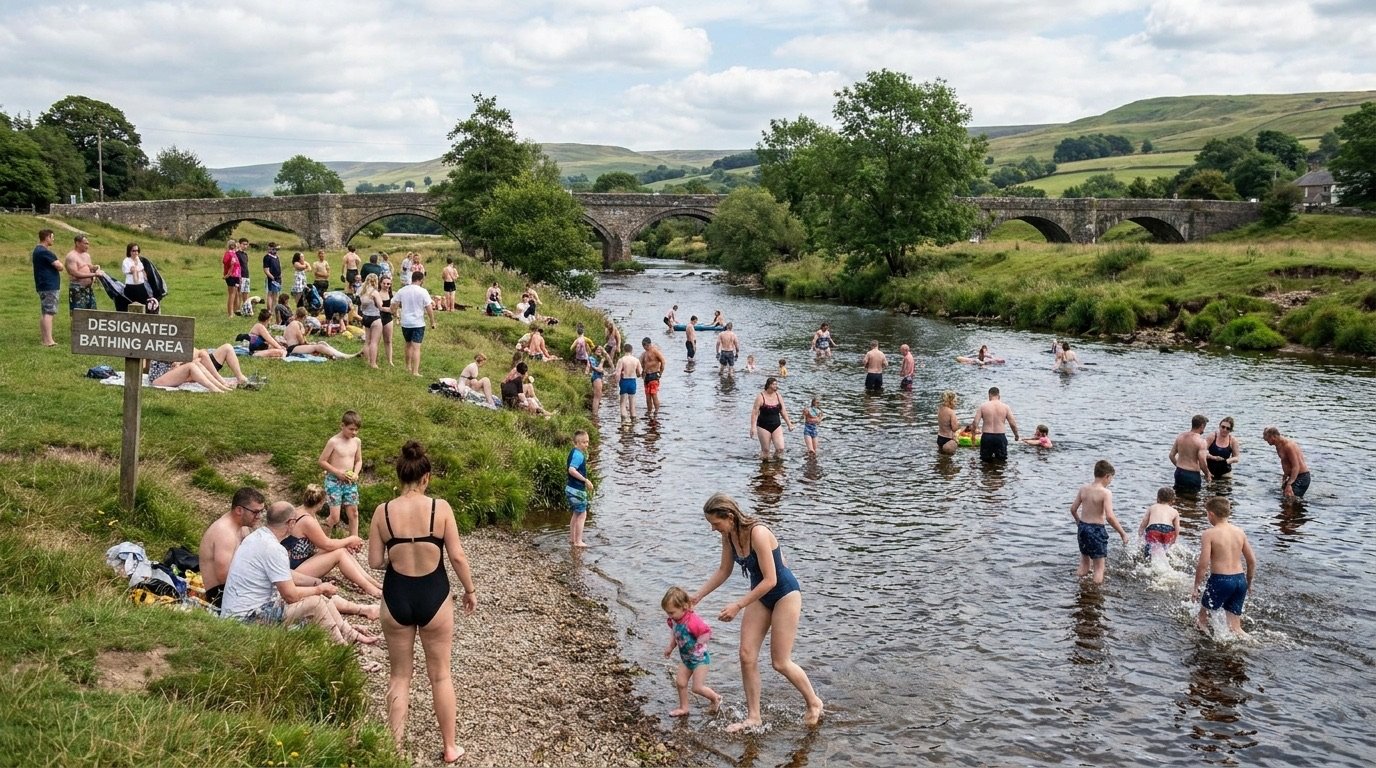
Bathing water reforms come into force as new sites added but river quality concerns persist
Changes to bathing water rules took effect for the 2026 season, adding 13 new monitored sites and tightening the path to designation, even as campaigners warn many inland waters remain badly polluted.

Household water bills to rise again as firms face sewage scrutiny
Average bills in England and Wales are set to climb by around £33 in 2026-27, a smaller rise than last year but one that comes amid continued anger over sewage spills.

Opinion: The public has made up its mind on water. The government has not
With Thames Water lurching from crisis to crisis and a mayor calling for nationalisation, ministers are clinging to a reform plan the voters have already rejected in principle.

Green Man's refugee training scheme shows what a festival can do beyond the stage
The Welsh festival's decade-old programme has trained 191 refugees from 52 countries, turning a music event into practical civic infrastructure.