New knife offence targets those who arm themselves intending violence
The Crime and Policing Act 2026 creates an offence of carrying a blade with intent to use unlawful violence, carrying up to seven years in prison, as ministers seek to halve knife crime.
Eleanor Whitfield
Writer ·
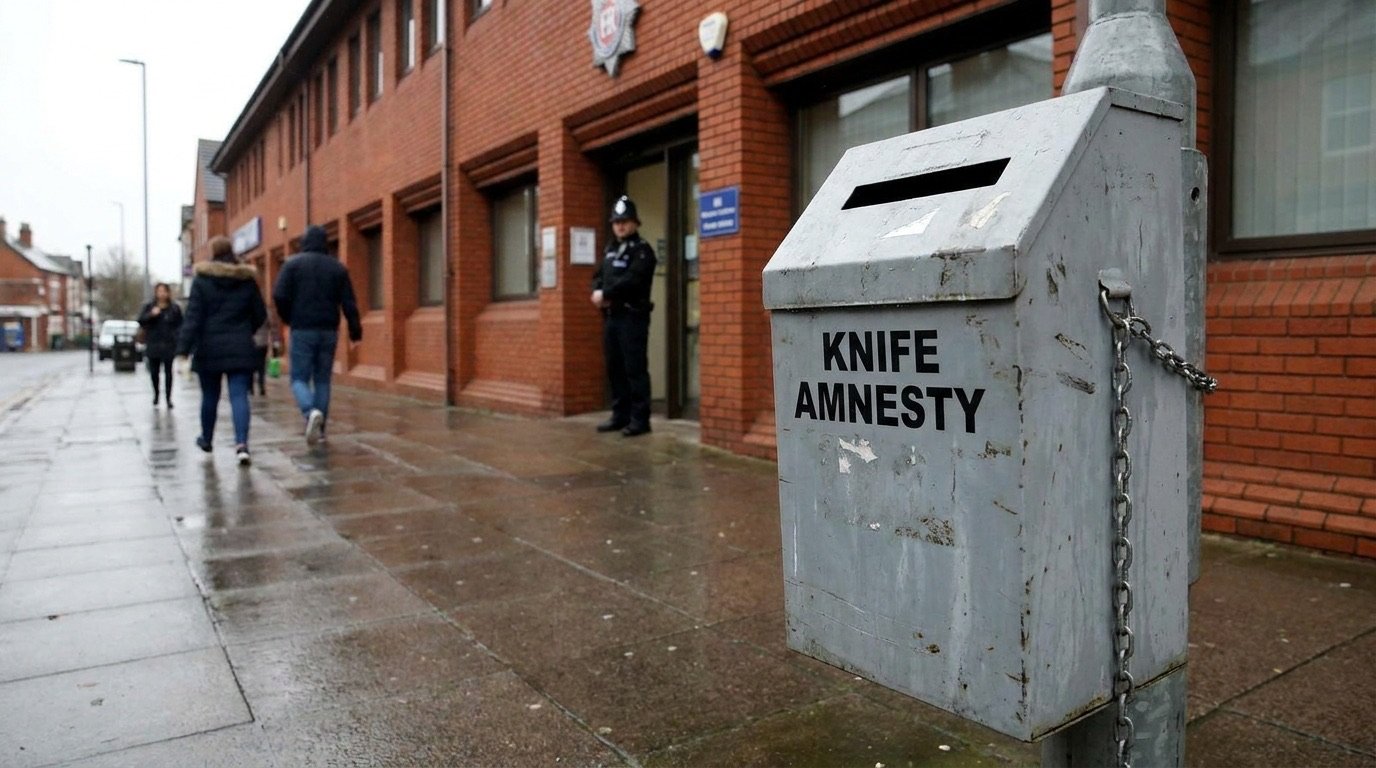
A new criminal offence aimed at people who arm themselves with a knife intending to commit violence has been created under the Crime and Policing Act 2026, as the government pursues a pledge to dramatically reduce knife crime over the coming years.
The offence covers possession of a knife or offensive weapon, in public or private, with the intention of using unlawful violence against another person, causing them to fear such violence, or causing serious unlawful damage to property. It carries a maximum penalty of seven years' imprisonment.
Ministers say the measure is designed to bridge the gap between simply carrying a blade and using it to threaten or harm, allowing police to intervene against those who equip themselves for violence before an attack can take place.
What the offence covers
Existing law already criminalises carrying a knife in a public place and using one to threaten. The new offence is intended to capture the intent behind the possession, targeting individuals who set out armed and ready to use violence but are intercepted before they strike.
By attaching a substantial maximum sentence, the government hopes to give courts a clear tool for the most dangerous offenders, while signalling that arming oneself with intent will be treated as a serious crime in its own right.
“This offence targets those who equip themselves to commit violence, allowing officers to act before a weapon is ever used.”
Part of a wider overhaul
The knife offence sits within the Crime and Policing Act 2026, which received Royal Assent on 29 April and which the government has described as the biggest shake-up of criminal justice law in decades. Different provisions are being commenced through a series of orders.
Beyond knife crime, the Act introduces new offences for assaulting retail workers and for the creation of certain AI-generated intimate images, extends anti-social behaviour powers and hands police additional tools to disrupt organised crime.
Will tougher law be enough?
Anti-knife crime campaigners and community groups have long argued that legislation must be matched by prevention, including youth services, education and early intervention to steer young people away from carrying weapons.
Bereaved families have repeatedly called for a comprehensive approach that combines enforcement with support for those most at risk. Police welcome new powers but stress that lasting reductions in knife crime depend on tackling the underlying drivers.
- A new offence covers carrying a blade or weapon with intent to use unlawful violence.
- It applies in both public and private settings.
- The maximum penalty is seven years' imprisonment.
- It is intended to let police act before a weapon is used.
- The offence forms part of the wider Crime and Policing Act 2026.
Background
Knife crime has remained one of the most emotive issues in British public life, with high-profile killings prompting repeated calls for action. The government has set out an ambition to substantially reduce knife crime, combining tougher laws with measures targeting the sale and supply of dangerous weapons.
The Crime and Policing Act 2026 follows earlier efforts to restrict particular types of blade and to clamp down on online sales, reflecting a sustained legislative focus on getting weapons off the streets and out of the hands of those who would use them.
What happens next
As the new offence is commenced, attention will turn to how police and prosecutors use it and whether it contributes to a meaningful fall in knife-enabled violence. Campaigners will continue to press for investment in prevention, arguing that enforcement alone cannot deliver the reductions the government has promised.
Sources: reporting by GOV.UK.
The NE Times is an independent news and analysis publisher. Our articles combine factual reporting with clearly-written, impartial analysis. Content is for general information and does not constitute professional advice. Disclaimer.
You may also like to read

New offence of assaulting a shop worker takes effect as retail crime fears mount
The Crime and Policing Act 2026 creates a standalone offence for attacks on retail staff and scraps the so-called low-value shoplifting loophole, as retailers warn of soaring abuse on the shop floor.

Killer jailed for life over Southampton stabbing as police conduct faces IOPC scrutiny
Vickrum Digwa was given a minimum of 21 years for murdering 18-year-old Henry Nowak, after footage emerged of officers handcuffing the victim as he said he had been stabbed.

Police facial recognition expands rapidly as watchdogs warn law is lagging behind
Forces have scanned millions of faces this year and ministers plan a national rollout, but biometrics regulators caution that the legal framework is struggling to keep pace with the technology.

Two men jailed at Old Bailey in landmark China spying case targeting Hong Kong dissidents
Chi Leung Wai and Chung Biu Yuen were sentenced to 10 and eight years respectively after a jury found they conducted surveillance on pro-democracy campaigners in Britain for a foreign intelligence service.