Ministers move to close the AI chatbot loophole in online safety law
The government is fast-tracking reforms to bring standalone AI chatbots within the scope of online safety rules, after an Ofcom investigation exposed a gap that left some tools outside the law entirely.
Eleanor Whitfield
Writer ·
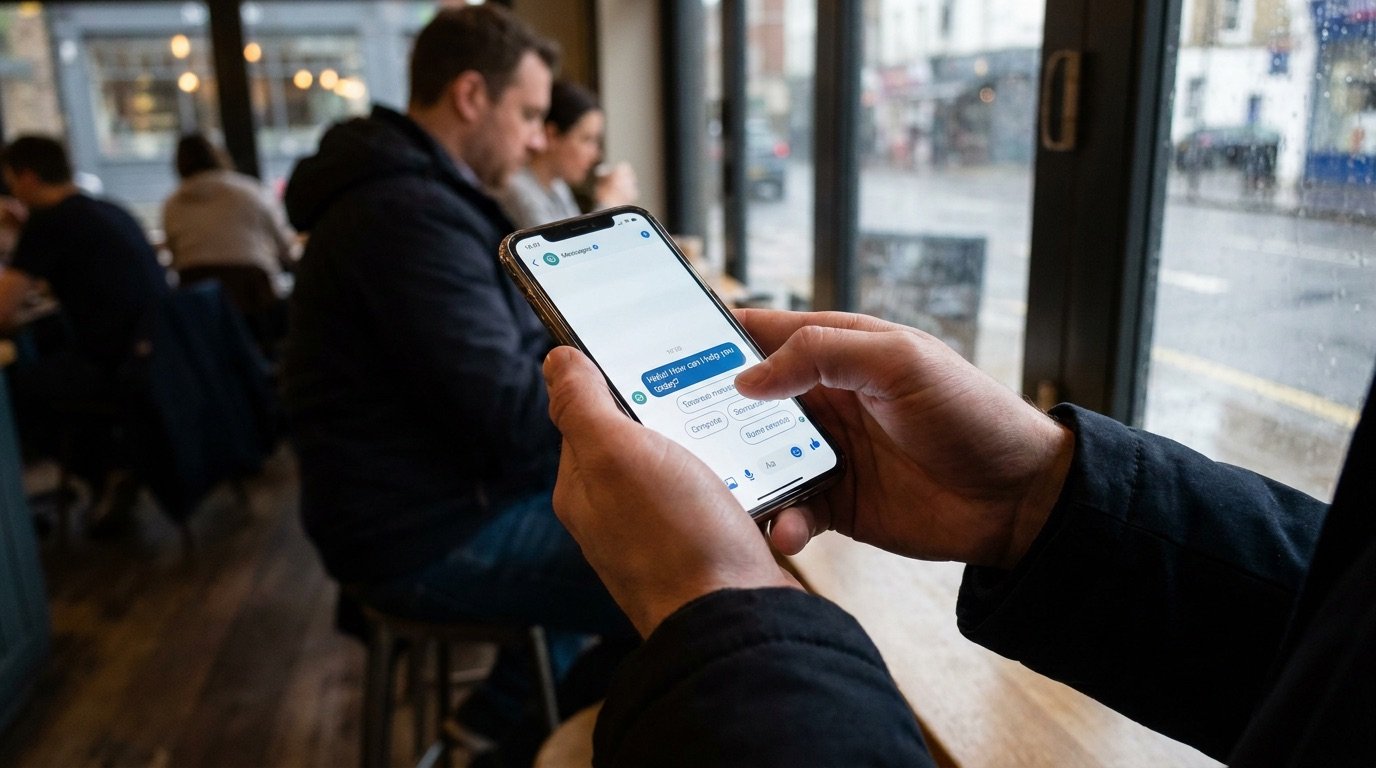
The government is moving to close a loophole that has left some artificial intelligence chatbots outside the reach of Britain's online safety laws, amid mounting concern that the technology is outpacing the rules meant to govern it.
The push follows an Ofcom investigation into an AI chatbot used to generate sexualised imagery, which laid bare a gap in the Online Safety Act. As drafted, the Act mainly covers 'user-to-user' services and search engines, leaving many standalone chatbots in a grey area, even when they can produce illegal or deeply harmful content.
Ministers announced plans to fast-track reforms, with the regulator and the government both signalling that AI tools should not be able to sidestep responsibilities that apply to social networks and search platforms.
The gap Ofcom found
Ofcom, which enforces the Online Safety Act, has clarified that AI chatbots fall within the regime only when they operate as user-to-user services, function as search services, or publish pornographic content. Many standalone chatbots, by contrast, sit outside the rules unless they enable user interaction, search the internet or generate explicit material.
That distinction matters enormously in practice. A chatbot that lets users share generated content with one another may be regulated, while a superficially similar tool that does not could escape the duties designed to keep illegal material offline.
The case that prompted action involved a tool capable of producing sexualised and abusive imagery, a category the government regards as intolerable regardless of the technology used to create it.
What the reforms would do
Under the plans, the government intends to amend the Crime and Policing Bill to require AI chatbot providers not currently covered by the Online Safety Act to protect users from illegal content, or face legal consequences. A separate amendment would address the preservation of children's social media data.
“AI tools should not be able to do behind a chatbot interface what the law already forbids everywhere else online.”
The reforms build on changes already in force. Provisions in the Data (Use and Access) Act 2025 that criminalise the creation of non-consensual intimate images came into effect earlier in 2026, part of a broader tightening of the rules around AI-generated harm.
- The Online Safety Act mainly covers user-to-user and search services
- Many standalone AI chatbots currently fall outside its scope
- An Ofcom probe into abusive image generation exposed the gap
- Ministers plan to amend the Crime and Policing Bill to close it
- Ofcom's final report on the issue is expected later in 2026
A regulator playing catch-up
The episode highlights a recurring challenge for regulators: legislation drafted before a technology matures can leave unexpected blind spots. The Online Safety Act was years in the making, yet the explosion of generative AI tools since has tested its boundaries in ways its authors did not fully anticipate.
Ofcom has issued an explainer setting out how chatbots are treated, and has opened investigations into AI companion and character services, signalling that it intends to enforce the rules where they apply while pressing for clarity where they do not.
Background
Britain has chosen a sector-led approach to AI regulation, leaning on existing bodies such as Ofcom, the data regulator and financial and medical regulators rather than creating a single overarching AI law. Supporters say this is flexible; critics argue it leaves gaps of exactly the kind now being patched. The debate over whether the UK needs a dedicated AI Act continues to simmer in Parliament.
The reforms also sit within a wider government drive on children's online safety, including consultations on social media use by under-16s and guidance on screen time.
What happens next
The proposed amendments will need to pass through Parliament, and Ofcom's final report on harmful AI-generated content is expected later in 2026. Campaigners will be watching closely to see whether the changes are broad enough to capture the fast-evolving market in chatbots, or whether new gaps emerge as quickly as old ones are closed.
Sources: reporting by Lewis Silkin.
The NE Times is an independent news and analysis publisher. Our articles combine factual reporting with clearly-written, impartial analysis. Content is for general information and does not constitute professional advice. Disclaimer.
You may also like to read
Opinion: A social media ban for under-16s is the easy part. Enforcing it honestly is the test
Banning under-16s from TikTok, Instagram and YouTube answers a real public anxiety, but a law the government cannot enforce risks becoming a comforting fiction that lets the platforms off the hook.
Parents back tougher screen rules as children embrace AI, polling shows
New government polling reveals strong public support for limits on young children's screen time and a possible social media ban for under-16s, even as surveys find a majority of children already using AI every day.
Government unveils sweeping ban on social media for under-16s
Snapchat, TikTok, Instagram and X will be off-limits to children under 16 under plans the prime minister says will give young people their childhood back.

Police facial recognition expands rapidly as watchdogs warn law is lagging behind
Forces have scanned millions of faces this year and ministers plan a national rollout, but biometrics regulators caution that the legal framework is struggling to keep pace with the technology.