Government adopts Seventh Carbon Budget, committing UK to 87 per cent emissions cut by 2042
Ministers have laid draft legislation before Parliament accepting the Climate Change Committee's advice on the Seventh Carbon Budget, setting a legally binding target to slash emissions by 87 per cent against 1990 levels.
Eleanor Whitfield
Writer ·
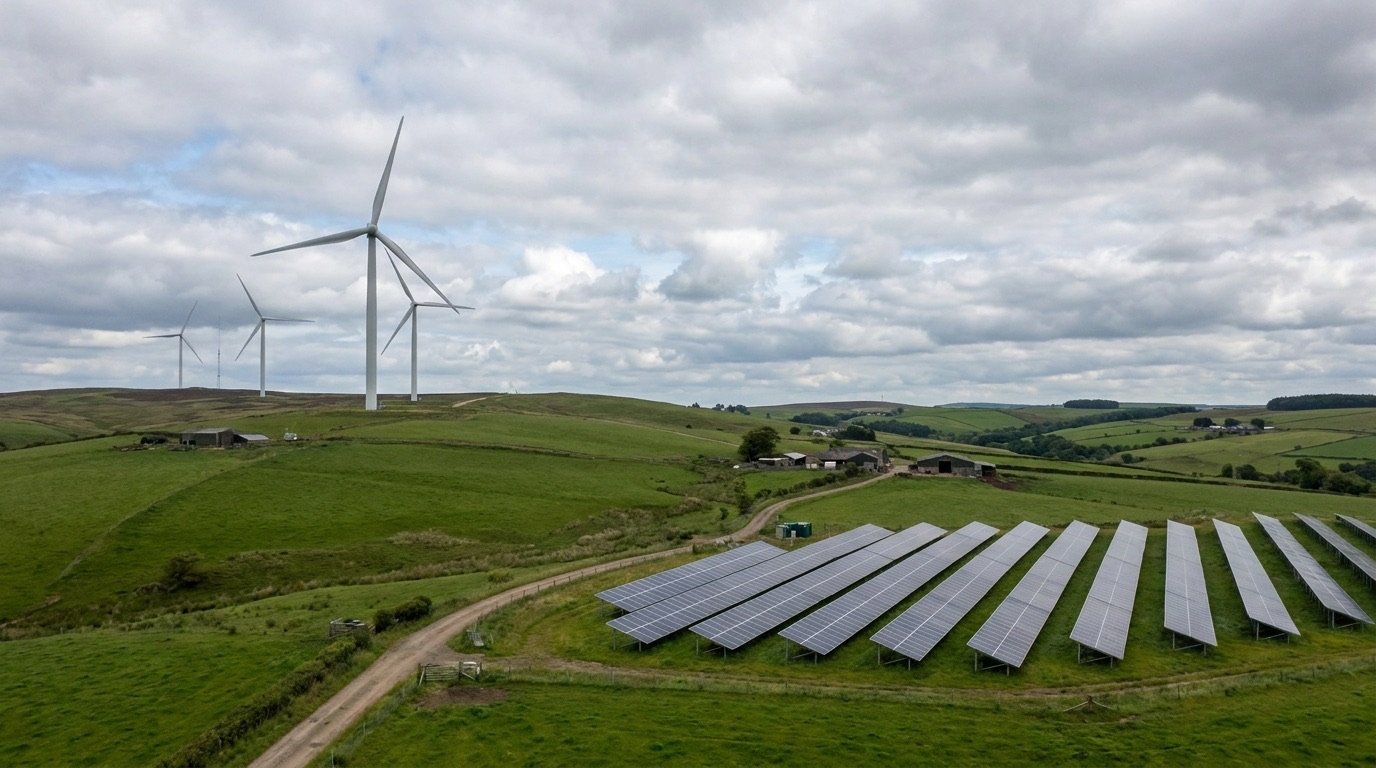
The government has accepted the advice of its independent climate advisers and committed the UK to one of its most ambitious emissions targets yet, laying draft legislation before Parliament for the Seventh Carbon Budget. The budget would set a legally binding limit on greenhouse gas emissions equivalent to a cut of 87 per cent against 1990 levels for the period 2038 to 2042.
The decision marks a critical checkpoint on the UK's statutory pathway to net zero by 2050, and was welcomed by the Climate Change Committee, which had recommended the same level of ambition. Ministers also agreed to give MPs a dedicated debate on the floor of the House of Commons before the budget is formally agreed.
Carbon budgets, introduced under the Climate Change Act, cap the total volume of emissions the UK can produce over consecutive five-year periods, providing a long-term framework for policy and investment.
The numbers behind the budget
The Climate Change Committee had advised that the Seventh Carbon Budget should be set at 535 million tonnes of carbon dioxide equivalent across the five-year period, a figure that includes emissions from international aviation and shipping for the first time at this level of stringency.
The committee described the target as ambitious but deliverable, provided that significant policy gaps are closed and implementation accelerates across key sectors such as power, transport, buildings and industry.
“The Committee is delighted that the Government have accepted the CCC's advised level for the Seventh Carbon Budget. The lower-cost, energy-secure future is electric, so we hope to see the Government plan to accelerate electrification.”
Electrification at the heart of the plan
Advisers stressed that the cheapest and most secure route to meeting the budget runs through rapid electrification, from electric vehicles and heat pumps to clean power generation. The committee argued that reducing reliance on imported fossil fuels would lower costs for households and improve energy security.
It urged ministers to bring forward a clear delivery plan once Parliament has agreed the level of the budget, warning that meeting the target will require faster progress than the country is currently making.
- The budget covers the five-year period 2038 to 2042
- It targets an 87 per cent cut in emissions against 1990 levels
- The recommended level is 535 million tonnes of CO2 equivalent
- International aviation and shipping emissions are included
- MPs will be given a Commons debate before the budget is agreed
Greater parliamentary scrutiny
In a notable shift, the government agreed to the committee's call, endorsed by the Environmental Audit Committee, to give MPs a half-day debate on the floor of the Commons to agree the next carbon budget. Supporters say the move represents a marked increase in transparency compared with the passage of previous budgets.
Ministers said they would publish a delivery plan for the budget once Parliament had decided on its level, and would take account of MPs' views in shaping that plan.
Background
The Climate Change Committee is the independent statutory body that advises the government on emissions targets and tracks progress towards them. Carbon budgets provide a legally binding trajectory designed to keep the UK on course for net zero, with each budget covering a five-year period and growing progressively tighter.
The Seventh Carbon Budget is significant because it covers a period far enough ahead to require decisions on infrastructure and investment to be taken now, while close enough that the choices made will shape the lives of people already in work and education today.
What happens next
Parliament will debate and vote on the budget in the coming months, after which the government will publish its delivery plan setting out how the target will be met. Climate analysts say the credibility of the commitment will ultimately rest not on the headline figure but on whether ministers close existing policy gaps and accelerate action across the economy.
Sources: reporting by Climate Change Committee.
The NE Times is an independent news and analysis publisher. Our articles combine factual reporting with clearly-written, impartial analysis. Content is for general information and does not constitute professional advice. Disclaimer.
You may also like to read

Green Man's refugee training scheme shows what a festival can do beyond the stage
The Welsh festival's decade-old programme has trained 191 refugees from 52 countries, turning a music event into practical civic infrastructure.

Gatwick expansion gains momentum as campaigners lose court battle
A ruling against opponents of the airport's growth plans has reinvigorated a contested infrastructure scheme, even as arguments over noise, emissions and capacity remain firmly alive.
UK records hottest June day as heatwave intensifies
Britain has logged its hottest June day on record as a heatwave drives temperatures sharply higher and warnings are extended.

NHS dental contract reforms bring complex care pathways from 23 June
The second wave of NHS dentistry reforms in England introduces new complex care pathways for patients with serious decay and gum disease, alongside changes to denture payments, as ministers try to improve access to NHS care.